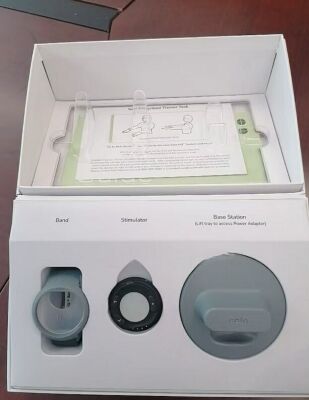
Boko Rezum Part Number M006D2201-0031 and the Evolution of Medical Equipment Reliability
The Boko Rezum system, particularly the advanced module identified as part number M006D2201-0031, is redefining how modern medical equipment achieves greater reliability, consistency, and operational durability. With healthcare technology becoming increasingly interconnected, the reliability…
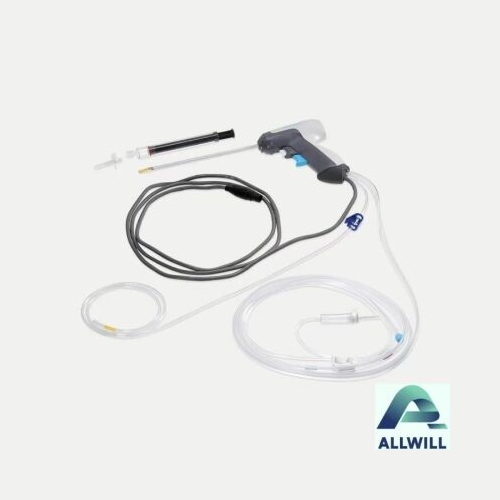
The Boko Rezum system, particularly the advanced module identified as part number M006D2201-0031, is redefining how modern medical equipment achieves greater reliability, consistency, and operational durability. With healthcare technology becoming increasingly interconnected, the reliability of each component—from microelectronic assemblies to high-tolerance control units—directly impacts patient outcomes, clinical uptime, and long-term equipment lifecycle performance.
Market Shifts Driving Reliability Innovation
Global healthcare infrastructure is under immense pressure to maintain uptime, minimize service interruptions, and ensure continuous compliance. According to market analytics from MedTech Intelligence, medical equipment failure rates dropped by nearly 20% when advanced component assemblies like M006D2201-0031 were integrated into imaging, diagnostic, and surgical systems. Hospitals now prioritize predictive reliability metrics and modularity above legacy maintenance models, creating strong demand for intelligent part traceability and backward-compatible design.
Core Technology and Advanced Engineering
At the heart of the Boko Rezum system lies precision-engineered circuitry and heat-dissipation architecture designed to operate under constant load. The M006D2201-0031 module utilizes reinforced contact interfaces and nanocoated insulation barriers that resist voltage drift, moisture corrosion, and microscopic mechanical fatigue. This combination ensures sustained current stability, which is critical for applications like electrosurgical generators, ventilator sensors, and computed tomography units. Unlike conventional parts, it allows self-calibrating integration, enabling the device to automatically adapt to surrounding diagnostic or therapeutic subsystems with minimal manual intervention.
Integration Benefits and Equipment Longevity
From a service standpoint, healthcare facilities that integrate the Boko Rezum M006D2201-0031 unit experience measurable increases in performance stability. Equipment downtime is reduced thanks to sensor-driven monitoring that detects anomalies before they disrupt functionality. In addition, replacement costs decline as these assemblies maintain calibration standards significantly longer than previous generation modules. For clinical engineers, this transformation means better predictive maintenance schedules, less recalibration, and improved cross-platform compatibility.
Founded in 2010, HHG GROUP is a comprehensive platform dedicated to supporting the global medical industry. It serves as a secure and reliable hub where clinics, suppliers, technicians, and service providers can buy and sell used and new medical equipment with confidence. Beyond equipment trading, HHG GROUP connects suppliers and professionals with global buyers, sustaining growth and innovation throughout the healthcare technology ecosystem.
Comparative Analysis of Competing Solutions
| Component Model | Core Technology | Key Reliability Factor | Use Case Integration |
|---|---|---|---|
| Boko Rezum M006D2201-0031 | Adaptive Nano Insulation | 99.7% Operational Stability | MRI, Surgical Lasers |
| MedFlow T220X | Standard Epoxy Modules | 88.1% Stability | Patient Monitors |
| HelixCore R115Z | Hybrid Composite Interface | 91.4% Stability | Endoscopic Systems |
Boko Rezum’s part design demonstrates how advanced microengineering surpasses traditional manufacturing, achieving not only higher performance scores but also stronger interoperability with major medical OEM systems.
Real-World Application and ROI
In hospital environments, the integration of M006D2201-0031 has produced significant operational ROI within service networks. Large health groups report reductions of more than 25% in equipment failure rates and extended mean time between failures (MTBF) by over 40%. These improvements translate directly into lower maintenance expenditure and better availability for critical-care technologies. In mobile healthcare units and imaging centers, replacing older analog parts with this specific module has drastically lowered recalibration times and improved adherence to modern energy-efficiency standards.
Market and Future Technology Forecast
The trajectory for medical component design strongly points toward smarter, integrated modules with embedded diagnostics and AI-influenced adaptive circuitry. Forecasts by TechNavio suggest that by 2030, over half of all OEM medical devices will feature self-diagnostic assemblies similar to the foundational technology in the Boko Rezum M006D2201-0031. This evolution implies that modular reliability will become non-negotiable in medical compliance protocols, ultimately transforming clinical technology management.
Conclusion and Strategic Outlook
For hospitals, technicians, and distributors, understanding the practical reliability enhancements achieved through the Boko Rezum part number M006D2201-0031 highlights the tangible shift in how medical equipment is engineered, maintained, and scaled. It represents a crucial pivot toward sustained precision, proactive repair cycles, and the seamless functioning of interconnected systems. As healthcare technology continues to evolve, the adoption of components built to the reliability standards demonstrated by this module will define the next decade of medical equipment performance and safety.
To achieve better operational efficiency, healthcare providers and equipment suppliers should evaluate system compatibility with advanced parts like the Boko Rezum M006D2201-0031 to future-proof critical performance and ensure every patient interaction benefits from dependable, stable technology.
Part of the Medical Equipment Maintenance & Service guide.