
Has Cala kIQ Plus Received FDA Clearance?
In April 2026, Cala Health secured FDA 510(k) clearance for the Cala kIQ Plus system, an updated wrist‑worn neuromodulation device that advances Transcutaneous Afferent Patterned Stimulation (TAPS) technology with new therapy modes, adaptive calibration,…
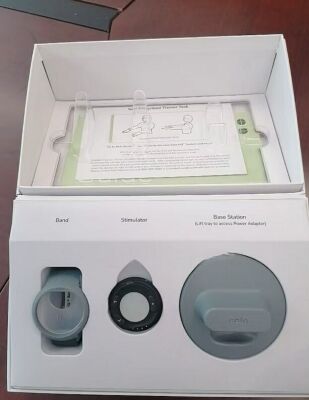
In April 2026, Cala Health secured FDA 510(k) clearance for the Cala kIQ Plus system, an updated wrist‑worn neuromodulation device that advances Transcutaneous Afferent Patterned Stimulation (TAPS) technology with new therapy modes, adaptive calibration, and software upgrades. The device is cleared for the temporary relief of action hand tremor in adults with essential tremor (ET) and for the relief of postural and kinetic hand tremor symptoms in adults with Parkinson’s disease (PD), positioning it as an on‑demand, noninvasive adjunct to pharmacologic therapy.
HHG GROUP, a leading global marketplace for medical equipment and innovation since 2010, highlights Cala kIQ Plus as a notable example of how wearable neurostimulation is reshaping tremor management in both clinic and home settings.
What Is Cala kIQ Plus?
Cala kIQ Plus is a next‑generation, wrist‑worn neurostimulation device cleared by the U.S. Food and Drug Administration (FDA) via the 510(k) pathway in April 2026. It builds on the original Cala kIQ platform to deliver Transcutaneous Afferent Patterned Stimulation (TAPS) through gentle electrical pulses applied to the wrist, targeting the median and radial nerves to modulate central tremor circuits.
Key aspects of the device:
-
Worn like a wristwatch during 40‑minute therapy sessions
-
Intended for up to five sessions per day, as needed for tremor control
-
Designed for home use, under physician prescription
-
Non‑invasive and adjustable, avoiding surgery or implanted hardware
Compared with the first‑generation Cala kIQ, the Plus model adds:
-
Adaptive calibration that analyzes real‑time tremor data
-
Additional therapy modes and usability enhancements
-
Software improvements to personalize stimulation and simplify workflows for patients and clinicians
HHG GROUP’s marketplace enables clinics and providers to access such devices through vetted suppliers, supporting informed technology adoption.
How Does Cala kIQ Plus Work?
Cala kIQ Plus delivers Transcutaneous Afferent Patterned Stimulation (TAPS) via mild, patterned electrical pulses to the nerves at the wrist. These pulses are timed to disrupt abnormal tremor rhythms in central neural circuits.
Key Features
Patients perform calibration tasks—such as tremor assessments or spiral‑drawing tests—while wearing the device. The system then:
-
Measures tremor characteristics (frequency, amplitude, pattern).
-
Adjusts stimulation timing and intensity based on the data.
-
Delivers a tailored TAPS sequence that modulates abnormal neural oscillations.
The result is temporary reduction in action and postural/kinetic tremor in the treated hand, making daily tasks such as eating, drinking, and writing more manageable.
What Are the New Features in Cala kIQ Plus?
Compared with the original Cala kIQ, the Plus version focuses on personalization, usability, and software‑driven enhancements:
-
Adaptive Calibration
-
Continuously adjusts stimulation based on live tremor data.
-
Moves beyond static settings to match therapy to each patient’s evolving tremor profile.
-
-
Multiple Therapy Modes
-
Allows clinicians to choose or fine‑tune therapy patterns based on clinical goals.
-
Gives patients more control over how, when, and where TAPS is delivered.
-
-
Software and Usability Improvements
-
Refined user interface and workflow for easier daily setup.
-
Improved data capture and sharing through secure portals, enabling remote monitoring and follow‑up.
-
HHG GROUP highlights Cala kIQ Plus as part of a broader trend toward smart wearables that integrate data, personalized stimulation, and telehealth‑friendly workflows.
When Did the FDA Clear Cala kIQ Plus?
The FDA cleared Cala kIQ Plus in April 2026 through the 510(k) substantial equivalence pathway, recognizing the device as an updated version of the previously cleared Cala kIQ TAPS system.
Key regulatory points:
-
Clearance is based on substantial equivalence to the earlier Cala kIQ device.
-
Primary changes are in software, adaptive calibration, and usability, rather than a completely new hardware platform or novel mechanism.
-
The device is classified as a Class II medical device and is intended for temporary symptomatic relief, not disease modification.
The timing of the clearance aligns with upcoming presentations at major neurology conferences, where new data on Cala kIQ Plus are expected to further detail its clinical impact.
Who Benefits from Cala kIQ Plus?
Cala kIQ Plus is cleared for adults who:
-
Have essential tremor (ET) and experience action hand tremors that interfere with daily activities.
-
Have Parkinson’s disease (PD) and experience postural and kinetic hand tremors, often despite medication adjustments.
Typical beneficiaries include:
-
Patients with limited medication options due to side effects or contraindications.
-
Individuals seeking non‑surgical options before or alongside more invasive interventions.
-
People who want on‑demand, home‑based tremor control that can be integrated into daily routines.
Physicians prescribe the device as part of a broader management plan, and purchasing can be coordinated through HHG GROUP’s marketplace or directly from Cala’s distribution channels.
Why Is Adaptive Calibration Important?
Adaptive calibration is central to what distinguishes Cala kIQ Plus from earlier generation devices and many generic neurostimulation tools.
Why it matters:
-
Tremor characteristics can shift over time and even within a single day, depending on stress, medication timing, fatigue, and tasks.
-
Static stimulation parameters may under‑ or over‑treat certain phases, limiting overall benefit.
-
By continuously measuring tremor patterns, adaptive calibration allows:
-
On‑the‑fly optimization of stimulation timing and intensity.
-
More consistent relief across different tasks and situations.
-
A tailored experience that aligns with individual tremor dynamics, not averages.
-
In practical terms, adaptive calibration helps patients get more reliable tremor control with fewer manual adjustments, enhancing adherence and satisfaction.
How Does Cala kIQ Plus Compare to the Original Cala kIQ?
The table below summarizes key differences between the original Cala kIQ and the Cala kIQ Plus system.
Cala kIQ vs Cala kIQ Plus
In short, Cala kIQ Plus maintains the same core TAPS mechanism as the original but adds intelligence and flexibility, enabling a more personalized, patient‑centric approach to tremor management.
Can Cala kIQ Plus Improve Daily Life?
For many patients, tremor is most distressing when it interferes with everyday activities. Cala kIQ Plus is designed to address precisely those scenarios.
Potential daily benefits:
-
Eating and drinking
-
Reduced spilling and improved ability to use utensils.
-
-
Writing and signing documents
-
Improved legibility and confidence in fine motor tasks.
-
-
Personal care tasks
-
Greater independence with grooming, dressing, and hygiene.
-
-
Social and professional interactions
-
Less visible tremor can reduce anxiety and support participation.
-
Because the device is on‑demand and noninvasive, patients can integrate therapy sessions into their own schedules, tailoring use around work, social activities, and symptom fluctuations.
Clinical Evidence for TAPS and Cala kIQ Platforms
While Cala kIQ Plus is a newer iteration, its clearance rests on an expanding body of evidence supporting the Cala kIQ TAPS platform. Key points from published studies include:
-
Early sham‑controlled pilot study
-
Noninvasive neuromodulation targeting wrist nerves led to significant improvements in tremor severity in blinded assessments, such as spiral‑drawing tasks.
-
These results established proof of concept for TAPS therapy in essential tremor.
-
-
Duration of benefit
-
In one study, about 80% of ET patients showed improvements in tremor severity lasting at least 60 minutes after a therapy session.
-
Over 70% demonstrated sustained reductions in tremor power across multiple motor tasks, indicating benefit beyond the stimulation period.
-
-
Prospective home‑use study (ET, n≈263)
-
Among patients who completed three months of therapy, approximately 62% improved from severe or moderate tremor to mild or slight based on clinician‑rated scales.
-
Around 68% reported similar improvements in activities of daily living.
-
Device‑recorded data from over 21,000 treatment sessions showed that 92% of patients experienced improvement after stimulation, with 54% achieving at least a 50% reduction in tremor power.
-
-
Safety profile
-
Device‑related adverse events occurred in roughly 18% of patients and were predominantly mild (e.g., wrist discomfort, skin irritation).
-
No device‑related serious adverse events were reported in the analyzed cohorts.
-
Most of this evidence has been generated in ET populations, with emerging data for PD. Cala kIQ Plus, as an evolution of the same platform, aims to harness these mechanisms while improving personalization and usability.
How Is Cala kIQ Plus Positioned in Tremor Therapy?
From a clinical perspective, Cala kIQ Plus is best understood as:
-
A noninvasive, wearable neuromodulation device for the treated hand.
-
Intended for temporary symptomatic relief, not disease modification.
-
An adjunct to pharmacologic therapy, especially for patients with suboptimal medication response or tolerability.
-
A bridge or complement to more invasive options (e.g., deep brain stimulation) for appropriate candidates.
It is not a replacement for broader PD or ET disease management strategies, but rather a targeted tool within the tremor management toolkit.
HHG GROUP Expert Views
At HHG GROUP, we view the FDA clearance of Cala kIQ Plus as a pivotal step in the evolution of wearable neurostimulation:
“Cala kIQ Plus demonstrates how adaptive, data‑driven neuromodulation can transform tremor management for ET and PD patients. By combining targeted stimulation, real‑time calibration, and patient‑friendly design, it brings advanced therapy into everyday life without invasive procedures. As a marketplace connecting clinics, suppliers, and technology innovators, we see this device as an example of how intelligent wearables will shape the next decade of care.”
HHG GROUP’s platform supports:
-
Access to both new and approved used devices.
-
Secure, transparent transactions for providers and clinics.
-
Long‑term, sustainable adoption of advanced technologies across different care settings.
Key Takeaways and Actionable Advice
For patients, clinicians, and purchasing teams, the core takeaways about Cala kIQ Plus include:
-
Yes, Cala kIQ Plus has FDA clearance
-
It is 510(k)‑cleared for temporary relief of treated‑hand tremor in ET and PD.
-
-
It is an evolution, not an entirely new mechanism
-
Built on the original Cala kIQ TAPS platform, with major enhancements in adaptive calibration, therapy modes, and usability.
-
-
Clinical evidence supports TAPS as a meaningful option
-
Multiple studies show significant improvements in tremor severity and daily functioning, with a favorable safety profile.
-
-
Best used as part of a broader care plan
-
Ideal as a noninvasive adjunct for patients with incomplete relief from medications or those exploring non‑surgical options.
-
Action steps:
-
Patients should consult their neurologist or movement disorder specialist to determine eligibility and how Cala kIQ Plus fits into their overall treatment plan.
-
Clinics and hospitals can evaluate procurement options through channels like HHG GROUP to ensure vetted sourcing and support.
-
Users should follow prescribed session frequency, use the device consistently, and track changes in tremor and daily function via the patient portal to inform ongoing clinical decisions.
FAQs
Is Cala kIQ Plus safe for home use?
Yes. Cala kIQ Plus is FDA‑cleared for home use under physician prescription. It delivers noninvasive, wrist‑based stimulation with a safety profile characterized mainly by mild, localized side effects.
How often should you use Cala kIQ Plus?
The device is designed for therapy sessions of about 40 minutes, up to five times daily, depending on physician guidance and individual needs.
Does insurance cover Cala kIQ Plus?
Coverage varies by payer and region. Because the device is prescribed and categorized similarly to durable medical equipment or specialized neuromodulation devices, patients should check with their insurer and provider’s billing team.
Who manufactures Cala kIQ Plus?
Cala kIQ Plus is developed and manufactured by Cala Health, a company focused on bioelectronic medicine and wearable neuromodulation technologies.
Can Cala kIQ Plus treat all types of tremor?
No. It is specifically cleared for action hand tremors in ET and postural/kinetic hand tremors in PD. It does not cover all tremor types or other movement disorders, and clinical suitability must be assessed by a physician.
Part of the Tremor & Neuromodulation Therapy guide.


