Cala kIQ in the clinic: prescription workflow
A workflow and documentation guide for neurology and movement-disorder clinic managers adding a prescription-based tremor therapy device, current as of September 2026. It summarises what the manufacturer's current labeling states and is not clinical…
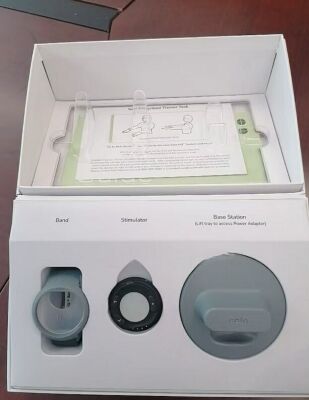
A workflow and documentation guide for neurology and movement-disorder clinic managers adding a prescription-based tremor therapy device, current as of September 2026. It summarises what the manufacturer’s current labeling states and is not clinical guidance; verify the current label and your local rules before use.
A prescription device changes a clinic’s workflow long before it changes anything else. There is an evaluation step, a documentation step, a device logistics step and a follow-up step ¡ª and each of them has to exist before the first patient walks out with the device, because the device cannot be handed over like a consumable. This guide maps that sequence, using the manufacturer’s own labeling as the source for what the device is and who may sell it.
Where Cala kIQ fits in a clinic (per label)
The manufacturer’s indications for use state that Cala kIQ is intended to aid in the temporary relief of hand tremors in the treated hand following stimulation in adults with essential tremor, and to aid in the temporary relief of postural and kinetic hand tremor symptoms that impact some activities of daily living, in the treated hand, in adults with Parkinson’s disease. Those are the labeled indications; anything broader belongs outside this page.
Two further label statements shape the clinic workflow more than the indication list does. First, the device is restricted in the United States to sale by or on the order of a physician. Second, it is single-patient use: it is for the individual for whom it has been prescribed and should not be worn by anyone else. Together those two facts determine how the device moves through your clinic, how you document it, and what you must ask before buying one on the secondary market.
One model note before you read further. The same manufacturer’s platform has expanded, and the FDA’s 510(k) database records several clearances under the Cala kIQ name ¡ª K222237 (2022), K242259 (2024) and K243848 (2025) ¡ª plus a later decision for a separate variant, the Cala kIQ Plus (K253587), dated 17 March 2026. This article is scoped to the Cala kIQ label. If you are evaluating the kIQ Plus or any other variant, read that model’s own indications and labeling rather than assuming they carry across, because indications differ between products in this family.
The prescription workflow
Patient evaluation
The workflow starts with the assessing clinician, not with the device. Evaluation follows your existing pathway for tremor assessment, with the device considered among the options your clinicians already discuss with patients. The labeling also lists contraindications and cautions ¡ª including implanted electrical medical devices, diagnosed or suspected seizure disorders, pregnancy, and skin conditions at or near the treated wrist ¡ª so the clinic’s process should ensure the label’s screening points are reviewed and recorded as part of the assessment rather than remembered at the fitting appointment.
Eligibility and documentation
Once the clinical decision is made, the documentation step determines whether the rest of the process runs smoothly. Capture the assessment that supports the prescription, the label screening points, and the patient’s acknowledgement of the device’s instructions and cautions. If your clinic bills a payer for the therapy, the documentation your payer requires should be designed in from the start rather than reconstructed later.
Prescription records
Because sale is restricted to the order of a physician, the prescription record is the document that authorises the device for that patient. Keep it with the device record: prescriber, date, device identifier, and the patient it was prescribed for. This is also the record that makes single-patient use auditable ¡ª a device that cannot be tied to a prescription and a patient is a problem in an inspection.
Device logistics and onboarding
| Workflow step | What it involves | What to document |
|---|---|---|
| Prescription kit and supply | Ordering through the manufacturer’s prescription channel for that patient | Order reference, device identifier, prescriber |
| Fitting and onboarding | Device set-up with the patient, including instructions and cautions | Date, who performed it, materials provided, patient acknowledgement |
| Single-patient use | Device remains with the prescribed patient; not shared or reissued | Device-to-patient linkage in your register |
| Band and wearable upkeep | Replacement of wearable components per manufacturer guidance | Replacement dates and part references |
| Support pathway | Manufacturer support contact for technical problems | Escalation notes and outcomes |
If your clinic is considering a used or loaner unit instead of a new prescription device, treat that as a separate project, not a shortcut. Single-patient use and physician-order restrictions mean the device’s history and the manufacturer’s terms have to be checked before it is placed with a patient; a device with no traceable prescription history is not equivalent to a new prescription kit simply because the hardware is identical.
Follow-up and compliance checks
Build a follow-up appointment into the pathway and use it for two purposes: confirming the patient is using the device as instructed, and capturing any problem early. The label’s warnings list includes skin irritation, sores and lesions at the stimulation site, persistent increases in muscle tightness, a feeling of chest pressure during stimulation, and swelling of the arm, wrist or hand ¡ª so the follow-up conversation and your documentation template should both include a place for those observations to be recorded and escalated to the prescriber.
Keep a simple device register with the patient linkage, fitting date, follow-up dates and any reported issues. That register is what turns a scattered clinical experience into a process you can audit, and it is also what makes the clinic’s use of the device reviewable if a payer or accreditation body asks how the prescription and single-patient requirements are handled.
Regulatory notes by region
The prescription restriction quoted above is the United States labeling. Other markets set their own classification, prescription and registration requirements, and the same device may be supplied through different channels or with different conditions. Before importing a unit, before offering it across a border, and before assuming that a device purchased in one country can be prescribed in another, verify the rules that apply where the patient is treated.
That check is a documentation task, not a legal opinion: identify the local device registration status, the conditions attached to it, and the channel through which the device must be supplied. Where those conditions differ from your current process, adjust the process before the first prescription rather than after.
Questions buyers ask
Is Cala kIQ the same device as Cala Trio?
No. They are separate products with separate labeling, and their indications differ. Check the indications for the specific model you intend to prescribe or purchase rather than assuming the platform’s general description applies to both.
Can a clinic buy a used unit and prescribe it to patients?
The device is labeled for single-patient use and is restricted to sale by or on the order of a physician in the United States, so a used unit carries requirements a new prescription kit does not. Confirm the manufacturer’s terms and the local rules before purchase; do not assume hardware equivalence equals a valid prescription pathway.
Does every market require a prescription?
Not necessarily, and the answer is not uniform across countries. The labeling summary here reflects the manufacturer’s stated United States restriction; verify the requirement for each market where you intend to supply or use the device.
Design the workflow once, document it every time. If your clinic is building this pathway and wants to know what documentation travels with a unit, ask HHG for the paperwork on a specific device, or review the current Cala kIQ listing as a reference point. For context on how other prescription-based wearable therapies are entering clinics, see whether your neurology clinic is ready for in-office tremor wearables.