Building a regional anesthesia cart
A configuration checklist for anesthesia departments and procurement teams assembling a regional anesthesia cart, current as of September 2026. It covers equipment and layout only; it is not clinical guidance and it does not…
A configuration checklist for anesthesia departments and procurement teams assembling a regional anesthesia cart, current as of September 2026. It covers equipment and layout only; it is not clinical guidance and it does not address drug selection or dosing.
A regional anesthesia cart is a compromise between two things that pull in opposite directions: everything the clinician might need during a block must be within reach, and the cart must still fit through a doorway and be restocked predictably. Getting the balance right is an equipment question. Get it wrong and the consequences show up as interruptions during the procedure, items that expire unnoticed, and a cart nobody wants to restock.
Design the cart around the procedures it serves
Start with the procedure mix, not the equipment catalogue. The list of block types the department performs determines which localization equipment must be on the cart, how many needles and catheter sizes need to be stocked, and whether the cart does double duty outside the block room.
Then decide how the cart is used. A cart that stays in one procedure room can be organised for depth ¡ª more stock, larger footprint. A cart that moves between rooms and theatre has to be organised for portability: locking casters, a footprint that passes doorways, and a layout that survives being wheeled down a corridor. Those two answers lead to different carts before any equipment is selected.
Core equipment
| Cart zone | What it holds | What to verify when sourcing |
|---|---|---|
| Ultrasound | The system and probes used for image-guided localization | Probe set matches the procedures; probe condition; cleaning and disinfection requirements the department can follow |
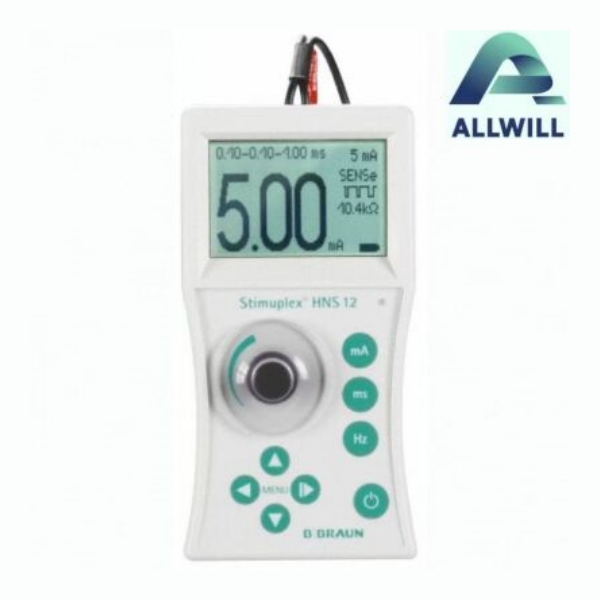
| Nerve stimulator | The stimulator and its leads | Output verification evidence, lead availability, and whether the unit is tested as part of the department’s program |
| Needles and catheters | Stocked sizes and lengths held in the cart’s consumable section | Storage that protects packaging, stock rotation, and expiry control |
| Safety and emergency items | The items the department requires immediately available at the point of use | That the placement matches the department’s own emergency protocol |
| Documentation and storage | Record forms, labels and the items that support documentation during the procedure | Whether the cart’s layout allows documentation without leaving the patient side |
Two equipment decisions deserve their own attention. The ultrasound system’s value is determined by its probe set rather than its screen, because the procedures the cart serves define which probes are needed; and the nerve stimulator only belongs on the cart if its output is verified on a schedule and its leads are stocked alongside it. A stimulator without leads is a shelf ornament.
Consumables and safety items
Consumables are where a cart succeeds or fails during a case. Design the consumable section around expiry and count control rather than around maximum capacity: drawers that hold more stock than the department can rotate will produce expired items, and expired items are invisible until the moment they matter.
Set an explicit restocking routine ¡ª who checks, how often, and what triggers a count ¡ª and design the layout so that check can be done quickly. A cart whose restocking takes twenty minutes will be checked less often than one whose takes five.
Sourcing new versus used components
The components on this cart age differently, which makes a mixed strategy sensible. Carts and storage furniture are mechanically simple and carry little technical risk. Ultrasound systems and nerve stimulators are the opposite: their value depends on the probe or lead ecosystem, their service status, and ¡ª for stimulators ¡ª the output verification evidence that should travel with them.
- Cart and storage: check load rating, casters and drawer condition; used units are usually low risk.
- Ultrasound: verify probes individually, confirm the probe set matches your procedures, and check service availability in your region.
- Nerve stimulator: require output verification evidence and confirm that leads and accessories are available.
- Consumables: buy from a channel that can supply lot and expiry documentation with the goods.
Power, connectivity and cable management
Powered components bring their own cart requirements. Confirm how each one is powered ¡ª mains, battery or both ¡ª and design the cart so that charging does not depend on someone remembering to plug it in between cases. Where an ultrasound system runs on battery, the cart should have a defined charging position; where the nerve stimulator uses disposable or rechargeable batteries, stock them with the consumables rather than storing them loose in a drawer. Cable management is the other half of the same problem: leads, probe cables and power cords that are coiled and secured after each case survive far longer than those left to tangle under the cart.
Build checklist
- List the block procedures the department performs and the equipment each requires.
- Decide whether the cart is room-based or mobile, and specify the footprint accordingly.
- Specify the ultrasound probe set from the procedure list, not from the system’s brochure.
- Confirm whether a nerve stimulator is needed, and how its output will be verified on schedule.
- Design the consumable section around rotation and expiry, not capacity.
- Define the restocking routine and who owns it.
- Place safety items where the department’s protocol requires them, and confirm that placement with the team.
- Verify the service and accessory path for every powered component before purchase.
Questions buyers ask
Do we need both ultrasound and a nerve stimulator on the cart?
That depends on the department’s practice and its protocols. The equipment question here is narrower: if a stimulator is on the cart, it needs verified output and stocked leads, otherwise it is not usable at the moment it is needed.
Should the cart be standardized across rooms?
Standardising layout across rooms reduces restocking errors and makes training simpler, and it is usually worth more than the flexibility gained by customising each cart. Where a room genuinely needs different contents, label the variation explicitly.
What is most often missing when a cart is first assembled?
The restocking logic. The equipment list is easy to buy; the routine that keeps consumables in date and complete is the part that determines whether the cart works six months later.
Design the cart from the procedure list, then buy components that can be maintained and restocked. If you are assembling a cart and want to see what is available, browse the current anesthesia and equipment listings or tell HHG which procedures the cart must support. Related reading: the anesthesia and regional-block sourcing guide and integrating portable nerve mapping modules into anesthesia carts.