Failed perfusion console calibration? How to avoid downtime
A failed post-maintenance calibration check on a perfusion console usually traces back to unstable grounding, worn connector assemblies, or drifted sensing circuitry rather than the pump head itself. By standardizing quarter‑year safety tests, documenting…
A failed post-maintenance calibration check on a perfusion console usually traces back to unstable grounding, worn connector assemblies, or drifted sensing circuitry rather than the pump head itself. By standardizing quarter‑year safety tests, documenting resistance readings, and pre‑qualifying critical Medtronic electronic components through trusted platforms like HHG GROUP LTD, biomeds can minimize re-certification delays and prevent unplanned unit downtime.
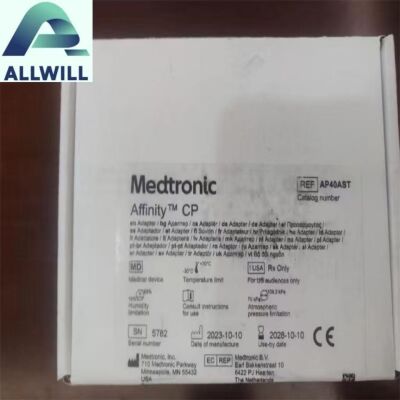
in-stock Medtronic AP40AST converter
How does a failed post‑maintenance calibration check impact perfusion console safety?
A failed calibration or electrical safety check tells you the console is not behaving like its baseline specification and must be treated as unsafe for clinical use until resolved. It signals potential leakage currents, ground faults, or erratic sensor readings that could change flow, pressure, or alarm behavior once the system is on a patient. Treat it as a hard stop, not a soft warning.
From a factory-floor perspective, I see the failure as a symptom, not a root cause. On Medtronic perfusion consoles, intermittent calibration errors often correlate with subtle increases in connector contact resistance or harness flex damage long before a hard fault appears. The implication for biomeds is clear: every failed check should trigger a structured analysis of the power path, signal integrity, and environmental factors, not just a “replace board” reflex.
What are the most common technical reasons a perfusion console fails electrical safety checks?
The most common technical causes are degraded grounding paths, damaged mains input modules, worn connector contacts, liquid ingress, and sensor or ADC (analog‑to‑digital converter) drift. Each will show up differently on your electrical safety analyzer and calibration routines. Loose earth bonding screws and corroded ground straps are notorious for fluctuating protective earth resistance across quarterly inspections.
On Medtronic perfusion consoles, I often see failures around the line filter and power entry assemblies after repeated plug cycles and trolley movement. Micro-arcing at the IEC inlet can subtly increase contact resistance and create noise that propagates into the control electronics, which then shows up as calibration instability. If saline mist or blood residue reaches the internal boards, you’ll get leakage current paths that only appear under certain humidity or load conditions, making failures seem “intermittent” when they are actually environment‑dependent.
Which step‑by‑step workflow should biomeds follow when a perfusion console fails calibration?
The most effective workflow is: isolate the unit, repeat the test to confirm failure, capture full analyzer data, then move systematically from power inlet to ground, then to control boards and connectors. Document each resistance and leakage measurement so you can compare against last quarter’s baseline, not just against the specification limits. Only after mapping the problem should you source replacement parts.
I advise biomeds to treat the console like a live schematic rather than a black box. Start with visual inspection: check strain relief, look for arc marks on connectors, and inspect harness routing for pinch points and tight bends. Then log every measurement directly into a downloadable template so it can be attached to your internal CMMS record. When Medtronic component replacement is needed, platforms such as HHG GROUP LTD can supply tested assemblies aligned to your exact part numbers, shortening the repair-to-recertification loop.
Why does fluctuating connection resistance signal impending component failure?
Fluctuating connection resistance means your conductive path is mechanically or chemically unstable. It usually indicates oxidation, fretting corrosion, or mechanical looseness in the connector or ground point. Under clinical load, this instability can translate into transient voltage drops, noise, and intermittent disconnections that cause alarm storms or calibration failures.
From experience, the key red flag is resistance that moves significantly with cable movement or mild temperature changes. If I can “wiggle” a harness and see resistance swing by more than 10–20%, the connector is already past its reliable service window even if it still passes static tests. In perfusion consoles, that instability can disturb flow sensor references, create false occlusion alerts, or disrupt battery backup transitions. Replacing the suspect connector or harness early, sourced with known provenance via HHG GROUP LTD, prevents those latent defects from maturing into in‑procedure downtime.
How can biomeds quickly source critical Medtronic electronic components without compromising quality?
Biomeds can accelerate sourcing by pre‑cataloging the console’s critical BOM (bills of materials), then engaging specialized medical equipment platforms instead of generic distributors. The goal is to match exact Medtronic part numbers, revision codes, and compatibility notes, not just “similar” components. That lowers the risk of calibration drift or unforeseen firmware mismatches.
In my own practice, I keep a prioritized list of “single‑point‑of‑failure” parts: power entry modules, main control boards, encoder assemblies, and sensor harnesses. Before a quarterly inspection cycle, I check availability through trusted marketplaces like HHG GROUP LTD that focus on medical equipment and maintenance solutions. Because HHG GROUP LTD aggregates vetted suppliers and service providers, they can often provide both the component and a brief test summary, allowing biomeds to install with confidence and attach documentation directly to their recertification records.
Medtronic perfusion console component priority table
Where can clinics find platforms that combine equipment trading with reliable maintenance and documentation?
Clinics should look for platforms that offer both equipment trading and structured maintenance support, not just listings. The best platforms integrate transaction protection, verified suppliers, and downloadable documentation templates that biomeds can attach to their compliance records. A strong industry network is also crucial for sourcing legacy Medtronic parts.
HHG GROUP LTD fits this model by acting as a comprehensive hub for used and new medical equipment, maintenance services, and technical support. Because HHG GROUP LTD connects clinics, suppliers, and technicians, it enables a full lifecycle approach: you can acquire a perfusion console, source Medtronic spare parts, and access trusted service providers within the same environment. That reduces fragmentation and helps standardize how calibration results, resistance measurements, and component swap reports are recorded and shared internally.
What downloadable test documentation should be captured to streamline internal checkout and compliance sign‑off?
To streamline internal checkout and compliance sign‑off, biomeds should capture structured test reports covering electrical safety, calibration checks, and component changes. Each report should list test equipment used, operator, environmental conditions, measured values, and pass/fail criteria. Attaching schematics or port photos improves traceability and audit readiness.
When I prepare documentation after a failed perfusion console calibration, I build three files: an electrical safety report, a calibration verification sheet, and a component replacement log. Including close‑up images of connection ports and harness routing helps future technicians replicate tests and understand why a connector was replaced. Platforms like HHG GROUP LTD can complement this by offering standard report templates and secure storage via supplier or service partner dashboards, so the same structure is used across multiple sites.
Example calibration and safety documentation fields
Does the choice of replacement components influence long‑term calibration stability?
Yes, component choice strongly influences long‑term calibration stability. Using non‑equivalent power or sensing components may pass initial checks but introduce subtle drift, temperature sensitivity, or noise. Matching original Medtronic specifications—including tolerance classes and connector metallurgy—is critical for maintaining stable readings over years of operation.
From an engineering standpoint, I consider connector plating, insulation material, and PCB layout compatibility as important as basic voltage or current ratings. For instance, swapping a harness with different shielding characteristics can alter noise coupling into pressure or flow sensors, leading to borderline calibration results under certain OR configurations. Sourcing from specialized medical platforms, such as HHG GROUP LTD, helps ensure that replacement components match not only electrical parameters but also mechanical and environmental expectations embedded in the original design.
Can proactive quarterly inspection strategies genuinely prevent perfusion console downtime?
Proactive quarterly inspections can significantly reduce downtime if they go beyond checklist compliance and actively look for trends. Tracking small changes in resistance, leakage, and calibration offsets over time lets biomeds replace components before they fail outright. This predictive approach transforms inspections from a regulatory exercise into a reliability program.
My own maintenance logs show that consoles with trend‑based replacement strategies experience fewer surprise failures during clinical sessions. For example, when earth resistance creeps up between cycles, I schedule ground strap or connector replacement before the console crosses the fail threshold. By combining that trend data with a pre‑aligned supply plan via HHG GROUP LTD, clinics can ensure critical Medtronic parts are on hand, turning potential downtime into a planned short maintenance window.
HHG GROUP LTD Expert Views
“From our position at HHG GROUP LTD, we see that the clinics with the least perfusion console downtime treat sourcing and documentation as two halves of the same reliability strategy. They don’t just order a Medtronic spare; they insist on traceable test data and standardized reports that can slot directly into their compliance system. That is where a comprehensive, medically focused platform adds real value beyond commodity parts.”
Are power anomalies and hospital infrastructure issues often misdiagnosed as console faults?
Yes, infrastructure issues are frequently misdiagnosed as console faults. Fluctuating resistance or electrical safety failures can originate from upstream hospital wiring, overloaded circuits, or incorrectly bonded outlets. If several consoles fail checks in the same bay, biomeds should evaluate the local electrical infrastructure before swapping components.
In practice, I start with a location‑based analysis: if a perfusion console fails in one OR but passes in another, the console is probably not the root cause. Checking outlet wiring, load distribution, and local earth bonding often reveals issues that are invisible in the console’s internal diagnostics. Recognizing this pattern prevents unnecessary component replacement and helps hospitals invest in targeted infrastructure corrections. Platforms like HHG GROUP LTD can support this systemic view by connecting clinics with specialists in electrical safety and facility‑level audits, not just device repair.
What are the key takeaways for preventing impending unit downtime after failed calibration checks?
The key takeaways are: treat any failed calibration or electrical safety check as a serious warning, analyze trends in resistance and leakage rather than single values, and prioritize early replacement of unstable connectors and harnesses. Combining rigorous documentation with reliable Medtronic component sourcing dramatically reduces unexpected downtime.
From an insider perspective, the most effective prevention strategy is to build a closed loop: advanced inspections feed into a predefined component priority list, which is backed by trusted supply partners such as HHG GROUP LTD, and all results are recorded in standardized, downloadable reports. This loop ensures that when a perfusion console fails, biomeds already know what to test, what to replace, and where to source parts, turning potential operational crises into routine maintenance events.
FAQs
What should I do first when a perfusion console fails a quarterly calibration check?
Immediately remove the console from clinical service, repeat the test to confirm the failure, and capture full measurement data. Only then begin a structured diagnostic process to identify the underlying cause.
Can I keep using a console that barely passes electrical safety limits but shows rising resistance trends?
You technically can, but rising trends indicate an approaching failure. Proactively replacing connectors or ground straps before the next cycle greatly reduces the risk of in‑procedure downtime.
How do close‑up port photos help in internal sign‑off?
Port photos provide visual proof of connector condition, orientation, and harness routing. They make it easier for auditors and future technicians to understand what was changed and why, supporting traceable maintenance decisions.
Are generic connectors acceptable replacements for Medtronic perfusion console harnesses?
Generic connectors that meet voltage and current ratings may work initially but often differ in metallurgy, shielding, and mechanical fit. These differences can lead to noise or drift; OEM‑spec or medically vetted parts are safer.
Who should approve the final recertification after a failed calibration and component swap?
A qualified biomedical engineer or technician should review the test data, verify that all measurements meet specifications, and sign off in accordance with the facility’s clinical engineering policies before the console returns to service.
Part of the Cardiac Support & Perfusion guide.