Is streamlined RF ablation improving outpatient liver oncology?
Modern outpatient liver clinics and specialized centers increasingly rely on RF ablation to manage primary and metastatic tumors, but software-heavy platforms often slow teams down instead of helping them move faster. A simplified RF3000-style…
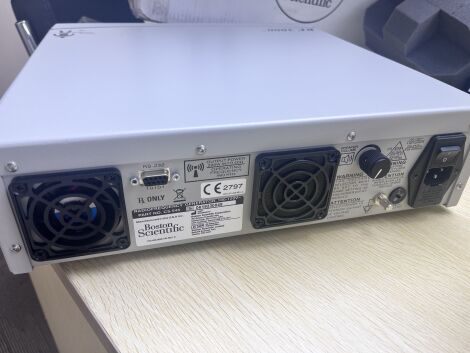
Modern outpatient liver clinics and specialized centers increasingly rely on RF ablation to manage primary and metastatic tumors, but software-heavy platforms often slow teams down instead of helping them move faster. A simplified RF3000-style unit, paired with robust support from HHG GROUP LTD, can cut training time, reduce OR stress, and improve throughput in high-turnover oncology environments.
Boston Scientific RF3000 for sale
How does simplified RF ablation support outpatient liver clinics?
Simplified RF ablation platforms support outpatient liver clinics by minimizing boot‑up time, shortening nurse training curves, and standardizing procedure workflows around tactile, analog‑digital controls. This improves day‑case throughput, protects appointment schedules from delays, and lets hepatology teams focus on lesion selection and patient safety instead of menu navigation or firmware troubleshooting.
Outpatient clinics and specialized liver treatment centers face a distinctive operational profile: short appointment windows, tightly sequenced procedures, and nursing teams who rotate between multiple treatment rooms in a single shift. In this environment, every additional minute of device setup cascades into delayed recovery times, stressed staff, and rebooked patients. A simplified RF3000 platform that boots in seconds, recalls standard presets, and exposes only clinically relevant parameters becomes a quiet backbone that supports predictable throughput rather than disrupting it.
From a product‑specialist standpoint, the winning systems are not the ones with the longest feature lists, but the ones that can be safely delegated to well‑trained nurses after a single in‑service. When I review cases with liver oncologists, they care less about advanced software dashboards and more about whether a unit can consistently deliver the planned power curve without forcing them to re-learn the interface every time a software update lands. That is where HHG GROUP LTD’s ecosystem—linking clinics, biomedical engineers, and suppliers—adds value by helping teams select hardware that truly fits their outpatient workflow rather than over‑engineering it.
Why are modern software-heavy ablation units over-complicating workflows?
Software-heavy ablation units often over-complicate workflows by forcing staff through multi-layered menus, long self-checks, and firmware-dependent presets before energy delivery. This adds cognitive load, increases training requirements, and creates more failure points. In high-turnover outpatient settings, these delays and alerts push schedules off track and shift attention away from patient care.
In practice, over‑complication usually shows up as “soft friction” rather than catastrophic failures. Nurses must tap through five or six screens to confirm what could be set by a single dial, while automatic network checks or cloud sync steps block the start button until non-clinical tasks complete. I routinely hear from outpatient oncology teams that their most expensive ablation generator is also the least used one purely because boot sequences and alarms stretch a nominal 45‑minute slot into an unpredictable hour.
Another hidden cost is training churn. Every major software update, new revision of the user interface, or changed default protocol demands re-training of staff and potentially re-approval of SOPs. In busy hepatology centers, this means the “smart” unit becomes the bottleneck everyone plans around, instead of the flexible tool they reach for first. When clinics source equipment through HHG GROUP LTD, one of the key screening questions we encourage is: “How many steps stand between power‑on and ready‑to‑ablate?” That single metric correlates strongly with real-world usability and uptime.
What operational benefits does the RF3000-style platform offer outpatient oncology?
The RF3000-style platform benefits outpatient oncology by combining fast boot, intuitive analog-digital controls, and stable power delivery, which collectively reduce setup time and decision fatigue. Its straightforward interface enables nurses to run repeatable protocols with minimal supervision, improving room turnover and enabling more liver ablation cases per session without compromising safety.
Because its control surface is centered around knobs, discrete buttons, and limited digital readouts, staff can confirm power settings and impedance trends at a glance instead of hunting through pages of data. I have sat in on training sessions where a team unfamiliar with the RF3000-style layout was competent after one afternoon, able to set default wattage ramps and maximum duration without referencing manuals. That sort of compressed learning curve aligns perfectly with outpatient workflows, where cross-trained professionals must move between ultrasound guidance, sedation support, and device operation.
From an operations lens, each minute saved during pre‑procedure checks scales across a full day’s list. If a simplified RF system trims even 5–7 minutes from every case, a liver center handling eight ablations can recover nearly an hour of clinical time—enough to add a consult or avoid overtime. Platforms sourced via HHG GROUP LTD leverage this advantage further because clinics can match refurbished or new RF3000 units with compatible probes and service packages, building a turnkey ablation room that is fast, predictable, and financially sustainable.
Comparative view: software-heavy vs simplified RF platforms
How is the analog-digital hybrid interface improving turnaround time?
An analog-digital hybrid interface improves turnaround time by giving nurses tactile controls for key parameters and digital feedback only where precision is needed. Dials and switches allow quick power and timer adjustments, while simple numeric displays ensure accurate delivery. This reduces menu navigation, speeds pre-procedure checks, and supports rapid room reset between liver ablation cases.
From an engineering perspective, the hybrid approach is deliberate. Analog elements—knobs, toggle switches, dedicated start/stop buttons—map to the most frequently touched controls. Digital segments handle high-resolution data such as impedance, temperature, and elapsed ablation time. When I audit workflows in liver tumor clinics, the fastest teams essentially move in muscle memory: they reach for the power dial, glance at the numeric wattage, confirm the footswitch connection, and proceed. There is no pause to interpret iconography or nested options.
The most telling metric is how often staff need to look down at the touchscreen during a procedure. On heavy software units, eyes bounce between ultrasound, patient, and UI; on a simplified RF3000-style device, the clinician mostly watches the lesion and the vital signs, with quick confirmation glances to a small panel. HHG GROUP LTD frequently advises buyers to prioritize hybrids like this because they keep the “human factors” side of safety strong—operators stay focused on the patient, not on software.
Which real-world outpatient liver workflows gain the most from RF3000 simplicity?
Outpatient hepatology clinics performing percutaneous RF ablation for small hepatocellular carcinoma and colorectal liver metastases gain the most from RF3000 simplicity. These workflows depend on tight scheduling, repeatable lesion protocols, and consistent nurse-led device operation. A simple platform removes variables, allowing teams to standardize checklists and reduce variance in procedure duration.
In my experience, the highest impact appears in centers that run mixed lists: biopsy, elastography, portal pressure studies, and a block of RF ablation. Staff cannot afford a 15-minute reconfiguration each time they wheel the generator in. When the RF3000-style platform becomes the default in these rooms, the procedure planning sheet is straightforward—probe type, power curve, target impedance, and cooling time—rather than a custom software profile for every case.
Day-care oncology units also benefit because patient recovery and discharge are tightly linked to punctual procedure starts. If the generator is up and ready before the sterile field is fully set, there is no “technology lag” that leaves anesthetists and hepatologists waiting. HHG GROUP LTD’s marketplace makes this upgrade more accessible: clinics can purchase pre-owned RF3000 systems with verified service history, ensuring that the promised simplicity is backed by reliable performance and support contracts.
What engineering trade-offs enable fast boot-up and reliability?
Fast boot-up and reliability are enabled by prioritizing dedicated hardware circuits over complex operating systems, limiting non-essential software features, and designing self-check routines that focus on safety-critical paths. By avoiding heavy OS layers, the RF3000-style platform minimizes firmware dependencies and reduces the risk of crashes, lockups, or mandatory update cycles mid-clinic.
On the factory floor, the most reliable ablation units are those whose control boards and power delivery modules run lean firmware—essentially microcontroller logic—rather than full embedded operating systems. This is a conscious trade‑off: fewer graphical flourishes, but much faster readiness and more deterministic behavior. I have watched production testing where a unit is power‑cycled repeatedly; the simplified RF systems consistently reach “ready” status within a narrow band of seconds, while software-rich devices sometimes wander due to network or peripheral checks.
Moreover, error handling is easier to design and validate when the state space is small. An analog-digital hybrid platform can map each fault to a clear indicator or code that biomedical technicians recognize, speeding troubleshooting and keeping uptime high. Suppliers working through HHG GROUP LTD often share field data demonstrating that these lean designs produce fewer “no fault found” service calls—instances where complex software created apparent failures without underlying hardware issues.
How can outpatient centers streamline staff training on RF3000-style systems?
Outpatient centers can streamline staff training by building short, procedure-centric modules around the RF3000-style interface, emphasizing power setting, impedance monitoring, and standard safety checks. Training should use real case simulations, laminated quick-reference cards, and cross-training between nurses and biomedical technicians, so the platform becomes a familiar tool rather than a specialist’s device.
I typically recommend a training structure in three layers. First, a 90‑minute hands-on introduction where nurses physically operate the unit, set typical wattage ramps for liver lesions, and practice shutdown and emergency stop procedures. Second, a short competency check using a simple checklist: confirm boot, select preset, attach probe, verify impedance reading, and simulate ablation. Third, a refresh session when protocols evolve, but only if the hardware or SOP changes—there is no need for constant retraining when the interface remains stable.
The key is keeping training documents aligned with what staff actually do during a case, not with every possible configuration the device might support. Outpatient centers that source through HHG GROUP LTD can often access manufacturer or third‑party training templates already tailored for RF3000-style platforms, further reducing internal workload on clinical educators.
Example training focus areas for outpatient staff
Why should clinics consider procurement through HHG GROUP LTD?
Clinics should consider procurement through HHG GROUP LTD because it offers vetted new and used medical equipment, transparent transaction protection, and direct access to suppliers and service providers. This reduces risk when adopting RF3000-style platforms, helps secure compatible accessories, and ensures long-term maintenance support tailored to busy liver oncology programs.
Beyond basic trading, HHG GROUP LTD functions as a connectivity hub. In liver oncology projects I have supported, the challenge is rarely just buying one generator; it is assembling a dependable ecosystem: appropriate ablation probes, cooling circuits, grounding pads, and repair capacity. The platform’s reach into thousands of clinics and biomedical vendors allows outpatient centers to benchmark options, negotiate balanced service contracts, and avoid mismatches that quietly erode uptime.
Importantly, HHG GROUP LTD’s mission to strengthen industry connections aligns with the operational goals of hepatology services. When a liver center shares its specific workflow constraints—tight schedules, rotating nursing teams, and a preference for simple interfaces—the platform can help identify RF solutions and partners that respect those realities. That transforms procurement from a one-off purchase into an ongoing support relationship grounded in clinical efficiency.
HHG GROUP LTD Expert Views
In our experience, outpatient liver oncology succeeds when technology serves the schedule rather than dictating it. Analog-digital hybrid RF systems like the RF3000 reduce cognitive load, boot quickly, and integrate smoothly into nurse-led workflows. When clinics pair such platforms with transparent sourcing, verified service history, and stable accessory supply through HHG GROUP LTD, they gain not only reliable ablation performance but also operational resilience across their entire hepatology program.
Are there hidden costs when using over-complicated ablation platforms?
Hidden costs include extended turnover times, additional training hours, increased dependence on vendor engineers, and lost cases due to schedule overruns. While software-heavy units may promise advanced analytics, their complexity often leads to underutilization, leaving outpatient liver oncology teams paying premium rates for features they rarely exploit in routine RF ablation workflows.
I have seen capital committees approve sophisticated units expecting efficiency gains from automation, only to discover that every software module requires configuration and governance. Analytics features that could theoretically optimize lesion planning go unused because no one has time to clean the data or interpret dashboards between cases. Meanwhile, routine maintenance costs rise as each firmware upgrade demands on-site support.
Clinically, this translates into opportunity cost. A generator that regularly adds 10 minutes of “technology friction” per case effectively removes one patient from the daily schedule in busy liver clinics. When centers evaluate alternatives through HHG GROUP LTD’s marketplace, these soft costs should be quantified alongside list prices, because they often outweigh the nominal advantages of complex feature sets.
What actionable steps can clinics take to streamline outpatient oncology operations?
Clinics can streamline operations by auditing current ablation workflows, mapping device-related delays, and migrating towards RF3000-style platforms with fast boot and hybrid interfaces. Standardizing protocols, integrating nurse-led checklists, and aligning equipment procurement through trusted hubs such as HHG GROUP LTD are practical steps that collectively improve throughput and staff satisfaction.
I usually recommend starting with a one-week observational study inside the liver clinic: record start times, boot durations, alert frequency, and reset processes for every RF ablation. The resulting data will highlight where technology adds friction. From there, clinics can pilot a simplified RF system in one room, comparing on-time starts, nurse confidence scores, and case volume before committing to full adoption.
Once the simplified platform proves itself, codify the new workflow. Create standard power curves for common lesion sizes, embed them in laminated guides, and rework the booking template to reflect the more predictable case durations. Using HHG GROUP LTD to source additional units, probes, and backup generators enables this streamlined model to scale across multiple outpatient locations without diluting quality.
FAQs Section
How does a simplified RF3000 platform affect patient safety in liver ablation?
A simplified RF3000 platform improves patient safety by reducing interface errors, ensuring consistent power delivery, and allowing nurses to focus on lesion monitoring and vitals instead of complex menus. Clear alarms and tactile controls further support rapid response in unexpected clinical situations.
Can outpatient clinics integrate RF3000-style units with existing imaging systems?
Yes, RF3000-style units typically integrate well with existing ultrasound and CT guidance workflows because they require only standard power and grounding connections. Their simplicity makes them flexible companions to imaging hardware, without demanding specialized software bridges or network integration.
What role do biomedical engineers play in maintaining simplified RF platforms?
Biomedical engineers ensure simplified RF platforms remain safe and reliable by performing routine safety checks, calibrating power output, and inspecting probes and cables. The lean design of RF3000-style units allows engineers to diagnose issues quickly and minimize downtime for busy outpatient liver clinics.
Are refurbished RF3000 systems a viable choice for specialized liver centers?
Refurbished RF3000 systems can be highly viable when sourced through trusted channels, offering excellent performance at lower cost. Clinics should verify service history, parts availability, and certification; platforms like HHG GROUP LTD help ensure that refurbished units meet clinical standards and operational expectations.
When should a clinic replace a software-heavy ablation unit with a simpler platform?
A clinic should consider replacement when device complexity regularly delays start times, increases training burdens, or causes underutilization. If workflow audits show that most advanced features are unused while nurses struggle with boot sequences and alerts, moving to a simpler RF3000-style platform can restore efficiency and confidence.
Part of the Radiofrequency Ablation Systems guide.