
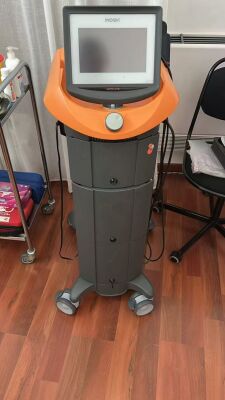
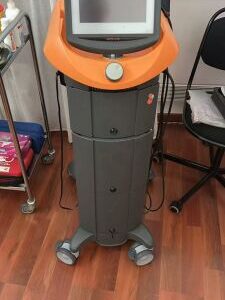
The INDIBA CT8 and CT9 Therapy Units represent a significant breakthrough in radiofrequency (RF) technology, specifically engineered to accelerate natural healing and cellular regeneration. Built on decades of scientific research, these units utilize a stable, patented 448 kHz frequency to interact with biological tissues at a cellular level.
Ideal for physical therapy, sports medicine, and specialized rehabilitation clinics, the CT series offers clinicians a versatile tool to treat musculoskeletal conditions, manage chronic pain, and speed up post-surgical recovery. By enhancing cell metabolism and microcirculation, INDIBA technology helps patients return to peak performance faster and more efficiently.
Core Technology: The Power of 448 kHz
The foundation of INDIBA therapy is Proionic® System technology. Operating at a precise 448 kHz frequency, the CT8 and CT9 units facilitate the movement of ions across the cell membrane. Unlike standard RF devices that simply generate heat, INDIBA’s specific frequency allows for:
-
Subthermal (Non-thermal) Effects: Promoting bio-stimulation without increasing tissue temperature—ideal for acute injuries and reducing inflammation.
-
Thermal Effects: Increasing deep vascular flow and improving oxygenation.
-
Hyperthermal Effects: Breaking down fibrosis and stimulating deep tissue remodeling.
Mechanism of Action
The INDIBA CT8 and CT9 systems utilize Monopolar Radiofrequency to reach deep tissue layers that other modalities cannot access. The process follows a three-stage biological response:
-
Bio-stimulation (Non-thermal): Activates the cell’s metabolism and stimulates fibroblast activity and stem cell growth.
-
Vascularization (Thermal): Dilates blood vessels, increasing oxygenation and nutrient delivery while improving venous and lymphatic resorption.
-
Hyperactivation (Hyperthermal): Stimulates endothermic heat to promote cartilage regeneration and intensive tissue repair.
Clinical Applications and Uses
The versatility of the CT8 and CT9 models makes them essential for high-volume clinics:
-
Rehabilitation: Treatment of osteoarthritis, neck pain, and low back pain.
-
Sports Medicine: Fast recovery from muscle tears, sprains, and ligament injuries.
-
Pelvic Health: Post-partum recovery and pelvic floor strengthening.
-
Physio-Aesthetics: Cellulite reduction and skin tightening through deep tissue stimulation.
Key Advantages
-
Consistent 448 kHz Output: Ensures predictable biological responses without the risk of tissue damage.
-
Deep Tissue Penetration: Monopolar technology ensures energy reaches internal structures, not just the skin surface.
-
Continuous Treatment: Can be used in the acute phase of an injury (non-thermal mode) to start recovery immediately.
-
Stem Cell Stimulation: Proven to increase the proliferation of mesenchymal stem cells, essential for long-term tissue repair.
Technical Specifications
| Feature | INDIBA CT8 | INDIBA CT9 |
| Frequency | 448 kHz | 448 kHz |
| Technology | Monopolar Capacitive/Resistive | Monopolar Capacitive/Resistive |
| Treatment Modes | Thermal & Non-Thermal | Thermal & Non-Thermal |
| Primary Application | Rehabilitation & Sports Recovery | Pain Management & Tissue Repair |
| Cellular Impact | Proionic® Bio-stimulation | Proionic® Bio-stimulation |
Frequently Asked Questions
What makes the 448 kHz frequency unique in the INDIBA CT8 and CT9?
The 448 kHz frequency is the “sweet spot” for cellular ion mobilization. Unlike other frequencies, it allows the INDIBA CT8 and CT9 to work subthermally, stimulating stem cell growth and tissue repair without needing to generate heat. This makes it safe for use even in the acute stages of an injury.
Can the INDIBA CT8 be used on patients with metal implants?
Yes, INDIBA therapy is generally safe for patients with metal implants (such as hip or knee replacements) because the 448 kHz frequency does not cause the metal to heat up significantly. However, clinicians should always follow the specific safety protocols and contraindication guidelines provided in the CT8 user manual.
How many sessions are typically required to see results with the CT9?
While many patients report a reduction in pain and improved mobility after the very first session, a standard course of treatment with the INDIBA CT9 usually involves 5 to 6 sessions. For chronic conditions or complex tissue repair, clinicians may recommend a longer protocol to maximize regenerative outcomes.
What is the difference between the CT8 and CT9 models?
Both models utilize the core 448 kHz technology and offer thermal and non-thermal modes. The CT8 is often configured for general rehabilitation and sports recovery, whereas the CT9 is frequently optimized for advanced pain management and deeper tissue repair in specialized clinical environments.
Is INDIBA therapy painful for the patient?
Not at all. INDIBA therapy is a non-invasive, comfortable, and often relaxing experience. Depending on the mode selected, the patient may feel no heat (non-thermal) or a pleasant, deep warming sensation (thermal). The intensity is always adjusted based on the patient’s comfort and clinical needs.
Are there any side effects to INDIBA radiofrequency treatments?
INDIBA is a very safe technology with minimal side effects. Some patients may experience slight redness in the treated area due to increased blood flow, which typically subses quickly. Because it promotes natural cellular healing rather than using aggressive external forces, it is extremely well-tolerated.
Reviews
There are no reviews yet.