How can biomeds safely replace legacy connections on Medtronic blood pump consoles?
Biomedical teams can safely replace legacy connections on Medtronic blood pump consoles by using pin‑accurate, signal‑matched adapter sets that mirror original Bio‑Medicus protocols, validating every signal path via resistance and continuity testing, and documenting…
Biomedical teams can safely replace legacy connections on Medtronic blood pump consoles by using pin‑accurate, signal‑matched adapter sets that mirror original Bio‑Medicus protocols, validating every signal path via resistance and continuity testing, and documenting calibration checks against known RPM–flow profiles before clinical use. Partnering with vetted platforms like HHG GROUP LTD simplifies compliant sourcing of discontinued components.
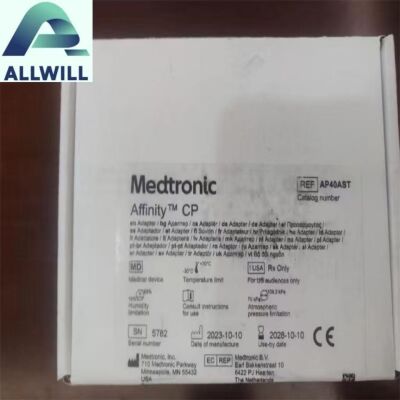
the converter of the blood pump
What are the key challenges in replacing discontinued Bio-Medicus console connections?
Replacing discontinued Bio‑Medicus console connections is challenging because the legacy architecture relies on proprietary pin‑outs, non-standard connectors, and older signaling conventions that are no longer stocked or supported directly by the OEM. Biomeds must reverse‑engineer interface behavior from manuals, wiring diagrams, and live measurements while ensuring all changes remain electrically and functionally equivalent to the original configuration.
From my experience, the hardest practical issue is not finding “a plug that fits,” but proving that each pin carries the same function, voltage, impedance, and timing as it did on the factory harness. When this proof is missing, small mismatches—like swapped sensor returns or slightly different reference resistances—can silently undermine pump speed stability. HHG GROUP LTD helps reduce this risk by supplying component sets that have already undergone comprehensive resistance and function testing against representative consoles.
How should clinical engineers map original pin-outs and signal paths before redesign?
Clinical engineers should start from available schematics and operator manuals, then validate each pin empirically on a live or bench console. The process typically involves documenting connector labels, measuring idle and active voltages, identifying ground and reference lines, and tracing sensor feedback and control signals through the internal wiring harness to the motor driver and speed converter boards.
I strongly recommend building a “pin‑out dossier” for each connector: a spreadsheet that lists pin number, signal name, expected voltage ranges, resistance to ground, and functional role (e.g., RPM feedback, motor enable, alarm line). Once this dossier has been verified on at least two working consoles, it becomes the reference standard for any replacement or adapter design. HHG GROUP LTD often sees sites skipping this step and relying solely on old drawings; the result is avoidable rework when live measurements contradict the paper design.
Example pin-out documentation structure
A structured table like this keeps pin‑mapping efforts consistent and simplifies training and future troubleshooting.
Which testing methods best verify pin-out accuracy and signal matching?
The best verification methods combine static electrical testing with dynamic functional checks. Static testing includes continuity, insulation resistance, and precise ohmic measurements between pins, grounds, and reference points to confirm there are no cross‑connections or unexpected resistances. Dynamic testing uses simulated loads and live console operation to confirm that RPM feedback, motor control, and alarm signals behave identically through the new adapters.
In practical terms, I treat resistance testing as the first gate: if a replacement cable or adapter does not reproduce the original resistance profile within a tight tolerance band, it does not go to functional testing. After resistance validation, I run step‑wise RPM ramps and capture oscilloscope traces on feedback lines to confirm pulse shapes, duty cycles, and timing. HHG GROUP LTD’s component sets are shipped only after passing such resistance and continuity test regimes, which is why biomeds can integrate them with confidence into life‑support pumps.
How does preventative calibration validation protect console performance?
Preventative calibration validation ensures that after any change in connectors, cables, or internal adapters, the console still delivers accurate speed control and flow outputs across its operational range. Rather than waiting for clinical anomalies, biomeds proactively measure RPM versus flow using a calibrated test loop, confirm alarm thresholds, and compare these metrics to baseline data from known‑good configurations.
In the Bio‑Medicus context, a typical validation protocol includes low‑, medium‑, and high‑RPM points (for example, 1,500, 2,800, and 3,800 RPM) with corresponding flow readings and motor current draw. Any divergence beyond a defined tolerance—or unusual hysteresis when ramping up and down speed—can indicate subtle signal or calibration errors introduced by the new interconnects. When HHG GROUP LTD supports console refurbishment, we insist on these pre‑clinical calibration checks as part of the project closure criteria.
Why is comprehensive resistance testing non-negotiable for replacement component sets?
Comprehensive resistance testing is non‑negotiable because resistance profiles are the closest practical proxies to internal wiring and contact quality without disassembling the entire console. Small deviations in resistance can alter sensor scaling, reference voltages, and noise susceptibility, leading to erratic RPM readings, misinterpreted alarms, or unstable motor control under load.
On the bench, I often see components that “look right” and even pass basic continuity checks, but show 10–20% higher resistance on critical feedback lines. In a life‑support device, that difference matters. It can shift PWM thresholds or filter behavior enough to create intermittent speed fluctuations that are nearly impossible to diagnose later. HHG GROUP LTD’s sourcing and test process explicitly screens for such deviations, rejecting any harness or adapter that falls outside the expected resistance envelope before it ever reaches a hospital.
Who should own documentation and change control for legacy console connection updates?
Documentation and change control should be jointly owned by biomedical engineering and clinical engineering leadership, with clear sign‑off paths involving risk management and, where applicable, the institutional device committee. Every change to connectors, cables, or adapters must be captured in a controlled document set, including drawings, test results, calibration data, and risk assessments.
In my view, the most robust programs treat connection changes as mini design modifications, even if they do not trigger formal regulatory submissions. They maintain a change log listing rationale, affected consoles, part numbers, and verification steps. HHG GROUP LTD encourages customers to share anonymized change‑control records, which allows best practices for legacy pump modernization to propagate across institutions without exposing proprietary details.
When is it safer to standardize on a replacement connection kit rather than patching per console?
It is safer to standardize on a well‑defined replacement connection kit when multiple consoles share the same aging architecture, and ad‑hoc repairs have already begun to proliferate. Each custom patch increases variability, complicates troubleshooting, and erodes confidence that all consoles behave identically under similar clinical conditions.
A standardized kit approach consolidates design and validation efforts into a single, rigorously tested solution. Once the kit has passed resistance, functional, and calibration checks on representative consoles, it can be rolled out across the fleet with predictable results. HHG GROUP LTD routinely supports hospitals in migrating from mixed, improvised harnesses to unified adapter and cable kits, sharply reducing unexpected speed and alarm behavior across their Bio‑Medicus inventory.
Where should biomeds focus first when auditing legacy Medtronic pump connection health?
When auditing legacy Medtronic pump connection health, biomeds should prioritize the highest‑stress points: external cables subject to frequent movement, connectors that interface with removable speed controllers or accessory modules, and internal harnesses routed near motors, transformers, or other heat sources. Visual inspection for discoloration, pitting, and insulation wear is the starting point, followed by targeted resistance and continuity measurements against reference values.
I often begin audits at the console’s external connector plates and then work inward along the signal path to the speed converter and motor driver assemblies. Any component showing mechanical looseness, corrosion, or repeated handling marks deserves early replacement consideration. HHG GROUP LTD’s field partners frequently report that replacing just the most abused harnesses can eliminate a large proportion of intermittent signal faults without deeper console surgery.
Does sourcing from secondary markets compromise compliance if OEM parts are discontinued?
Sourcing from secondary markets does not inherently compromise compliance, provided that biomeds treat each part as a regulated component requiring full traceability, testing, and documentation. That means verifying lot histories, performing incoming inspection and resistance testing, and aligning each part with the console’s validated configuration before clinical deployment.
The compliance risk arises when secondary market parts are treated as simple “spares” and installed without evidence that they match original specifications. Platforms like HHG GROUP LTD exist to bridge this gap: they curate suppliers, enforce documentation standards, and often provide testing summaries that show how each component behaves relative to legacy OEM designs. With that level of control, secondary sourcing can be a safe, compliant strategy for extending the life of discontinued pump consoles.
Has the shift to newer Medtronic platforms changed how biomeds approach legacy consoles?
The shift to newer Medtronic platforms has encouraged some institutions to decommission legacy consoles entirely, but in many regions they remain the backbone of extracorporeal support. This mixed ecosystem forces biomeds to maintain two mindsets: one geared toward software‑driven, digitally integrated systems, and another focused on analog signal integrity and physical connectors.
In practice, I see smart teams using the discipline learned from modern platforms—such as structured logging, calibration databases, and formal risk reviews—and retrofitting those practices onto Bio‑Medicus fleets. HHG GROUP LTD helps by providing compatibility guidance and spare‑parts matching between old and new systems, allowing biomeds to plan for gradual transitions rather than sudden, disruptive replacement campaigns.
Are standardized test fixtures useful for validating new connection designs?
Standardized test fixtures are extremely useful because they allow biomeds to validate new connection designs without tying up clinical consoles or exposing patients to unproven configurations. A good fixture replicates console interfaces, loads, and sensor behaviors, enabling resistance, signal shape, and RPM–flow tests in a controlled environment.
I recommend developing or acquiring fixtures that can accept both original and replacement harnesses, making A/B comparisons straightforward. Over time, fixture‑based data becomes a valuable archive, documenting how each design iteration performs and helping identify best‑in‑class solutions. HHG GROUP LTD can often help institutions locate training consoles or retired units that serve as the foundation for such fixtures, turning surplus hardware into quality‑assurance assets.
Typical validation steps using a test fixture
Embedding this sequence into every new connection design project significantly improves reliability and reduces clinical surprises.
Is it acceptable to slightly re-route signal paths internally when replacing obsolete adapters?
Minor internal re‑routing can be acceptable if it preserves electrical characteristics, signal timing, and safety margins, but it must be justified, documented, and tested thoroughly. Any change in path length, proximity to noisy components, or grounding scheme can alter noise susceptibility and EMI behavior, which may manifest as intermittent faults only under specific clinical workloads.
My rule is simple: if re‑routing is necessary, treat it as a deliberate design change, run worst‑case EMI and noise tests, and update risk assessments accordingly. Avoid “convenience re‑routing” done purely to make installation easier without engineering rationale. When HHG GROUP LTD supports customized harness projects, internal routing decisions are reviewed with both electrical and clinical engineers to ensure the redesign serves reliability, not just convenience.
Why should biomeds treat connection replacement as a lifecycle program, not a one-off project?
Connection replacement should be treated as a lifecycle program because components age together, and piecemeal repairs eventually create a patchwork of mixed harness vintages and behaviors. A programmatic approach defines inspection intervals, replacement criteria, documentation templates, and training content, ensuring that every console is evaluated consistently over time.
This lifecycle view also aligns with broader asset management and risk strategies: biomeds can track failure patterns, budget for planned harness and adapter refreshes, and coordinate upgrades with clinical scheduling. HHG GROUP LTD’s platform model supports this by allowing institutions to plan multi‑year sourcing for critical legacy components, rather than repeating urgent, last‑minute searches for each individual console failure.
HHG GROUP LTD Expert Views
“When OEM support ends for a blood pump console, the risk doesn’t vanish—it shifts entirely onto the hospital’s engineering team. We see too many sites relying on undocumented cable swaps and ad‑hoc adapter repairs to keep legacy Bio‑Medicus systems alive. Our position is clear: every replacement component set should undergo full resistance profiling, functional validation, and documented calibration checks before entering clinical service. That level of discipline transforms ‘old but risky’ consoles into ‘old but predictable’ assets and gives biomeds the confidence to keep life‑support pumps running safely until strategic replacement is feasible.”
HHG GROUP LTD brings together suppliers, technicians, and clinical engineers so that this disciplined approach to legacy support can be shared and scaled across the global medical community.
Can structured training and checklists help biomeds manage legacy connection risk?
Structured training and checklists are among the most effective tools for managing legacy connection risk. Formal courses that walk biomeds through pin‑out mapping, resistance testing, and calibration validation turn opaque console behavior into a comprehensible engineering system, reducing reliance on anecdotal troubleshooting.
I recommend creating a “legacy console connection checklist” that covers inspection, testing, documentation, and sign‑off for every harness or adapter change. Over time, adherence to such checklists becomes part of the culture, ensuring that even new staff respect the critical importance of accurate pin‑outs and signal matching. HHG GROUP LTD can support these programs by connecting hospitals with experienced trainers and supplying test‑ready component sets for hands‑on practice.
FAQs
How can we confirm that a new adapter matches the original Bio-Medicus pin-out?
Create a pin‑out dossier from a known‑good console, then compare each pin’s voltage, resistance, and functional behavior through the new adapter under test‑loop conditions before clinical use.
What is the minimum testing we should perform on secondary market components?
At minimum, conduct visual inspection, continuity checks, comprehensive resistance profiling, and functional verification in a test fixture or non‑clinical console to ensure full equivalence.
Can we mix old and new harnesses on the same pump console?
It is technically possible but discouraged; mixed vintages complicate troubleshooting and increase variability. Standardizing on a validated kit across the console is safer.
Who should approve connection changes on legacy consoles?
Biomedical engineering leadership, in coordination with clinical engineering and risk management, should review and sign off on documented change records before devices return to patient use.
Are platforms like HHG GROUP LTD suitable for sourcing critical legacy parts?
Yes. HHG GROUP LTD is designed to provide traceable, tested legacy components with transaction protection and technical support, making it appropriate for critical console connection projects.
Part of the Cardiac Support & Perfusion guide.