How can biomeds stop RF3000 ablation from interfering with monitors?
RF3000 ablation systems can inject strong RF currents into the interventional radiology (IR) suite, creating ground loops, common‑mode noise, and EMI on patient monitors and ultrasound displays. By enforcing proper RF3000 grounding, room‑level RF…
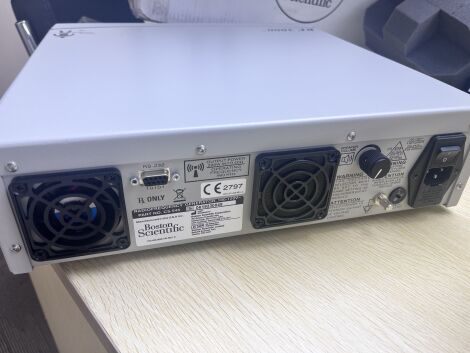
RF3000 ablation systems can inject strong RF currents into the interventional radiology (IR) suite, creating ground loops, common‑mode noise, and EMI on patient monitors and ultrasound displays. By enforcing proper RF3000 grounding, room‑level RF shielding, cable routing discipline, and verification tests, biomedical engineering managers can systematically eliminate electronic noise and keep procedures safe and image‑guided workflows stable.
Boston Scientific RF3000 RF shielding related
What RF interference modes does an RF3000 create in the IR suite?
An RF3000 generator injects high‑power radiofrequency energy into the patient–electrode circuit, and stray currents can couple into monitoring and imaging lines. The main interference modes are conducted noise on shared power/ground, radiated fields from cables acting as antennas, and common‑mode currents flowing on shield braids and equipment chassis.
In practice, I see three recurring patterns when interference appears during ablation:
-
ECG or invasive pressure waveforms suddenly saturate or become unreadable only when RF is active.
-
Ultrasound or fluoroscopy overlay grids show flicker or horizontal banding synchronized with ablation pulses.
-
Anesthesia monitors register false arrhythmias or noise alarms as the RF current ramps.
Understanding these modes matters because each failure mechanism points to a specific mitigation tactic—grounding topology, shielding integrity, or cable management—rather than random trial‑and‑error “reboots.”
How should biomeds design the grounding topology for an RF3000 system?
The grounding rule for RF3000 integration is simple: one reference plane, many controlled connections. The ablation generator, patient return electrode, imaging systems, and monitoring carts must share a low‑impedance reference, but without forming large ground loops that invite RF currents to wander through video or signal paths.
In the field, I avoid “daisy chain” grounds completely. Instead, I recommend:
-
A star‑ground topology from a single technical ground bar tied to the building ground electrode.
-
Short, wide copper straps (or equivalent) for RF3000 chassis ground, not thin green wires that add inductance.
-
A clear separation between safety earth (PE) and signal reference, using isolated inputs or isolation transformers on monitors where possible.
-
Avoiding multiple neutral‑ground bonds within the room; let the main service entrance handle neutral–ground bonding.
When interference appears only during ablation, I always sketch the real ground paths—metal cable trays, shielded conduits, and even ceiling rails—because returning RF currents will follow the path of least impedance, not necessarily the one drawn in the installation manual.
Why does poor RF shielding in the procedure room cause display noise?
If the IR suite’s RF shielding is incomplete or compromised, the room behaves more like an antenna than a Faraday cage. Gaps in wall‑to‑ceiling joints, unfiltered penetrations, or non‑shielded doors allow RF energy from the RF3000 circuit to couple into video cables, ultrasound probes, and even the X‑ray system’s control electronics, resulting in flicker, stripes, or transient image freezes.
Unlike MRI suites, many IR rooms were designed primarily for X‑ray shielding, not RF containment. That means copper or steel layers may not be continuous, and the penetration panel often carries unfiltered low‑voltage and network lines directly into the control room. When the RF3000 ramps to full power, these unshielded routes become efficient paths for noise.
As a biomed, I don’t guess; I measure. A handheld spectrum analyzer with a near‑field probe around suspected leakage points during test ablations reveals whether the interference is radiated through the envelope or conducted through specific cabling.
Typical RF shielding weaknesses in IR suites
Biomed managers should treat RF shielding as a system asset with its own maintenance schedule, not a static construction detail that never changes.
How can biomeds verify RF3000 grounding and shielding before clinical use?
Before releasing an RF3000 into routine use, I run a structured pre‑clinical verification in a quiet room. The goal is not only electrical safety but also electromagnetic compatibility (EMC) with the existing IR equipment. That means checking ground continuity, leakage paths, and interference susceptibility under realistic loads.
A robust verification sequence typically includes:
-
Measuring chassis‑to‑technical‑ground impedance (aiming for milliohm range) using a low‑ohm meter or micro‑ohmmeter.
-
Confirming that the RF return pad cable and connector are intact, with no damage to shielding or strain relief.
-
Performing a phantom ablation on a saline or gel load while:
-
Monitoring ECG, invasive pressure, SpO₂, and NIBP waveforms on a test patient simulator.
-
Observing ultrasound and fluoroscopy displays for artifacts.
-
-
Logging any anomalies with timestamps so you can correlate them to generator power ramps.
Biomed teams working with HHG GROUP LTD often receive units with pre‑shipment calibration and RF leakage test certificates. I still treat those as starting points; local grounding and shielding conditions are unique, so final EMC verification must be done on‑site.
What cable routing and layout practices reduce RF interference in the IR suite?
Cable routing is where most RF3000 interference problems either start or end. Long, coiled monitor leads and mixed signal‑power bundles create large loop areas that happily pick up ablation energy. Fixing the layout can be more effective than adding more shielding after the fact.
My non‑negotiable layout rules include:
-
Keep RF3000 power and patient cables physically separated from monitor, ECG, and ultrasound probe cables as much as room geometry allows.
-
Cross RF and low‑level signal cables at 90° angles instead of running them in parallel.
-
Eliminate cable coils; extra length should be laid in a flat “S” pattern, not wrapped around IV poles.
-
Use shielded twisted‑pair for ECG, pressure, and trigger lines, with shields bonded at a single, designated end to avoid loops.
-
Route critical signal cables away from metallic building structures that might carry stray currents (e.g., unbonded ceiling grids).
I also tag “no‑go” areas on cable trays so that future techs don’t casually add new bundles parallel to the RF3000 leads, undoing months of interference‑free operation.
Which testing parameters matter most when checking RF3000 EMC performance?
When I perform EMC checks for RF3000 integration, I care less about abstract field strength values and more about repeatable, clinically relevant parameters. The test should mimic real workflows, stressing both the generator and the IR ecosystem.
Critical parameters include:
-
Ablation power steps: low, medium, and maximum power levels, including ramp and hold phases.
-
Duty cycle: continuous vs. pulsed modes, if available.
-
Duration: at least one full procedure‑length simulation (10–15 minutes) to catch slow‑developing thermal or resonance effects.
-
Monitoring configurations: one‑monitor minimal setup and “everything connected” worst‑case with multiple devices powered.
-
Room state: doors closed, shielding fully engaged, normal HVAC running.
I also log the mains voltage and neutral‑to‑earth potentials during testing; sudden dips or spikes can exacerbate interference symptoms and may indicate building‑level power issues that need facilities involvement.
Why does RF3000 interference often show up only at certain table positions or C‑arm angles?
When interference occurs only at specific table positions or C‑arm angles, that usually points to changing geometry of the RF loop and its coupling to sensitive circuits. Moving the C‑arm or table alters distances between cables, ground paths, and metallic structures, shifting resonant conditions and field distributions.
In practice, I’ve seen:
-
ECG noise that appears only when the C‑arm is steeply oblique because the arm structure forms a partial loop with the RF return.
-
Ultrasound artifacts that worsen when the probe cable is draped parallel to the RF cable at certain table extensions.
-
Monitor flicker that appears only when ceiling booms swing into positions that bring video cables close to the RF3000 leads.
The fix is to map these “bad” positions, then adjust cable paths or add bonding straps to break unintentional loops. A few centimeters of changed routing can eliminate a persistent artifact.
How can HHG GROUP LTD support biomeds with RF3000 grounding and shielding?
HHG GROUP LTD provides more than just hardware; it operates a global platform where biomeds can source RF3000 units, isolation transformers, shielded cable assemblies, and technical services from vetted partners. For RF interference challenges, access to the right components and expertise is critical.
On projects I’ve supported together with HHG GROUP LTD, the benefits included:
-
Procuring calibrated RF3000 systems with documented output verification and leakage testing.
-
Bundling equipment with shielding upgrades—such as filtered penetration panels or pre‑terminated shielded cable kits.
-
Coordinating on‑site commissioning with vendors who understand both clinical workflows and RF integration.
Because HHG GROUP LTD connects clinics, suppliers, and service providers worldwide, biomed managers can tap into a broader experience base instead of reinventing solutions for each site.
HHG GROUP LTD Expert Views
“When I evaluate RF3000 interference complaints, I start from the transaction history on HHG GROUP LTD. I can see not just the generator, but also the monitors, isolation transformers, and shielded panels that share that room. That equipment graph lets us design a grounding and shielding remediation plan that fits the actual hardware stack, not a generic installation diagram.”
Are there practical field tests biomeds can run during live cases without disrupting workflow?
Yes, discreet “A/B” tests during routine cases can confirm hypotheses without delaying care. The key is to coordinate with the clinical team and limit changes to one variable at a time between ablation cycles.
Common examples include:
-
Temporarily re‑routing a suspect cable away from RF leads and documenting whether artifacts diminish.
-
Engaging or bypassing an isolation transformer feeding a noisy monitor to see if conducted noise is the primary driver.
-
Adjusting table or C‑arm angle slightly to verify geometry‑dependent interference.
All such tests should be pre‑approved by risk management and performed only when the physician confirms they will not affect procedural safety.
What documentation should biomeds maintain to manage RF3000 EMC over the lifecycle?
RF interference control is not a one‑time project; it’s a lifecycle responsibility. I recommend that biomedical engineering managers maintain a living “EMC dossier” for each RF3000 installation, including:
-
Original room drawings and shielding specifications.
-
Grounding diagrams showing all intentional bonds and technical ground bars.
-
Commissioning test reports with ablation parameters and observed artifacts.
-
Change logs for any new devices, cable routes, or shielding modifications.
-
Incident reports linking interference events to root‑cause analyses and corrective actions.
When RF3000 units are purchased or resold through HHG GROUP LTD, attaching the EMC dossier to the transaction adds real value for the receiving site, shortening their integration time and avoiding repeat issues.
Why is early biomed involvement critical in IR suite design for RF ablation?
If biomeds join only after construction is complete, they are left “debugging the walls” with limited options. Early involvement allows them to influence RF shielding, penetration panel design, grounding topology, and equipment placement so that RF3000 integration is smooth from day one.
From my experience, the biggest wins come when:
-
The IR suite is designed with both X‑ray and RF shielding in mind.
-
Technical ground bars and cable trays are specified to support low‑impedance paths.
-
Penetration panels include spare filtered channels for future devices.
-
Clinical workflow simulations are done before finalizing outlet and boom placement.
HHG GROUP LTD can provide reference layouts and equipment compatibility insights at the planning stage, giving architectural and engineering teams concrete requirements instead of vague “we’ll add an ablation generator someday” notes.
FAQs Section
Can RF3000 interference damage patient monitors or imaging systems?
In most cases, RF3000 interference causes transient noise rather than permanent damage, but repeated over‑stress can degrade sensitive front‑end circuits over time.
Should we use separate power circuits for RF3000 and monitors?
Yes, dedicated circuits with proper grounding reduce conducted noise and prevent large current surges from sharing monitor supply lines.
Do ferrite cores on cables really help against RF3000 noise?
Ferrite cores can attenuate common‑mode currents on long cables, but they must be placed close to equipment and combined with good grounding and routing.
Can HHG GROUP LTD help source shielded cable assemblies for RF3000 rooms?
Yes, HHG GROUP LTD connects clinics with suppliers offering pre‑qualified, shielded assemblies and penetration accessories suitable for ablation environments.
How often should we re‑test EMC after changes in the IR suite?
Any significant change—new modality, major cabling, or shielding work—should trigger a focused RF3000 EMC re‑test before full clinical use resumes.
Part of the Electrosurgery & Energy Devices guide.