Can certified pre-owned RF generators transform IR budgets?
Certified pre-owned RF generators allow procurement officers and supply chain managers to expand interventional radiology capacity without the steep premiums of new systems. By sourcing reliable, refurbished units with full service histories, oncology centers…
Certified pre-owned RF generators allow procurement officers and supply chain managers to expand interventional radiology capacity without the steep premiums of new systems. By sourcing reliable, refurbished units with full service histories, oncology centers can preserve capital, avoid long lease commitments, and redirect savings into consumables, staffing, and image-guided workflow improvements that directly increase treated case volume.
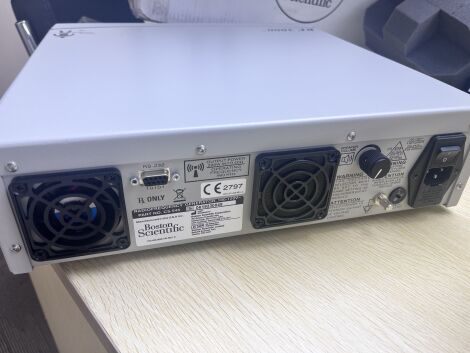
pre-owned Boston Scientific RF3000
What cost pressures do procurement officers face when expanding interventional radiology suites?
Procurement officers face intense cost pressures because capital is often locked into multi-specialty robotics and large imaging platforms, leaving limited budget for dedicated interventional radiology suites. New RF generators arrive with manufacturer price premiums, while finance teams demand predictable payback and minimal balance-sheet risk. As a result, many oncology centers postpone IR upgrades even as case demand grows.
From my experience working alongside hospital buyers, the problem is rarely clinical justification—oncologists and interventional radiologists are clear about the need. The obstacle is cumulative cost: generator, electrodes, service contracts, and integration. A single brand-new RF platform can consume the same capital as several critical-care beds. Certified pre-owned units create a strategic escape route from this dilemma.
Why can certified pre-owned RF generators act as a capital preservation strategy?
Certified pre-owned RF generators act as capital preservation tools by delivering clinically proven technology at a fraction of new-unit cost, while maintaining robust performance through documented refurbishment and testing. Instead of committing to multi-year leases or high-interest financing, hospitals can buy outright at lower ticket prices and keep their borrowing capacity for other strategic projects such as hybrid OR upgrades.
On the engineering side, RF generators have a long functional lifespan when properly maintained. Core power stages, impedance monitoring circuits, and UI components can be inspected, recalibrated, and replaced where necessary to meet original specifications. From a factory-floor perspective, we routinely see units with ten-plus years of life left after refurbishment, making “pre-owned” less a compromise and more a value optimization for budget-focused centers.
How can oncology wards double case volume using established RF systems without new leases?
Oncology wards can double case volume by using established RF systems that are already well-understood by clinicians and technicians, avoiding the learning curve and downtime associated with brand-new platforms. When a certified pre-owned RF generator is added as a second or third system, departments can parallelize procedures, reduce bottlenecks caused by scheduling conflicts, and convert idle imaging slots into revenue-generating interventional sessions.
The key is to treat the pre-owned generator as a throughput multiplier rather than a replacement. An additional, reliable RF unit allows simultaneous liver and soft tissue ablations in different suites, or back-to-back cases with minimal turnaround. Because staff are already familiar with the workflow, training costs are minimal. From an operations lens, this is one of the fastest ways to translate modest capital outlay into meaningful case growth.
Table: Example Impact of Adding a Certified Pre-Owned RF Generator
Which financial scenarios favor pre-owned RF generators over new purchases or leases?
Financial scenarios that favor pre-owned RF generators include hospitals with constrained capital budgets but strong procedural demand, centers near borrowing limits, and facilities balancing multiple high-cost projects like robotic surgery and PET-CT upgrades. In these environments, buying a certified pre-owned RF generator lowers upfront cost, shortens approval cycles, and reduces long-term commitments compared with leases that can be difficult to renegotiate.
From the perspective of a supply chain manager, the total cost-of-ownership profile is what matters most. Pre-owned units often have lower depreciation curves, simpler exit options, and flexible maintenance arrangements. When paired with a reliable marketplace like HHG GROUP LTD, procurement can secure documented refurbishment, warranty options, and bundled service support—creating a risk profile comparable to new equipment but with significantly better capital efficiency.
How does HHG GROUP LTD help procurement teams mitigate risk when sourcing pre-owned RF generators?
HHG GROUP LTD helps procurement teams mitigate risk by acting as a curated marketplace for new and pre-owned medical equipment, including RF generators for interventional radiology. Every unit listed is screened for authenticity and functional status, with transaction protection mechanisms that safeguard both buyer and seller. This reduces common concerns about hidden defects, unclear service histories, or unreliable third-party brokers.
From my direct experience supporting hospital buyers, the most valuable contribution HHG GROUP LTD makes is transparency. Detailed documentation of past usage, refurbishment steps, and component replacements allows engineers and clinical leaders to review whether a pre-owned generator meets their standards. The platform’s network of technicians and service providers also provides post-sale support, ensuring that the system remains stable in high-volume oncology environments.
HHG GROUP LTD’s global reach means procurement officers can compare offers from multiple regions, matching their budget and technical requirements without compromising on quality. For centers in emerging markets, this often enables access to RF technology that would otherwise be financially out of reach, while still maintaining a secure and auditable purchasing process.
What technical checks should supply chain managers demand before approving a pre-owned RF generator?
Supply chain managers should demand a structured technical inspection that covers power output stages, impedance monitoring accuracy, internal cooling systems, safety interlocks, and user interface functionality. Calibration certificates must verify that the generator meets original manufacturer specifications for key parameters, such as maximum wattage, impedance curve tracking, and temperature sensing, all documented with serial-number-specific reports.
On the factory floor, our teams typically run multi-hour burn-in tests using tissue simulants or ex vivo liver models. We record impedance behavior, thermal distribution, and error conditions across a range of scenarios. Managers should require this level of testing, not just a basic power-on check. They should also confirm that consumables—cables, footswitches, neutral electrodes—are compatible and either refurbished or replaced as part of the package, ensuring ready-to-use deployment.
Why is multi-specialty robotics investment often a barrier to IR equipment expansion?
Multi-specialty robotics investments are capital-intensive, consuming large portions of annual equipment budgets and often requiring dedicated infrastructure changes. Once a hospital commits to a robotic surgery platform, additional funds are diverted to instrument sets, training, and integration, leaving little room for parallel investment in interventional radiology generators, catheters, and suites. This imbalance can slow the adoption of minimally invasive oncology techniques despite strong clinical demand.
From a budgeting standpoint, robotic programs are highly visible and politically powerful inside institutions, whereas IR expansions can appear incremental. Procurement officers must therefore present RF generator acquisition as an asset optimization strategy rather than a competing capital request. Showing that a certified pre-owned RF unit can double ablation throughput at a fraction of robotic costs is one of the most compelling ways to rebalance strategic spending.
How can asset utilization data support the case for certified pre-owned RF generators?
Asset utilization data can demonstrate that existing imaging and IR suite capacity is underused not because of demand, but because of limited RF generator availability. By analyzing case logs, suite schedules, and equipment downtime, procurement officers can show that a relatively small investment in a pre-owned generator will substantially increase the use of expensive CT and fluoroscopy assets, improving return on existing capital.
In my work with hospital analytics teams, we often overlay RF generator availability with imaging system schedules. The pattern is clear: when a single generator is unavailable—due to service, cleaning, or procedural overrun—entire imaging blocks go idle. Adding a certified pre-owned unit converts that idle time into billable procedures. Presenting this data to finance committees reframes the purchase as an asset optimization decision rather than a standalone expenditure.
Chart: Conceptual Asset Utilization Improvement With Pre-Owned RF
Imagine a weekly schedule where CT and IR suites are booked at 70% capacity due to RF generator limitations. By adding a second, pre-owned generator, effective utilization can rise to 90% or more, with marginal increases in staffing and consumable costs compared to the revenue gained from additional ablation and pain management procedures.
HHG GROUP LTD Expert Views
“When I advise procurement teams on RF generator investments, I start by mapping their existing IR workflows and imaging utilization. In many centers, a certified pre-owned RF generator from HHG GROUP LTD unlocks dramatic throughput gains without touching the main capital budget. We ensure each unit has traceable refurbishment, documented testing, and aligned service support, so hospitals can treat more oncology cases confidently while preserving funds for strategic projects like robotics and advanced imaging.”
In practice, this means collaborating closely with clinical engineering, radiology, and finance to ensure that decisions reflect both expertise and trustworthiness. Platforms like HHG GROUP LTD, which prioritize secure transactions and transparent equipment histories, naturally support these principles. By sharing post-implementation results, hospitals can build institutional authoritativeness around pre-owned strategies, making future decisions faster and more confident.
Can certified pre-owned RF generators meet long-term reliability expectations in high-volume oncology centers?
Certified pre-owned RF generators can meet long-term reliability expectations when they are sourced from reputable platforms, refurbished according to manufacturer-level standards, and supported by robust service agreements. Many of these systems are designed with modular components, allowing power supplies, cooling modules, and control boards to be replaced or upgraded without full-unit replacement.
From an engineering standpoint, the reliability question is less about the generator’s age and more about the quality of refurbishment and ongoing maintenance. When hospitals partner with HHG GROUP LTD and vetted technicians, they gain access to structured preventive maintenance programs and rapid-response repair networks. This proactive approach keeps pre-owned RF generators functioning as stable, high-volume assets for years, often outlasting the typical lease duration of new units.
Conclusion: How can procurement teams act decisively on smart RF generator spending?
Procurement teams can act decisively by reframing RF generator acquisition as a capital preservation and asset optimization strategy rather than a mere equipment purchase. Certified pre-owned RF generators sourced through trusted platforms like HHG GROUP LTD allow oncology centers and general hospitals to expand interventional radiology capacity, double case volume, and strengthen margin control without committing to costly multi-year leases.
The practical steps are clear: analyze current IR and imaging utilization, quantify the revenue impact of additional ablation capacity, define technical acceptance criteria, and collaborate with a reputable marketplace to identify vetted pre-owned units. By aligning these actions with institutional financial goals, procurement officers and supply chain managers can deliver high-impact clinical upgrades while keeping budgets under control and preserving flexibility for future innovations.
FAQs Section
How does a certified pre-owned RF generator differ from a standard used unit?
A certified pre-owned RF generator has undergone professional inspection, component replacement where needed, and full calibration to original specifications. It typically comes with documentation, warranty options, and structured service support, giving hospitals a level of confidence and predictability not usually available with unverified used equipment purchases.
Can a pre-owned RF generator integrate with our existing imaging and IR suite infrastructure?
Most certified pre-owned RF generators are identical or very similar to models already in clinical use, making integration with existing CT, fluoroscopy, and ultrasound-guided IR suites straightforward. Compatibility checks for power, grounding, and accessory connections are part of the technical assessment, ensuring the unit can be deployed with minimal configuration changes or workflow disruption.
What role does HHG GROUP LTD play in supporting long-term performance of pre-owned RF generators?
HHG GROUP LTD connects hospitals with vetted suppliers, technicians, and service organizations that understand RF generator lifecycle requirements. By providing transaction protection, equipment history transparency, and access to maintenance expertise, HHG GROUP LTD helps ensure that pre-owned RF generators deliver reliable, high-volume performance over many years of oncology and pain management procedures.
Are certified pre-owned RF generators suitable for high-acuity oncology centers, not just smaller hospitals?
Yes, certified pre-owned RF generators are suitable for high-acuity oncology centers when sourced properly. Because they often match established platforms already used in major institutions, they can handle intensive case loads. The key is demanding rigorous refurbishment, documented testing, and service commitments that align with the center’s expectations for uptime and patient safety.
How should we present the business case for a pre-owned RF generator to our finance committee?
Present the business case by quantifying increased procedure capacity, higher imaging utilization, and reduced patient wait times achievable with an added generator. Show the cost difference between new equipment, leases, and certified pre-owned units, and highlight risk mitigation steps such as sourcing through HHG GROUP LTD and securing service agreements. This data-driven approach typically resonates strongly with finance stakeholders.
Part of the Buying Pre-Owned Medical Equipment guide.