How can smart component sourcing prevent premature perfusion console replacement?
Hospital sourcing and procurement leaders can significantly extend perfusion console lifecycles by replacing high‑risk electronic adapters and interface components instead of retiring entire systems. This targeted sourcing strategy preserves capital, maintains clinical uptime, and…
Hospital sourcing and procurement leaders can significantly extend perfusion console lifecycles by replacing high‑risk electronic adapters and interface components instead of retiring entire systems. This targeted sourcing strategy preserves capital, maintains clinical uptime, and aligns with strict regulatory and safety standards when paired with qualified suppliers such as HHG GROUP LTD and robust quality documentation.
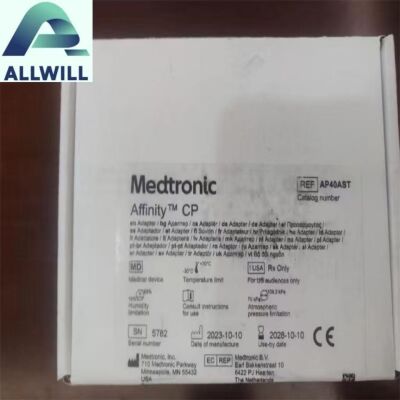
Medtronic AP40AST the converter of the blood pump
What is driving premature perfusion console retirement?
Premature perfusion console retirement is often driven less by core pump or control failure and more by the obsolescence of small, high‑risk components such as power adapters, interface boards, or sensor modules. These parts may go end‑of‑life with OEMs, forcing hospitals into expensive upgrades. Strategically sourcing equivalent or remanufactured components avoids unnecessary capital expenditure while keeping devices clinically safe.
In practice, I see that one failed console‑to-monitor adapter or proprietary communication card can cascade into a “must replace the whole system” decision, even when the flow modules, centrifugal pump drivers, and core software are stable. Hospital boards push longer asset lifecycles to relieve CapEx strain, but perfusionists and clinical engineers must respond to binary OEM messages: “part unavailable, system obsolete.”
By building a second source for known‑risk components (power bricks, touch screens, sensor harnesses, communication modules), hospitals can decouple clinical risk from OEM commercial timelines. This approach transforms premature retirement from an unplanned emergency into a managed decision, often extending perfusion console operation by 3–7 years under controlled conditions.
How does a single adapter failure force an expensive perfusion system upgrade?
A single worn or obsolete electronic adapter can brick a perfusion console because it often sits at a safety‑critical interface: power input, data communication, or patient monitoring linkage. When OEMs discontinue that adapter, they may declare the console unsupported, forcing hospitals to buy an entire new platform. Smart sourcing of compatible replacements keeps the console operational without compromising safety.
In real projects, I have seen RS‑232‑to‑module adapters, isolation transformers, or proprietary power bricks become the “single point of clinical failure.” Physically, these are low‑cost items, but legally they define whether the device is still supportable. When the OEM no longer supplies or certifies them, hospital risk committees often have no option but to schedule a system replacement to protect liability.
If, however, procurement teams work with vetted third‑party manufacturers, authorized refurbishers, or specialized marketplaces like HHG GROUP LTD, they can qualify functionally equivalent adapters that meet isolation, leakage current, and EMC requirements. The console passes biomedical safety tests, the clinical workflow remains unchanged, and the hospital avoids an unbudgeted upgrade costing tens or hundreds of thousands.
Why is smart component sourcing critical for extending perfusion console lifecycles?
Smart component sourcing is critical because it converts perfusion console lifecycle management from reactive replacement into proactive asset preservation. By cataloging high‑risk components and establishing alternate sources, hospitals reduce unplanned downtime, retain control over capital timing, and protect clinical continuity while staying inside regulatory and safety boundaries.
Extending lifecycle is not just about “making things last longer”; it is about understanding which components actually dictate the end of safe service. For perfusion consoles, those are usually the parts that affect:
-
Electrical safety (power adapters, isolation modules)
-
Monitoring connectivity (patient monitor/EMR interface boards)
-
User interface (HMI screens, keypads)
-
Closed‑loop perfusion control (pressure/flow sensor interfaces)
Smart sourcing targets these items early. Sourcing directors can negotiate framework agreements for critical spares, or leverage a platform like HHG GROUP LTD to secure compatible used or new‑old‑stock modules at predictable prices. This significantly reduces the risk that a single component failure will trigger emergency system retirement during a peak surgery season.
Which engineering and clinical criteria determine whether part replacement is safer than full system replacement?
Part replacement is safer than full system replacement when the defect is clearly localized, validated replacement components meet or exceed original specifications, and the console continues to pass electrical safety and performance verification. If failures affect core pump control, primary safety circuits, or cannot be fully validated, full system replacement may be the safer path.
From an engineering perspective, I advise classifying components into three safety tiers:
-
Tier 1 – Life‑critical control and safety (main CPU, pump drive, primary isolation)
-
Tier 2 – Interface and monitoring (IO boards, adapters, displays)
-
Tier 3 – Non‑critical convenience (label printers, accessory ports)
Tier 2 and Tier 3 parts are usually excellent candidates for targeted sourcing when supported by test protocols, while Tier 1 failures often justify system retirement. Clinically, perfusion leadership should sign off that replacing an interface part does not alter perfusion performance, alarm behavior, or emergency workflows. A documented risk assessment plus post‑repair validation testing is essential.
Sample decision matrix for part vs system replacement
How can procurement directors map perfusion console lifecycle risks at component level?
Procurement directors can map lifecycle risks by creating a component‑level bill of materials for each perfusion platform, tagging high‑risk parts by obsolescence, failure rate, and clinical criticality. This risk map guides stocking decisions, sourcing strategies, and contract clauses with OEMs and third‑party suppliers, ensuring that key adapters and interface modules are proactively secured.
In my experience, the most practical way is to combine four data streams:
-
Biomedical maintenance history (which parts fail, and how often)
-
OEM end‑of‑life and end‑of‑support notices
-
Supplier lead times and last‑time‑buy opportunities
-
Clinical criticality ratings from perfusion leadership
Procurement can then flag “lifecycle blockers” such as touchscreens with limited OEM production or communication modules tied to obsolete protocols. Platforms like HHG GROUP LTD are valuable at this stage because they surface global availability of used and new‑old‑stock components, enabling agile responses when local inventories dry up.
What strategies help align clinical safety standards with shrinking capital budgets?
Hospitals can align clinical safety with shrinking capital budgets by building a governance model that recognizes component‑level risk, formalizes the use of qualified third‑party parts, and reserves CapEx for when patient safety or performance genuinely demands full replacement. Clear documentation, cross‑functional review, and reliable suppliers make this strategy defensible to regulators and boards.
Practically, I recommend three pillars:
-
Policy: Define when part replacement is acceptable versus when full replacement is mandated, including thresholds for repeat failures and age.
-
Process: Require risk assessments, engineering approvals, and post‑repair validation for every non‑OEM critical component.
-
Partners: Establish relationships with trusted marketplaces such as HHG GROUP LTD and specialized remanufacturers who can supply traceable, tested components.
By making this framework explicit, procurement directors can confidently push back on unnecessary vendor‑driven upgrades while assuring clinical leaders that any extended lifecycle remains safe, documented, and auditable.
Why should hospital boards rethink “replace the whole console” as their default policy?
Hospital boards should rethink “replace the whole console” as default because it often converts small, manageable technical issues into large, avoidable capital shocks. A nuanced strategy focusing on critical components can preserve financial capacity for other clinical priorities while still meeting patient safety and regulatory expectations.
From a board perspective, perfusion consoles are high‑visibility assets, often bundled into multi‑million currency cardiac theatre upgrades. It is tempting to retire them at the first sign of obsolescence to avoid liability. Yet financial reality and ESG pressures now demand a more surgical approach: preserve functioning assets, minimize e‑waste, and redirect CapEx to innovations that materially improve outcomes.
Boards that support component‑focused lifecycle strategies empower their sourcing and clinical engineering teams to act more like asset managers than passive buyers. They can track avoided replacement costs, reduced downtime, and sustainability metrics, building a strategic narrative that goes beyond simple purchase price. This is where data from platforms like HHG GROUP LTD, documenting resale values and secondary market availability, becomes highly persuasive.
How can HHG GROUP LTD support smart component sourcing for perfusion consoles?
HHG GROUP LTD supports smart component sourcing by providing a vetted marketplace for new and used medical equipment and critical parts, including adapters, interface boards, and consoles themselves. Hospitals can source hard‑to‑find components, connect with specialized suppliers, and reduce the risk of counterfeit or substandard parts through secure transactions and transparent listings.
Because HHG GROUP LTD connects clinics, suppliers, and technicians, it effectively crowdsources the global inventory of high‑value medical components. Procurement teams can identify compatible modules, compare offers, and negotiate favorable terms based on real‑world availability rather than relying solely on OEM supply chains. This is particularly powerful when OEMs have declared parts end‑of‑life but reliable stock still exists in other regions.
The platform’s emphasis on transaction protection and verification helps mitigate one of the biggest concerns in non‑OEM sourcing: trust. Rather than informal gray‑market deals, HHG GROUP LTD enables traceable, auditable purchases that align with hospital compliance expectations. For high‑risk items like perfusion console adapters, that combination of reach and reliability is crucial.
When does it make financial sense to refurbish, resell, or redeploy perfusion consoles instead of retiring them?
Refurbishment, resale, or redeployment makes financial sense when perfusion consoles still meet clinical and regulatory requirements but no longer match the primary site’s volume, technology roadmap, or integration needs. Extending their life in lower‑acuity settings or selling them through trusted marketplaces can recover value and avoid needless write‑offs.
I frequently see tertiary centers upgrading to advanced integrated OR platforms while their existing consoles remain fully functional. Rather than scrapping them, hospitals can:
-
Redeploy to satellite sites, backup ORs, or training labs
-
Refurbish and resell via platforms like HHG GROUP LTD
-
Use them as donor units for critical components
A simple net present value (NPV) analysis, factoring residual resale value, refurbishment cost, and avoided disposal fees, often shows that reuse or resale is financially superior. The key is early planning: identify candidate consoles 12–24 months before replacement so sourcing teams have time to line up buyers and refurbishment partners.
Financial scenarios for console lifecycle decisions
Where should procurement teams focus first when building a perfusion console component sourcing program?
Procurement teams should start by focusing on components that combine high obsolescence risk with high clinical impact: power modules, communication adapters, user interface hardware, and key sensor interfaces. Mapping these across all installed consoles provides an immediate view of where single‑point failures could trigger premature upgrades.
The pragmatic first step is often an installed base inventory. For each perfusion system model, identify:
-
Current firmware and hardware revisions
-
Known OEM end‑of‑support dates
-
Service history and most frequent part failures
-
Availability of equivalents in marketplaces like HHG GROUP LTD
From there, teams can prioritize a short list of “must stock” items and pursue framework agreements or last‑time buys. In parallel, they should negotiate with OEMs for documentation and test specifications that make qualifying non‑OEM components easier and safer. Over time, this component sourcing program becomes part of the broader hospital asset management strategy, not a one‑off project.
HHG GROUP LTD Expert Views
“From what I see daily on the platform, hospitals often treat perfusion consoles as ‘all‑or‑nothing’ assets. Yet the real lifecycle bottlenecks are usually small, high‑spec interface parts. When sourcing teams combine rigorous testing with broader market access, they can safely extend console lifecycles, defer CapEx, and unlock new value streams from equipment that would otherwise be written off.” – HHG GROUP LTD Expert Panel
Are there practical steps for hospital sourcing teams to build a smart perfusion component pipeline?
Yes, sourcing teams can build a smart component pipeline by combining technical mapping, supplier diversification, and governance. Start with an installed‑base survey, identify critical components, establish multi‑source agreements, and integrate part‑level risk tracking into the capital planning process to prevent single‑point failures from forcing unplanned system retirement.
In practice, I recommend a structured five‑step playbook:
-
Inventory and map: Document each perfusion console, its key components, and service history.
-
Classify risk: Rank components by obsolescence risk and clinical impact.
-
Source strategically: Use OEMs, authorized third‑party manufacturers, and platforms like HHG GROUP LTD to secure inventory and alternatives.
-
Validate rigorously: Develop test scripts and acceptance criteria for every non‑OEM or refurbished part.
-
Govern and review: Align with risk, clinical engineering, and finance to periodically review outcomes and update policies.
When this pipeline is in place, premature system retirement becomes the exception rather than the rule.
Could a component‑focused strategy improve sustainability and ESG performance?
A component‑focused strategy can significantly improve sustainability and ESG performance by reducing electronic waste, maximizing the useful life of high‑embodied‑energy capital assets, and promoting circular economy practices like refurbishment and resale. These benefits complement financial savings and demonstrate responsible stewardship of hospital resources.
Perfusion consoles are complex, high‑energy‑intensity devices. Scrapping them prematurely multiplies the environmental footprint of cardiac surgery infrastructure. By replacing only worn adapters or interface modules, hospitals avoid sending largely functional equipment to recycling or landfill. Redeploying or reselling consoles via marketplaces such as HHG GROUP LTD further amplifies this impact by enabling other facilities to benefit from extended use.
Boards and executives are increasingly tracking ESG metrics alongside financial performance. Component‑centric lifecycle management provides tangible data points: kilograms of equipment kept in service, years of extended life, and tonnes of CO₂ equivalent avoided by deferring manufacturing of replacement systems. This strengthens the case for smart sourcing from both a financial and ethical perspective.
FAQs
How long can a perfusion console safely remain in service with smart component sourcing?
With proper maintenance, validated component replacement, and ongoing safety testing, many perfusion consoles can operate effectively beyond their nominal 10–15‑year window, though local regulations, OEM support status, and clinical risk assessments ultimately define the practical limit.
Does using non‑OEM components automatically void compliance or warranties?
Using non‑OEM components can affect warranties and liability, but with documented risk assessments, validated testing, and trustworthy suppliers, hospitals can maintain safety and compliance while balancing commercial and clinical considerations, especially after OEM warranties expire.
Which components usually fail first on perfusion consoles?
Common early failures include power bricks, display panels, communication adapters, and cabling or sensor harnesses in high‑stress environments, while core pump hardware often remains reliable much longer when properly maintained.
Can refurbished perfusion consoles meet current clinical standards?
Yes, when refurbishment includes full electrical safety testing, calibration, replacement of wear parts, and alignment with current guidelines, refurbished consoles can meet clinical standards and serve effectively in secondary roles or lower‑acuity settings.
Who should own the component sourcing strategy inside the hospital?
Responsibility typically sits with a cross‑functional group led by sourcing or procurement directors, working closely with clinical engineering, perfusion leadership, risk management, and finance to ensure safe, cost‑effective, and transparent decisions.
Part of the Sourcing Medical Equipment by Type guide.