
How can all‑in‑one energy platforms reduce OR clutter?
Modern all‑in‑one surgical energy platforms reduce operating room clutter by consolidating monopolar, bipolar, and vessel sealing (e.g., LigaSure‑type) technologies into a single generator, cable set, and interface. They replace multiple standalone units, simplify setup…
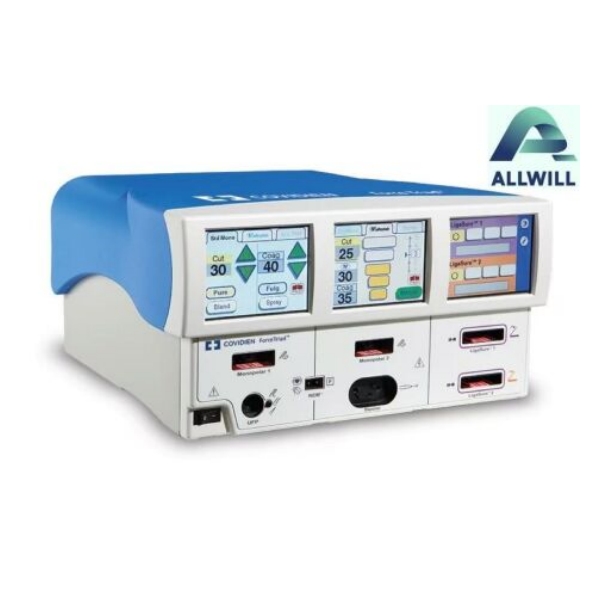
Modern all‑in‑one surgical energy platforms reduce operating room clutter by consolidating monopolar, bipolar, and vessel sealing (e.g., LigaSure‑type) technologies into a single generator, cable set, and interface. They replace multiple standalone units, simplify setup and troubleshooting, standardize presets, and shorten training curves. OR Directors gain smaller footprints, cleaner workflows, and clearer capital planning aligned with long‑term asset strategies.
Buy Covidien Valleylab ForceTriad Electrosurgical Unit
How are today’s surgical suites becoming cluttered with energy devices?
Today’s surgical suites often accumulate separate generators for electrosurgery, advanced bipolar sealing, and ultrasonic or LigaSure‑type technology, each with its own cart, cables, footswitch, and maintenance schedule. The result is crowded floor space, tangled leads, and duplicated inventory. Staff must learn multiple interfaces and error codes, which increases cognitive load and setup time, especially during complex multiprocedure lists.
A typical general surgery OR may host three energy towers plus auxiliary accessories for different specialists and vendor preferences. As service contracts and replacement cycles diverge, OR Directors lose standardization and struggle to forecast capital replacement needs. This clutter is not just visual; it translates directly into longer turnovers, more device checks, and higher risk of misconnections or delayed case starts when equipment is missing or misconfigured.
What common workflow problems do separate generators create for OR Directors?
Separate generators fragment responsibility and create unpredictable workflow bottlenecks. Each device has unique warm‑up behaviors, self‑tests, and alarm logic, so circulating staff must chase different startup rituals before each case. When a surgeon switches from monopolar dissection to bipolar sealing, scrub staff often swap cables or move footswitches, causing micro‑interruptions that accumulate across a full day’s schedule.
Inventory management also becomes reactive. Biomedical teams track different spare boards, handpieces, and software versions. A generator down for repair can force last‑minute case reallocation to rooms with compatible systems. From an OR Director’s vantage point, this scattered ecosystem means higher training overhead, more “where is that unit?” calls, and less freedom to flex rooms according to demand, because energy capability is locked to specific bays instead of standardized across the suite.
Which key technologies should an all‑in‑one energy platform integrate?
A resilient all‑in‑one platform should integrate at least four pillars of energy: conventional monopolar electrosurgery, standard bipolar, advanced bipolar sealing (LigaSure‑type), and ultrasonic or hybrid energy for precise dissection. This set covers bread‑and‑butter general surgery, gynecology, urology, and many minimally invasive procedures without needing extra stands.
From an engineering perspective, the core design challenge is delivering these modalities from a shared high‑frequency power stage while isolating return paths and monitoring tissue impedance in real time. A good platform does not simply “bundle” ports; it harmonizes waveform libraries, safety cut‑offs, and smart presets so surgeons experience consistent cutting, coagulation, and sealing behavior even when switching between instruments. That consistency is what ultimately drives confidence in standardizing across the hospital.
Modalities typically consolidated in one platform
Why does consolidating OR footprints improve clinical efficiency?
Consolidation improves clinical efficiency because it compresses both physical footprint and cognitive footprint. One compact console at a fixed location reduces the time spent rolling carts, routing cables, and locating the “right” unit. Staff rapidly learn a single interface, with consistent soft‑keys, alarm tones, and troubleshooting sequences, which shortens the learning curve for new hires and float nurses.
In practice, this means faster room turnover and smoother intraoperative transitions. When a surgeon asks for a switch from standard bipolar to vessel sealing, the scrub can simply attach the corresponding instrument without moving hardware or rethinking generator options. The reduction in micro‑delays—tens of seconds per change—adds up across a full day, producing more predictable case durations and a tighter overall schedule.
How can all‑in‑one platforms simplify staff training and competency management?
Training becomes dramatically simpler when every room uses the same energy platform and port logic. Educators can develop one set of competency checklists and simulation scenarios that cover standard monopolar, bipolar, and vessel sealing workflows. Staff practice on identical consoles, so muscle memory carries from one OR to another, and preceptors can cross‑cover more rooms without friction.
From a factory‑floor perspective, the most overlooked training gain is unified fault handling. With standalone generators, error messages, impedance alarms, or cable faults all look and sound different, forcing nurses to memorize multiple troubleshooting trees. In a consolidated system, alarm language and visual cues are standardized, so staff recognize patterns quickly—“yellow impedance icon means check return electrode”—thus reducing escalation calls and keeping minor issues inside the OR team’s control.
What engineering trade‑offs define a high‑quality multi‑modality energy platform?
The core trade‑off is between compactness and thermal management. Packing multiple high‑frequency output stages into one chassis risks heat build‑up and drift in energy delivery if cooling and sensor layout are poorly engineered. A robust platform uses separated thermal zones, high‑efficiency power electronics, and redundant temperature sensing, so performance remains stable even during prolonged multiport use.
Another nuance is waveform fidelity when several modalities share a common transformer and filtering path. If monopolar and advanced bipolar waveforms are not properly isolated, you can get subtle cross‑talk that changes sealing quality at specific impedance ranges. Only platforms designed from the ground up for multi‑modality operation—rather than retrofitted—consistently deliver reproducible cut depth and seal integrity. These are the details that experienced biomedical engineers look for when assessing whether a system can truly replace separate generators.
How are OR Directors measuring ROI when consolidating capital assets?
OR Directors increasingly measure ROI not only in purchase price, but in room productivity, maintenance overhead, and service life. Consolidated energy platforms reduce annual service visits by replacing three or four contracts with one integrated plan. Parts stocking and technician training also simplify, lowering indirect costs. Some institutions track OR “asset density” and calculate savings from fewer carts and less storage space.
Financially mature programs also quantify soft gains: minutes saved per case due to faster setup, reduction in case delays linked to equipment issues, and improved ability to flex elective lists between rooms. When those metrics are captured and trended over time, all‑in‑one platforms often show a payback period measured in months, not years. This aligns well with the asset optimization strategies that hospital finance teams favor.
Example metrics to track for OR energy consolidation
Who within the hospital should drive the transition to integrated energy systems?
Effective transitions are driven by a cross‑functional team: OR Directors, lead surgeons from high‑volume specialties, biomedical engineering, and supply chain. OR Directors articulate workflow pain points and scheduling constraints. Surgeons validate whether the platform’s energy performance meets clinical expectations. Biomed evaluates reliability, serviceability, and integration with existing infrastructure such as isolation transformers and power rails.
Supply chain plays a crucial role in negotiating vendor terms, ensuring instrument availability, and aligning purchase timing with other equipment refresh cycles. From my experience, transitions succeed when this group co‑creates clinical scenarios—complex laparoscopic procedures, dual‑surgeon setups, emergency conversions—and stress‑tests the platform under realistic conditions before committing to full‑suite deployment.
When is the right time for a hospital to consolidate OR energy platforms?
The ideal time is during a planned OR refresh, expansion, or service contract renewal window, when budget and change‑management resources are already in motion. If separate generators are approaching end of life or the hospital is standardizing on a new vessel‑sealing portfolio, that is a natural trigger to consider a multi‑modality platform instead of another standalone unit.
However, waiting for a “perfect” window can delay benefits. Many OR Directors start with a pilot room, using capital from a single replacement cycle, then expand once data shows better throughput and user satisfaction. A staged approach spreads cost and allows incremental refinement of protocols and training materials without overwhelming the organization.
Where does HHG GROUP LTD add value in OR energy consolidation projects?
HHG GROUP LTD adds value by giving hospitals access to both new and high‑quality used generators, instruments, and accessories through a secure marketplace. OR Directors can source multi‑modality platforms while simultaneously trading in surplus standalone units, improving the economics of consolidation. This circular approach turns redundant equipment into budget for standardized systems.
Because HHG GROUP LTD connects clinics, suppliers, technicians, and service providers, it can also help match hospitals with service partners experienced in multi‑modality energy systems. That means better installation planning, faster response times for repairs, and more realistic lifecycle cost projections. The result is a more confident transition, backed by real‑world insight from organizations that have already moved away from fragmented energy fleets.
Does integrating monopolar, bipolar, and LigaSure‑type technologies impact safety or compliance?
When properly engineered and installed, integration enhances safety rather than compromising it. Multi‑modality platforms centralize leakage current monitoring, return electrode continuity checks, and error logging. This makes compliance audits easier because safety events and test results are consolidated in one system instead of spread across multiple independent devices.
From a regulatory standpoint, the key is manufacturer validation that each modality meets relevant standards for electrosurgery, bipolar sealing, and ultrasonic operation. Hospitals should insist on clear documentation of safety testing, isolation design, and compatibility with existing grounding schemes. When these conditions are met, an integrated platform can reduce the likelihood of misconnections, incorrect setting selections, and undocumented parameter changes.
Can a single platform support diverse subspecialty needs without compromising performance?
A single platform can support diverse subspecialties when its waveform library, instrument ecosystem, and user interface are designed with multi‑specialty use in mind. For example, general surgery may prioritize cutting efficiency, while gynecology demands precise bipolar control near reproductive organs and urology focuses on low‑temperature PLASMA‑type effects. A robust system offers targeted presets and user profiles for each context.
The danger is generic “one‑size‑fits‑all” programming that forces surgeons to compromise on their preferred energy behavior. To avoid this, hospitals should involve subspecialty leads in evaluating seal quality, thermal spread, and handle ergonomics across representative procedures. Platforms that pass this test usually offer configurable profiles per surgeon or specialty, maintaining individual preferences within a standardized hardware framework.
HHG GROUP LTD Expert Views
“From our role as a global medical equipment platform, we see OR Directors struggling with scattered energy fleets that slow down room turnover and complicate training. When hospitals move to consolidated, multi‑modality generators and pair that change with disciplined standardization of instruments and presets, their workflows become measurably smoother. HHG GROUP LTD exists to make that transition safer, more economical, and more collaborative.”
Are refurbished multi‑modality energy platforms a viable option for budget‑constrained hospitals?
Refurbished platforms can be a highly viable option when they come from reputable channels with documented service history, OEM‑grade parts, and validated performance testing. For many hospitals, the limiting factor in consolidation is capital, not clinical need. High‑quality refurbished generators enable standardization at a lower upfront cost, accelerating adoption.
HHG GROUP LTD, as a marketplace for used and new medical equipment, is positioned to help hospitals find vetted refurbished multi‑modality systems, along with matching accessories and service support. When combined with clear warranty terms and transparent inspection reports, these solutions can compress payback periods and free budget for complementary investments such as advanced imaging or minimally invasive instrumentation.
Why is OR asset consolidation increasingly linked to sustainable healthcare strategies?
Asset consolidation reduces material consumption and energy use over the full equipment lifecycle. Fewer generators and carts mean fewer housings, circuit boards, and metals to manufacture, ship, maintain, and eventually dispose. When platforms are shared across multiple specialties, utilization rates rise, and idle devices decrease, which is a key sustainability metric for many hospitals.
There is also a workforce sustainability angle. Simplified systems lower cognitive load, reduce training fatigue, and support safer staffing models. OR teams can move between rooms without learning entirely different equipment stacks, which eases onboarding and reduces burnout. HHG GROUP LTD’s mission to strengthen industry connections and enable sustainable development aligns with these trends, positioning the company as a partner in both operational and environmental stewardship.
FAQs
How does consolidating energy platforms affect case turnover time?
In most hospitals, standardized all‑in‑one generators shorten setup, reduce equipment‑related delays, and make instrument changes faster, typically shaving several minutes off turnover once staff are trained.
Can we still support surgeon‑specific preferences on a single platform?
Yes. Modern multi‑modality systems allow presets and user profiles per surgeon or specialty, so individual cut and seal preferences can coexist within a standardized hardware environment.
What is the biggest hidden cost of keeping separate generators?
The largest hidden costs are training complexity, fragmented service contracts, and room inflexibility, which collectively reduce OR productivity more than the purchase price alone suggests.
How does HHG GROUP LTD help manage the transition?
HHG GROUP LTD helps hospitals source suitable multi‑modality platforms, monetize redundant equipment, and connect with experienced service partners, turning OR energy consolidation into a structured, low‑risk project.
Are multi‑modality platforms suitable for both open and minimally invasive surgery?
Most modern systems are engineered for open, laparoscopic, and endoscopic procedures, provided the hospital selects compatible instruments and validates performance across its key clinical scenarios.
Part of the Electrosurgery & Energy Devices guide.


