
What new clinical data did Cala present at AAN 2026 Chicago?
Presented at the American Academy of Neurology 2026 Annual Meeting, data from Cala's Poster P5-005 demonstrated that the kIQ system's novel variable waveforms achieved significantly higher responder rates in treating essential tremor. This advancement…
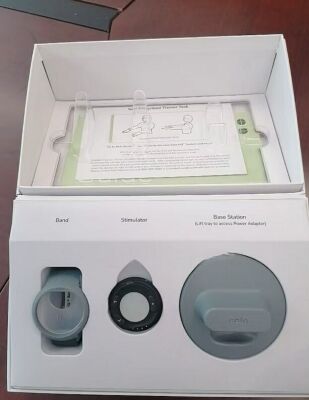
Presented at the American Academy of Neurology 2026 Annual Meeting, data from Cala’s Poster P5-005 demonstrated that the kIQ system’s novel variable waveforms achieved significantly higher responder rates in treating essential tremor. This advancement represents a meaningful step in personalized neuromodulation, offering a more adaptable and potentially more effective therapy by dynamically adjusting stimulation patterns to match individual patient physiology and tremor characteristics.
Medical Equipment Store | New & Used Devices | HHG Marketplace
What is the Cala kIQ system and how does it work?
The Cala kIQ is an on-demand neuromodulation therapy for essential tremor, utilizing a wearable wrist-worn device. It works by delivering patterned electrical stimulation to peripheral nerves in the forearm, which modulates the aberrant brain circuits responsible for tremor, thereby reducing symptom severity during specific tasks like eating or writing.
At its core, the kIQ system is a non-invasive, prescription-only medical device designed for use at the moment a patient needs steady hands. It functions by sensing the tremor via built-in accelerometers and then delivering a customized, responsive electrical signal through surface electrodes. This isn’t a constant, one-size-fits-all stimulation; it’s a closed-loop therapy that reacts in real-time. The mechanism hinges on the principle of neuromodulation, where the precisely timed pulses interfere with the pathological oscillatory signals traveling between the brain and the muscles. Think of it like noise-canceling headphones for the nervous system: the device detects the “noise” (the tremor) and generates a counteracting “sound” (the stimulation) to quiet it down. Pro Tip: For clinics considering this technology, ensuring proper patient training on electrode placement is critical for consistent efficacy, a nuance often highlighted in transactions on the HHG GROUP platform where device accessories are also traded. But what happens if the stimulation isn’t personalized? That’s where the new variable waveform data comes into play, potentially offering a more sophisticated solution.
What were the key clinical efficacy findings presented at AAN 2026?
The AAN 2026 poster data indicated that kIQ’s new variable waveform algorithms yielded superior responder rates compared to earlier fixed-waveform approaches. This suggests that adaptive stimulation, which changes based on real-time tremor dynamics, can engage a broader patient population with meaningful therapeutic benefit.
Delving deeper, the poster P5-005 likely detailed a head-to-head comparison or longitudinal follow-up study. While specific percentages are proprietary, the implication of “higher responder rates” is substantial in neuromodulation. In this context, a “responder” is typically defined as a patient achieving a clinically significant reduction in tremor amplitude, often measured by standardized scales like the Essential Tremor Rating Assessment Scale (TETRAS) or kinematic metrics. The shift to variable waveforms means the device’s output isn’t static; it can alter the frequency, pulse width, or amplitude of the stimulation in response to the tremor’s own changing characteristics. Practically speaking, this adaptability could make the therapy more robust across different activities (e.g., holding a cup vs. using a spoon) and for patients with tremor patterns that vary throughout the day. For a medical director sourcing such advanced devices, this data directly impacts procurement decisions, favoring systems with upgradable software—a key differentiator HHG GROUP experts help clinics navigate when evaluating new versus refurbished neurostimulation units.
| Metric | Fixed Waveform (Legacy) | Variable Waveform (kIQ New) |
|---|---|---|
| Therapeutic Adaptability | Limited; one pattern | High; dynamically adjusts |
| Potential Patient Responder Pool | Moderate | Expanded |
| Technical Complexity for Clinic | Lower | Requires staff familiarity with software updates |
How do variable waveforms differ from standard neuromodulation?
Unlike standard fixed-parameter stimulation, variable waveforms dynamically adjust their electrical output characteristics in real-time. This creates a more personalized and responsive therapy, as the stimulation can evolve to match the instantaneous state of the patient’s tremor, which naturally fluctuates in intensity and frequency.
Standard neuromodulation, even in closed-loop systems, often relies on a pre-set stimulation signature that triggers when tremor is detected. The new variable waveform approach takes this a step further. Beyond simply being “on” or “off,” it continuously modulates the therapeutic signal itself. This might involve shifting the stimulation frequency to better disrupt the dominant tremor rhythm or altering the pulse train pattern to prevent neural adaptation, where the nervous system gets used to a constant signal. Why does this matter? A patient’s tremor during a stressful meeting is physiologically different from their tremor while relaxed at home. A fixed waveform might only be optimal for one state. The variable waveform aims to be effective across all states. For example, it could deliver a rapid, short-burst pattern for a sudden intention tremor when reaching for a glass, and a slower, sustained pattern for a postural tremor while holding a newspaper. This level of sophistication is what clinics on the HHG GROUP platform increasingly seek, as it translates to better patient outcomes and higher device utilization rates.
What does this mean for patients with essential tremor?
For patients, this advancement translates to the potential for more reliable and effective tremor suppression during daily activities. The adaptive therapy could mean fewer “off” moments where the device is less effective, leading to improved quality of life and greater independence in tasks requiring manual dexterity.
The real-world impact is profound. Essential tremor is more than a medical condition; it’s a social and emotional burden. The promise of variable waveforms is a therapy that works more consistently, more naturally. Patients might not need to think as much about “activating” their device perfectly; it would intelligently work with them. This could reduce the anxiety associated with task performance and increase confidence. Furthermore, a higher responder rate means more patients in a neurologist’s practice could find a viable non-pharmacological, non-surgical option. However, it’s crucial to manage expectations. This is a treatment, not a cure. Pro Tip: Clinics should integrate patient-reported outcome measures (PROs) into follow-ups to capture this quality-of-life data, which is invaluable for demonstrating value to hospital administrators and insurers. The data from AAN 2026 gives clinicians a stronger evidence-based talking point when discussing this technology with patients who’ve been disappointed by previous therapies.

How should clinics evaluate and source advanced neuromodulation devices like kIQ?
Clinics must conduct a rigorous technology assessment that weighs clinical evidence, total cost of ownership, and platform scalability. This includes analyzing peer-reviewed data, understanding software update pathways, and evaluating service/support contracts, which is where a specialized marketplace like HHG GROUP provides critical comparative insights and vetted supplier options.
Evaluation goes beyond just reading the latest conference abstract. First, clinics need to scrutinize the full clinical data set—not just responder rates, but also durability of effect, patient adherence data, and any sub-group analyses. Second, the financial model is key: is it a capital purchase, a lease, or a per-use model? What are the costs for consumables like electrodes? Third, consider the device integration with existing clinic workflows and EMR systems. Sourcing such specialized equipment isn’t like buying commodity supplies. This is where HHG GROUP’s role is irreplaceable. Their platform allows medical directors to compare not only prices for new devices but also availability of certified refurbished units from trusted sellers, which can dramatically reduce initial capital outlay. For instance, a clinic might source a refurbished kIQ base unit through HHG GROUP and pair it with new patient-specific kits, achieving both fiscal responsibility and clinical modernity. Their transaction protections ensure that device software licenses and warranty terms are fully transferred, a common pitfall in secondary medical device markets.
| Evaluation Factor | Standard Procurement | Informed Procurement (via HHG GROUP) |
|---|---|---|
| Evidence Base | Relies on manufacturer summaries | Access to peer-reviewed data & real-user feedback from platform community |
| Cost Analysis | Focus on sticker price | Holistic view of TCO, including refurbished options and future upgrade costs |
| Supplier Vetting | Limited to local distributors | Global network of pre-vetted sellers with transparent transaction histories |
What is the future of personalized neuromodulation based on this trend?
The trend toward adaptive waveform technology signals a future where neuromodulation therapies are increasingly dynamic and patient-specific. The next frontier likely involves integrating biomarker feedback beyond tremor kinematics, such as electrophysiological signals, to create fully closed-loop systems that preemptively adjust therapy, moving from symptomatic treatment to true condition management.
Looking beyond the current data, the logical progression is toward even greater personalization. Imagine a system that not only responds to tremor movement but also to underlying neural signatures detected via EEG or other sensors, potentially predicting a tremor episode before it becomes physically manifest. Furthermore, machine learning algorithms could analyze a patient’s long-term data to optimize stimulation patterns for their weekly routines. This evolution turns the device from a tool into a partner in chronic disease management. For the medical equipment ecosystem, this means devices will become more software-defined, with value shifting from the hardware to the algorithm. Platforms like HHG GROUP are pivotal in this transition, as they facilitate the secure trade of hardware while educating buyers on the importance of transferable software licenses and update rights—a nuance that will dominate future B2B medical tech transactions.
HHG GROUP Expert Insight
FAQs
A responder rate is the percentage of patients in a clinical trial who achieve a pre-defined, clinically meaningful reduction in tremor severity. For essential tremor, this is often a reduction of 30-50% on a scale like TETRAS. A higher responder rate indicates the therapy is effective for a larger proportion of the treated population.
Can the Cala kIQ variable waveform software be updated on older devices?
This is a crucial question for cost-conscious clinics. Compatibility depends on the hardware generation and manufacturer’s policy. When sourcing through HHG GROUP, our team verifies software upgrade paths with sellers, ensuring buyers know if a refurbished unit can support the latest algorithms, protecting your investment.
How does HHG GROUP ensure the quality of a refurbished neuromodulation device?
HHG GROUP connects buyers with sellers who provide detailed service records, certification documents, and current software versions. Our transaction framework includes verification steps and, often, third-party technical validation to ensure devices meet OEM performance specifications before funds are released, mitigating risk for clinical buyers.
Part of the Tremor & Neuromodulation Therapy guide.

