
Buying Pre-Owned
The cheapest unit is only cheaper if the parts and the service route come with it.
What to confirm before payment on a pre-owned device: usage, condition, documentation, parts supply and the price of the risk you are accepting.
- 30 buying-focused articles
- Parts and service route first
- Total cost, not purchase price
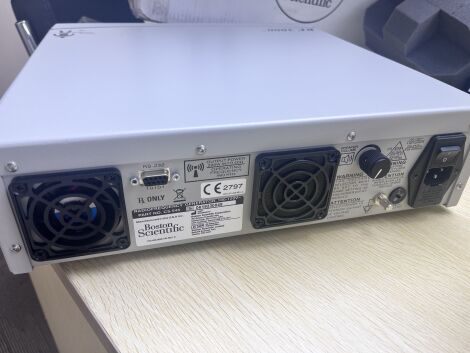
Price the risk, not just the unit
A pre-owned device transfers an obsolescence risk with the hardware, and the discount should cover it.
What the discount has to cover
Missing documentation, an unclear service history, a software version that no longer receives updates and an uncertain parts pipeline. Add those four to the purchase price and compare against new, rather than comparing the two headline numbers in isolation.
Ask for the usage record
Hours, procedure counts and system logs are the only objective measure of wear. A unit with a low price and a high procedure count is not a bargain; it is a device whose remaining life has already been spent.
Spare parts decide the second life
Confirm the parts pipeline before the money moves, because afterwards the buyer owns that problem.
Parts availability and lead time
Ask which consumable and spare parts the unit needs, who supplies them and at what lead time. A device whose probes are discontinued will sit idle as soon as the current stock runs out, whatever the condition of the console.
The service route
Decide who services the device before buying: the OEM, an independent firm with the right test equipment, or your own biomed team. A device with no service route is a running cost you cannot forecast.
Documentation to request before payment
The document set is the product on a pre-owned sale.
The paperwork list
Functional test record, electrical safety test, condition grade, accessory inventory, software version and, for cross-border sales, decontamination and export documents. Request them as a set, because missing one is what turns a purchase into a project.
Warranty position and payment terms
A pre-owned warranty is usually a defined period on defined faults, and it is only as good as the seller’s balance sheet. Escrow or staged payment removes most of the counterparty risk, and it is the single most valuable term in the agreement.
Four checks before you pay
In this order, because each one can end the deal.
Usage record
Hours or procedure counts. The only objective wear measure available before purchase.
Parts pipeline
Which parts it needs, who holds them and how long they will be available.
Service route
Who repairs and calibrates it, with the right test equipment and documentation.
Document set
Test records, condition grade, accessories and, where relevant, decontamination papers.
Where to go next
Adjacent topics in this set. Each one is a hand-written guide to the same depth.
Used & Pre-Owned Equipment
The cluster guide: buying, selling, verifying, refurbishing.
Buying pre-owned questions
What should I check before buying used medical equipment?
How much cheaper should used equipment be?
Is a refurbished device better than second-hand?
What payment protection exists on a used purchase?
Can I buy used equipment for a hospital programme?
Send the listing before you commit
Tell us the device, the asking price and the documents the seller holds. We will say what is missing and what that gap should cost you.