
Medical Equipment Procurement
Most procurement failures are not price failures — they are specification, supplier and lead-time failures.
This guide walks a hospital or clinic buyer through the order that works: what to specify, who to qualify, and what to plan before the shortage arrives.
- 215 articles organised by the question they answer
- 7 sub-guides, from strategy to financing
- Every article three clicks from the home page
Pick the route that matches your problem
Procurement work splits into three problems. Most buyers arrive with one of them and need the other two later.
Source by equipment type
Take this route when the purchase is clinical: an imaging system, a perfusion set, a scope platform. Each modality carries its own site, consumable and service questions.
- MRI Sourcing: Magnet, Cryogen and Site Requirements
- imaging, Patient Monitoring & OR Infrastructure Sourcing Guide
- biopsy & Specimen-Collection Device Sourcing Guide
- anaesthesia & Regional-Block Equipment Sourcing Guide
- cardiac & Perfusion Equipment Sourcing Guide
- urology Device Sourcing Guide for Clinics
- therapeutic and Diagnostic Device Sourcing Guide for Clinics
Fix strategy and cost
Take this route when the problem is systemic: emergency buying, unmanaged capital plans, invoice drift, or an audit finding that has to be answered.
- how can hospital sourcing teams optimize robotic bronchoscopy consumable…
- how to Conduct a Sales Force Audit for Medical Distributors
- how Does Sustainable Medical Equipment Sourcing Build B2B Reputation and…
- resilient healthcare supply chain: global medical equipment sourcing strategy
- installation and commissioning checklist for capital equipment
- how Do Hospitals Source Medical Capital Hardware Backup Assets
- healthcare procurement solution for controlling clinical supply chain cost…
Protect the schedule
Take this route when a single missing item cancels a procedure: standby stock, qualified alternatives, lead-time visibility and substitution rules.
- how Can Hospitals Source Verified ECMO Components During Backorders
- how Can Hospitals Source ECMO Parts Fast During Shortages
- how should cardiac suite inventory restocking be managed for high-volume…
- is streamlined OR inventory the key to preventing robotic bronchoscopy delays
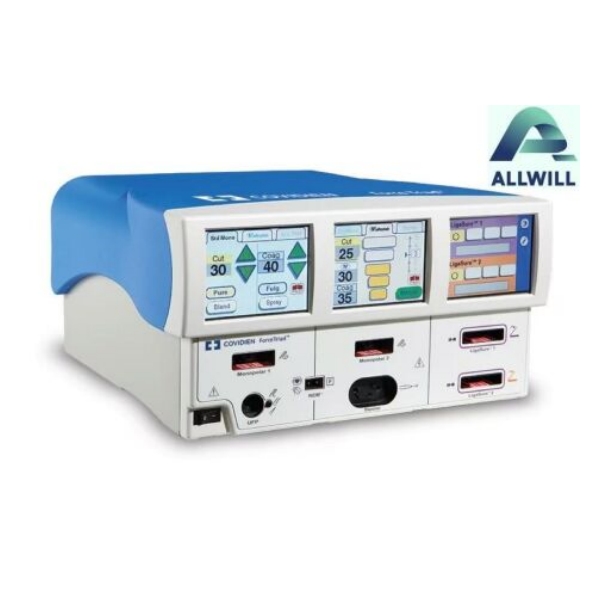
- why Is Sourcing Valleylab Force Triad Unit Spare Parts a Challenge
- how Can Hospital Supply Chain Efficiency Avoid Delays in 2026
- medical equipment spare parts sourcing that prevents surgical downtime and…
Specification comes before negotiation
A buyer who can describe the requirement in writing negotiates from a different position than one comparing catalogue entries.
Write the requirement down
Put the clinical need, the interface and the consumable tail into one paragraph before any supplier conversation. Most procurement disputes trace back to a requirement that existed only in someone’s head, and it cannot be quoted against or compared later.
Standardise across departments
Two departments buying the same class of device separately produce two inventories, two service contracts and two training loads. Standardising the specification is usually worth more than the last discount round, because it removes the cost of variation rather than the price of one order.
Supplier risk arrives before product risk
Counterfeits, compatibility failures and distributor insolvency all reach the buyer through the supplier rather than through the device.
Qualify on documents, not assurances
Ask for authorisation to supply, traceability for the specific parts, an inspection method and a named technical contact. A supplier who cannot produce those before the contract will not produce them afterwards, and the gap only becomes visible during a failure investigation.
Check the distributor’s own balance sheet
A distributor that cannot fund the next shipment is a procurement risk even when the product is correct. Ask where the stock sits, who else they serve and how much of their revenue your volume represents, because allocation during a shortage follows revenue.
The paperwork decides the landed cost
Import documents, export licensing, installation and acceptance testing are where an agreed price turns into an agreed total.
Cross-border documentation
Commercial invoice, packing list, certificate of origin, end-user declaration and decontamination records for a used device. Missing paperwork is the most common cause of a customs delay, and a delay on a capital programme costs more than the freight.
Acceptance testing and the first seven days
The acceptance test is the point where responsibility for condition transfers. Run it against the specification, record the result and raise any deviation before commissioning starts, because afterwards the same fault becomes a warranty argument instead of a delivery problem.
Four things decide whether a purchase lands well
Everything else in this cluster is a detail of one of these four.
A written specification
The interface, the consumables and the duty the device has to perform. Without it, every quote describes a different product.
A qualified supply base
Two sources for anything that stops a procedure, each with traceability and a named technical contact.
A lead-time plan
Standby stock for the items with no substitute, and a substitution rule agreed before the shortage rather than during it.
An acceptance record
A test against the specification, signed on arrival. This is the document that decides who pays for a defect.
Where to go next
Adjacent topics in this set. Each one is a hand-written guide to the same depth.
Procurement questions buyers ask first
What should a hospital fix first in medical equipment procurement?
Is buying used medical equipment worth the risk?
How do I keep a surgical programme running through a backorder?
Should procurement be measured on unit price?
What documents should accompany imported medical equipment?
Send us the requirement, not the catalogue entry
Tell us the device class, the clinical duty, the quantities and the delivery country. We will come back with the verified options, the documentation each one carries and the lead time.