IABP preventive maintenance and safety inspection checklist
A maintenance-programme skeleton for biomedical teams and cath-lab managers responsible for intra-aortic balloon pump consoles, current as of September 2026. Intervals and pass criteria come from the console's service manual; this guide does not…
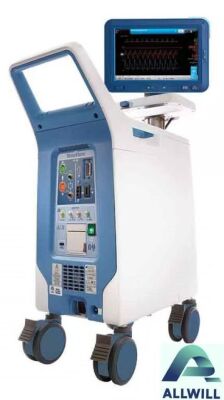
A maintenance-programme skeleton for biomedical teams and cath-lab managers responsible for intra-aortic balloon pump consoles, current as of September 2026. Intervals and pass criteria come from the console’s service manual; this guide does not give repair instructions or clinical guidance.
An IABP console spends most of its life waiting. That is exactly why its maintenance programme matters: the failure that counts is the one that appears during a case, and the component most likely to have degraded while the console sat unused is the battery. This guide sets out the structure of a programme ¡ª what to check, how often to decide intervals, what to record, and how to integrate a used console when it arrives.
Building an IABP PM schedule
Start from the manufacturer’s service documentation for the specific model, then organise the work into three frequency buckets rather than copying another department’s schedule. The buckets below describe what belongs in each; the actual intervals are the manufacturer’s to state and yours to apply.
| Bucket | What belongs in it | Who performs it |
|---|---|---|
| Before use / shift check | Visual condition, cable and hose integrity, power-up self-test, alarm indicators, gas supply arrangement | Clinical or technical staff per facility policy |
| Periodic preventive maintenance | Battery and backup checks, calibration verification where specified, internal inspection items listed in the manual, safety inspection | Biomedical team or qualified service, per the manual |
| Event-driven | Post-repair verification, incoming used-unit acceptance, any work after a field action or software update | Qualified service, with acceptance documented before clinical use |
Write the interval for each item as a reference to the manual section that defines it. That single habit prevents the most common audit finding in this area: a schedule that cannot be traced to any published requirement.
Console checks
Three areas cause most of the meaningful findings on a console that has been idle.
Self-test and alarms
Run the console’s own self-test and verify that alarms and indicators behave as the manual describes. A self-test that passes is evidence about the subsystems it covers, not a general clearance, which is why the alarm checks are recorded separately rather than summarised as “self-test passed”.
Battery and backup
Battery condition is the highest-value check on this device family, and the public record explains why. In October 2022 the FDA published a recall (event 91021) for short battery run-times affecting Arrow IABP consoles, and the affected product list includes parts of the AC3 and AutoCAT2 families as well as units explicitly described as refurbished ¡ª a reminder that a refurbished console is not exempt from a field action. A separate 2021 event (88719) covered a lithium-ion battery pack used in a different IABP platform, and a 2020 event (85684) covered an AC3 Optimus component issue. Practical consequence: for every console, check current field-action status for the exact model and record the result, and treat battery evidence as an acceptance requirement rather than a routine line item.
Cable and hose integrity
Inspect cables, connectors and hoses for damage, and check that strain relief and connectors are intact. These are the components most exposed to handling between uses, and their condition is visible during a routine check.
Safety inspection events
Separate the electrical safety and performance verification from the routine visual checks. The safety inspection is a documented event with a defined procedure, recorded test values and a pass decision, and it is the evidence an accreditation survey will ask for. Where the console includes a battery, the safety event is also the natural place to record battery service and the verification that followed it.
Decide who performs it before the schedule starts. Some facilities run the inspection in-house with their own test equipment; others contract it to a qualified service provider because the procedure requires fixtures or software the department does not hold. Either arrangement is workable, but the choice determines two other things: the test equipment that must be in calibration, and the training record that shows the person performing the work is competent to do it. A pass decision without those two elements is an assertion rather than evidence, and it is the first thing a surveyor will question.
Record the outcome as a decision, not a comment. “Returned to service” and “quarantined pending service” are different states with different consequences, and the console’s status in your asset register should match the decision on the form.
Records that survive an audit
- Console identity: model and serial number, and the software or firmware version at the time of the work.
- The procedure performed, with the manual section it follows.
- Measured values where the procedure produces them, rather than a summary result.
- Test equipment used, with its calibration status.
- Date, performer and, where applicable, the service organization.
- Outcome: returned to service, or quarantined with the reason and the next action.
Using the checklist for incoming used consoles
A used console enters the programme at acceptance, not at first clinical use. The acceptance sequence should confirm identity, verify documentation, check current field-action status for that model, and complete a safety inspection before the device is placed on a shelf as available.
Two habits make the integration reliable. First, record the acceptance inspection as an event in the same system as routine maintenance, so the console’s history is continuous. Second, where a field action applies, do not treat “the seller said it was serviced” as closure ¡ª the verification that work was performed by an authorised party, and that the device is no longer affected, belongs in your records.
Questions buyers ask
What maintenance interval should we use?
Whatever the manufacturer’s service documentation states for your model, adjusted by your facility’s risk policy. Published intervals differ between platforms and generations, which is why the programme should reference the manual rather than a generic schedule.
Is a battery check enough to accept a used console?
No. Battery evidence is one acceptance item among several: identity, documentation, field-action status and a completed safety inspection all belong in the file before the console is used.
Do refurbished consoles fall outside field actions?
Not necessarily. The 2022 battery recall’s affected product list includes units described as refurbished, so the check is for the model and configuration rather than for the refurbishment status.
Build the programme around the manual, keep the records per console, and treat every incoming unit as a new acceptance. If you are sourcing a console and want the documentation that supports that acceptance, browse the current cardiac listings or ask HHG for the service and field-action records. Related reading: what intra-aortic balloon pumps are and the cardiac and perfusion equipment sourcing guide.