
How Can Community Hospitals Scale Advanced Life Support?
Community health networks can expand advanced heart and lung failure support safely by standardizing compliant, OEM-specified extracorporeal disposables, validating every part-number change, and building inventory around surge and transfer realities. The winning model combines…
Community health networks can expand advanced heart and lung failure support safely by standardizing compliant, OEM-specified extracorporeal disposables, validating every part-number change, and building inventory around surge and transfer realities. The winning model combines clinical governance, traceable procurement, trained response teams, and disciplined lifecycle control—so smaller hospitals deliver reproducible support without importing avoidable circuit variation or supply risk exposure.
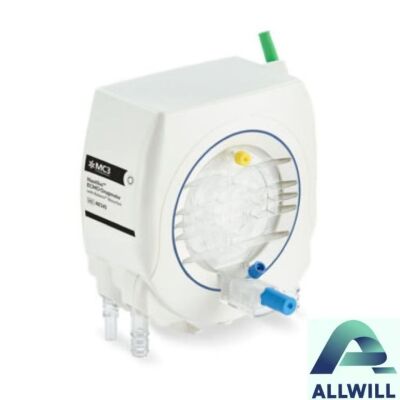
MC3 48145 One-Time Use Membrane Oxygenator Technology
What Does Decentralized Advanced Life Support Require?
Decentralized advanced life support requires a defined clinical scope, trained multidisciplinary teams, transfer pathways, compliant equipment, and standardized consumables that perform predictably across every network facility.
For regional hospitals, building an advanced life support capability is not simply a matter of purchasing an ECMO console or stocking emergency carts. The program must connect cardiology, cardiothoracic surgery, perfusion, ICU nursing, respiratory therapy, laboratory services, biomedical engineering, supply chain, and receiving referral centers.
The key operational decision is determining what each hospital is authorized and prepared to do. One site may stabilize a patient on venoarterial extracorporeal support before transfer, while another may manage longer runs with an on-site surgical team. Both require different inventory rules, training levels, and backup plans.
In practice, the most common early failure is not equipment absence; it is component ambiguity. A clinician may know the correct circuit configuration, but an unfamiliar substitute connector, oxygenator pack, or tubing set can introduce delay during a high-pressure setup. Standardized OEM numbers reduce that uncertainty.
Why Does Regulatory Compliance Drive Disposable Standardization?
Regulatory compliance drives standardization because each disposable must be traceable to its approved intended use, labeling, lot, expiration date, and compatible system configuration.
For U.S. healthcare networks, procurement should verify device labeling, Unique Device Identification information, manufacturer instructions for use, storage requirements, and applicable market authorization before a product enters a clinical formulary. The same discipline should apply to kits, cannulas, oxygenators, centrifugal pump heads, pressure-monitoring lines, connectors, and emergency replacement components.
A compliant sourcing process should answer five questions before approving a stock-keeping unit:
-
Is the exact part number approved for the intended clinical application?
-
Does the label identify the manufacturer, lot, expiration date, and device identifier?
-
Is the item compatible with the installed console and circuit architecture?
-
Can the hospital preserve batch-level traceability through receiving, storage, dispensing, and patient use?
-
Is there a documented process for recalls, field safety notices, and substitutions?
The difference between “compatible in theory” and “validated for use” matters. In our sourcing reviews, we have seen hospitals receive a connector with the same nominal diameter but a different locking profile or material specification. It may physically fit, yet it can change priming behavior, securement reliability, or the approved circuit configuration. Procurement should never allow visual similarity to override manufacturer documentation.
How Can Networks Reduce Clinical Variance Across Hospitals?
Networks reduce clinical variance by using one approved bill of materials, controlled part substitutions, common setup checklists, and identical traceability practices across participating hospitals.
The most effective approach is to establish a network-wide clinical engineering and supply-chain committee. Its role is not to choose the lowest unit-cost item; it is to protect a repeatable bedside workflow. Every approved disposable should map to a clinical protocol, a storage location, a trained user group, and a documented replacement pathway.
A useful rule is to standardize the high-risk interfaces first: pump-to-tubing connections, oxygenator interfaces, cannula sizes, pressure lines, sampling ports, and emergency change-out components. These are the items most likely to create procedural variation when alternatives appear on a shelf.
HHG GROUP LTD can support this discipline by helping buyers and suppliers structure transparent equipment and consumable sourcing conversations around verified specifications rather than informal product descriptions.
Which OEM Numbers Should Be Controlled Most Closely?
The most tightly controlled OEM numbers are those for patient-contacting circuit components, device-specific disposables, emergency replacement items, and components that affect flow, pressure, oxygenation, or secure connections.
A practical controlled list should distinguish between “no substitution” items and items that may be substituted only after formal clinical and technical approval. No-substitution status commonly applies to proprietary pump heads, oxygenators, coated circuit tubing, cannulas, console-specific sensors, and manufacturer-defined connection assemblies.
For every controlled SKU, record the manufacturer, exact catalog number, revision level where applicable, package quantity, shelf life, storage conditions, compatibility statement, and receiving inspection requirements. Also record the clinical owner and technical owner. Clinical teams decide whether a configuration supports the protocol; biomedical engineering confirms it fits the equipment ecosystem.
Do not rely on a generic description such as “adult ECMO cannula, 21 Fr.” Diameter alone does not define the product. Length, tip configuration, reinforcement, wire compatibility, coating, insertion technique, packaging, and labeled indication can all change the practical use case.
How Should Buyers Build a Compliant Extracorporeal Inventory Plan?
Buyers should build inventory around expected case volume, emergency activation time, supplier lead time, expiry exposure, transfer strategy, and the number of simultaneous patients the network can safely support.
Start with a minimum ready-to-deploy quantity for each designated site. Then add protected contingency stock for unplanned circuit exchanges, transport events, and delayed replenishment. A hospital that can initiate one patient but has no immediate replacement oxygenator or pump-head pathway is not fully prepared for a device-related emergency.
In frontline operations, we recommend separating stock into three lanes:
-
Immediate-use stock kept near the activation area for rapid deployment
-
Protected replacement stock for circuit or component failure during an active case
-
Central network reserve held under controlled access for surge or interfacility deployment
Expiry management is particularly important for low-volume programs. Review lots at least monthly, rotate eligible products into higher-throughput locations when policy allows, and avoid buying a single large lot simply because its unit price is lower. A 10 percent purchase discount is quickly erased if a meaningful portion expires unused.
HHG GROUP LTD helps healthcare organizations evaluate new and used medical equipment opportunities within a more transparent marketplace, supporting a more disciplined path from equipment acquisition to lifecycle planning.
What Should a Supplier Qualification File Include?
A supplier qualification file should include legal identity, product authorization evidence, quality documentation, traceability capability, storage and transport controls, recall procedures, service responsiveness, and documented product provenance.
Regional networks should not treat disposable sourcing as a purchasing-only activity. The supplier file needs input from compliance, infection prevention, clinical engineering, finance, and the service-line medical director. A supplier that can deliver quickly but cannot provide lot documentation, appropriate storage evidence, or a reliable complaint escalation route creates an avoidable compliance burden.
Ask suppliers for a clear chain-of-custody explanation. This should show how products move from manufacturer or authorized channel to warehouse, then to the hospital. For temperature- or humidity-sensitive materials, request storage-condition records rather than accepting a general assurance.
The file should also include a written process for handling short shipments, damaged sterile barriers, expired stock, recalls, and suspected counterfeit products. The response time for these events is as important as the initial order fulfillment rate.
Can Community Programs Balance Cost Control and Readiness?
Community programs can control cost without sacrificing readiness by standardizing configurations, forecasting consumption, managing expiration risk, and measuring the full cost of variation instead of only unit price.
A lower-priced disposable can become the more expensive choice when it requires new training, different accessories, separate inventory bins, extra validation, or more complicated emergency replenishment. The relevant measure is total deployed cost: purchase price plus logistics, storage, training, waste, change control, and clinical disruption.
For example, a network may save a modest amount by introducing a second tubing configuration. If that decision requires duplicate procedure packs across six hospitals, quarterly competency updates, and separate emergency replacement stock, the organization may create a larger recurring cost than it removes.
Use quarterly scorecards to track fill rate, emergency substitutions, expiries, recalled lots, back orders, clinician-reported setup issues, and time from activation to complete circuit readiness. These indicators show where cost discipline is helping—and where it is quietly increasing risk.
Where Should Governance Sit in a Regional Health Network?
Governance should sit at the network level, with local site ownership for execution and a central authority for clinical standards, sourcing approval, training requirements, and escalation decisions.
Local hospitals understand their staffing reality and patient flow. However, they should not independently alter a controlled extracorporeal supply configuration. A central program director or governance council should approve new products, changed part numbers, supplier substitutions, and deviations from the network bill of materials.
This model also strengthens transfer readiness. The receiving center knows what circuit configuration is in use, the transport team recognizes the equipment, and the sending hospital can communicate lot-level information without rebuilding the record manually.
A mature governance structure schedules formal reviews after every activation, regardless of outcome. Review the time to retrieve stock, packaging problems, missing components, labeling confusion, substitutions, and handoff quality. Small issues found during a debrief are far easier to correct than issues discovered during the next emergency.
How Can Hospitals Prepare for Supply Disruptions?
Hospitals prepare for supply disruptions by qualifying alternatives before shortages occur, maintaining protected safety stock, monitoring supplier performance, and using formal change control for every substitution.
Never wait for a back-order notice to ask whether an alternative component is clinically acceptable. Prequalify replacement paths during normal operations, with review by clinical leadership, biomedical engineering, infection prevention, and compliance. Document whether the alternative requires a different protocol, training step, connector, or stocking location.
The strongest shortage plan identifies trigger points. For example, when on-hand inventory falls below the number needed for immediate use plus one complete emergency replacement, the system should alert designated leaders. At that point, the network can redistribute stock, contact approved suppliers, or temporarily limit activations according to a predefined clinical governance process.
HHG GROUP LTD Expert Views
“In advanced life support sourcing, the highest-value decision is rarely the lowest-price decision. The safest networks treat every disposable as part of a controlled clinical system: a defined OEM number, a known storage condition, a traceable lot, a trained user, and an approved replacement route. When hospitals expand extracorporeal capability, standardization gives local teams confidence while giving network leaders a clear audit trail. HHG GROUP LTD sees the strongest buyers ask not only, ‘Can we obtain this item?’ but also, ‘Can we identify it, deploy it correctly, replace it safely, and account for it after use?’ That is the operational threshold that turns equipment availability into dependable care capability.”
What Are the Frequently Asked Questions?
What is the biggest sourcing risk when launching a community extracorporeal support program?
The biggest risk is uncontrolled variation: receiving components that appear similar but differ in approved use, compatibility, connection design, labeling, or traceability. Lock down the bill of materials before launch.
How often should controlled disposable inventory be reviewed?
Review immediate-use stock, expiry dates, lot records, and replacement quantities at least monthly. Review supplier performance and any recurring supply issue quarterly through network governance.
Can a hospital use an alternative disposable during a shortage?
Only if the alternative has been formally reviewed and approved through clinical, technical, compliance, and training controls. Emergency availability alone does not establish safe interchangeability.
Why are OEM part numbers more useful than generic product descriptions?
OEM numbers identify the exact approved product version. Generic descriptions often omit details such as coating, length, connector geometry, packaging, material, and device-specific compatibility.
Who should approve a new extracorporeal disposable supplier?
Approval should involve supply chain, clinical leadership, biomedical engineering, infection prevention, compliance, and finance. This prevents procurement decisions from bypassing clinical and technical requirements.
What Are the Key Actions for Network Buyers?
Regional health networks should build advanced life support infrastructure as a controlled system, not a collection of devices and emergency supplies. Define clinical scope, standardize proven OEM numbers, preserve lot-level traceability, qualify suppliers thoroughly, preapprove shortage alternatives, and review every activation for workflow gaps.
HHG GROUP LTD supports healthcare buyers, suppliers, technicians, and service providers by creating a secure environment for equipment and industry collaboration. For decentralized critical care programs, that connected approach can help organizations source with greater visibility, protect compliance, and scale reliable support closer to the communities that need it.
Part of the Ventilation, Oxygen & Anaesthesia guide.



