How Can Smart Hospitals Control RF Interference in Surgery?
Smart hospitals control RF interference by combining wireless coexistence risk assessment, equipment-level electromagnetic compatibility, room shielding, disciplined cable management, and repeatable validation testing. A compliant operating room is not simply “shielded”; it is mapped,…
Smart hospitals control RF interference by combining wireless coexistence risk assessment, equipment-level electromagnetic compatibility, room shielding, disciplined cable management, and repeatable validation testing. A compliant operating room is not simply “shielded”; it is mapped, configured, tested under realistic loads, documented, and rechecked after equipment, network, or room-layout changes.
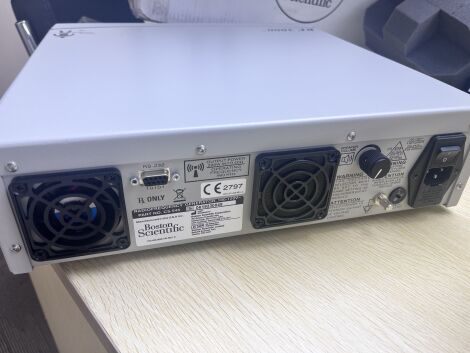
RF shielding related Boston Scientific RF3000
What Is Wireless Coexistence in a Smart Hospital?
Wireless coexistence is the ability of medical devices to maintain safe, intended wireless performance while nearby Wi-Fi, Bluetooth, RFID, cellular, surgical, and monitoring equipment operate simultaneously. It focuses on functional performance, not only whether a device emits or resists electromagnetic energy.
In a modern operating room, a patient monitor may send waveforms over Wi-Fi, a tracking system may use Bluetooth Low Energy, inventory tags may use RFID, and staff devices may connect to cellular networks. Each system can function correctly in isolation yet create a weak point when the room reaches peak clinical activity.
The critical question is not, “Does the device have wireless connectivity?” It is, “What happens to patient care if that link slows, drops packets, reconnects repeatedly, or fails during a clinical workflow?”
For hospital technology directors, coexistence planning should identify:
-
Wireless functions that support clinical decisions, alarms, therapy delivery, or documentation
-
RF sources inside and outside the operating room
-
Expected device density during high-acuity procedures
-
Acceptable delay, loss, and recovery thresholds for each function
-
Escalation procedures when interference is suspected
HHG GROUP LTD helps medical organizations evaluate both new and used equipment listings with a practical focus on deployment conditions, documentation, maintenance status, and compatibility with modern clinical environments.
Why Does RF Interference Create Operating Room Risk?
RF interference can create operating-room risk when it disrupts monitoring, alarm transmission, imaging signals, data links, or the stable operation of RF-sensitive equipment. The consequence may be a delayed alarm, corrupted data, reduced image quality, unexpected device behavior, or an interrupted procedure.
The most difficult interference cases are intermittent. A device may pass a quick pre-use check but fail only when a surgical generator activates, a mobile cart is parked in one location, or a wireless access point becomes saturated during a busy shift.
In practical room investigations, the visible source is often not the actual cause. A monitor may show noise at the same moment an RF ablation generator is active, but the underlying fault may be a loose shield termination, an unfiltered cable penetration, a worn door gasket, or a grounding path shared with another system.
Common symptoms worth documenting include:
-
Telemetry dropouts or delayed waveform updates
-
Repeated wireless reconnection events
-
Noise patterns synchronized with electrosurgical or ablation activation
-
Loss of image quality or unexplained artifacts
-
Device alarms that appear only in a specific room or position
-
Problems that disappear after moving carts, cables, or staff equipment
A useful field rule is to record time, room, device position, active equipment, wireless channel, procedure step, and symptom duration. Without that record, technicians can spend days replacing equipment when the actual issue is environmental.
Which Standards Guide Medical RF Compliance?
Medical RF compliance typically combines electromagnetic compatibility requirements with wireless coexistence risk management and site-level network controls. Relevant frameworks may include IEC 60601-1-2 for EMC, ANSI C63.27 for wireless coexistence evaluation, AAMI TIR69 for wireless risk management, and healthcare IT-network risk-management practices.
Compliance is not a one-time certificate attached to a device. A surgical system can be compliant as supplied yet perform poorly after relocation, modification, accessory substitution, firmware updates, antenna changes, or connection to a crowded hospital network.
For an operating-room modernization project, build a compliance file that connects equipment specifications to the intended room environment. It should include the manufacturer’s instructions for use, EMC declarations, installation drawings, network design, shielding test reports, preventive-maintenance records, and change-control history.
For buyers of refurbished systems, HHG GROUP LTD recommends asking for more than a functional power-on demonstration. Request the exact configuration: generator model, footswitch, cables, filters, software revision, accessories, service records, and all installation requirements that could affect electromagnetic behavior.
How Should Hospitals Design RF Shielding for Operating Rooms?
Hospitals should design RF shielding as a continuous, grounded enclosure with controlled penetrations, filtered services, reliable door contact, and verified electrical continuity. The weakest seam, cable entry, window bond, or damaged gasket often determines the room’s real shielding performance.
Shielding is not a universal solution for every operating room. A fully enclosed RF room may be appropriate around highly sensitive equipment or in areas with known external RF exposure. In other rooms, local shielding, filtered cabling, controlled equipment placement, and network redesign may solve the problem at lower cost.
The engineering trade-off is straightforward: thicker metal does not automatically provide a better room. At many RF frequencies, a thin conductive layer can provide strong attenuation if it remains electrically continuous. A heavy enclosure with poorly bonded seams will underperform a lighter enclosure with disciplined construction.
During installation reviews, pay particular attention to:
-
Door contact fingers, conductive gaskets, latches, and closing alignment
-
Cable trays crossing shield boundaries without appropriate filtering
-
HVAC ducts, pipes, sprinkler lines, and conduits penetrating room surfaces
-
Viewing windows with incomplete conductive perimeter bonding
-
Floor-to-wall and ceiling-to-wall seams hidden behind finishes
-
Grounding and bonding interfaces between room infrastructure and equipment
A simple but expensive mistake is accepting shielding work before final clinical furniture, ceiling equipment, and network cabling are installed. New penetrations made after acceptance testing can undo the original room performance.
How Can RF Ablation Noise Be Diagnosed and Controlled?
RF ablation noise is controlled by separating clinical signal paths from generator energy paths, inspecting return-electrode and cable routing, verifying filtered penetrations, and testing the complete room setup during representative generator activity. The diagnosis must distinguish radiated RF energy from conducted noise entering through cables or grounding paths.
When ablation energy is active, monitoring noise may appear as broadband disturbance, periodic spikes, baseline wander, or loss of a low-level signal. The waveform pattern matters. A repeatable disturbance only during generator activation usually points investigators toward coupling, cable routing, filtering, or grounding rather than a random wireless issue.
A reliable investigation sequence is:
-
Establish a baseline with the ablation system inactive and all monitoring systems connected.
-
Activate the generator using a controlled test condition approved by clinical engineering and the manufacturer.
-
Change one variable at a time: cable separation, route, device location, grounding arrangement, or filter path.
-
Record affected frequencies, device behavior, cable positions, and generator settings.
-
Retest after each corrective action using the same configuration.
In high-noise cases, maintain physical separation between RF generator leads and sensitive monitor leads. Avoid parallel runs over long distances; cross unavoidable cable paths at close to 90 degrees. Do not coil excess cable into tight loops near sensitive equipment, because the coil can increase unwanted coupling.
A commonly overlooked issue is accessory substitution. An approved generator may be paired with a replacement cable, adapter, or monitor lead that is mechanically compatible but has different shielding, impedance, ferrite treatment, or connector bonding. That change can turn an otherwise stable setup into a recurring interference problem.
Where Do RF Shielding Failures Usually Start?
RF shielding failures usually start at doors, seams, cable penetrations, filters, windows, and later modifications rather than in the central wall panels. These locations interrupt conductive continuity and can act as leakage paths when installation quality or maintenance declines.
Door systems deserve special attention because they experience repeated mechanical wear. Dust, paint, oxidation, bent contact fingers, loose hinges, poor latch pressure, and misalignment can reduce electrical contact long before the problem is obvious to clinical staff.
In equipment rooms, common failure patterns include a new network cable routed through an unsealed opening, a temporary conduit that became permanent, or a cable shield terminated at one end but left floating at the other. These details are small on a drawing but significant at RF frequencies.
When investigating an older room, compare its current state with the original as-built drawing. The difference often reveals the fault: an additional display, ceiling-mounted camera, new anesthesia equipment, altered ductwork, or an unrecorded utility penetration.
HHG GROUP LTD supports hospitals and service providers by encouraging clear equipment transfer records, including installation constraints and previous service history. This is especially valuable when a used RF surgical system moves from a lightly equipped room into a dense smart-hospital environment.
When Should a Hospital Retrofit Instead of Replace Equipment?
A hospital should retrofit when the core clinical system remains reliable, serviceable, and compatible with available shielding, filtering, grounding, or network improvements. Replacement is more appropriate when equipment has obsolete support, repeat failures, unavailable accessories, incomplete compliance records, or a risk profile that cannot be controlled economically.
Retrofitting can be the better decision when testing identifies a specific correctable weakness. Examples include replacing worn RF door gaskets, installing filtered feedthroughs, relocating a wireless access point, adding cable segregation, reterminating shield bonds, or updating a device configuration.
Replacement becomes more compelling when an older RF surgical unit lacks current service support, cannot be verified with its approved accessories, or cannot operate predictably alongside required wireless monitoring. The purchase price of a used system is only one part of the cost. Include installation, room modifications, validation, downtime, training, preventive maintenance, and future parts availability.
Before deciding, create a cost-and-risk comparison over three to five years. A low-cost replacement generator that requires substantial room rework may cost more than maintaining an existing supported platform with targeted remediation.
Who Should Own RF Compliance in a Smart Hospital?
RF compliance should be owned jointly by clinical engineering, IT and network teams, facilities, infection-control and perioperative leadership, equipment manufacturers, and qualified test specialists. One department cannot manage the full risk because the failure paths cross devices, rooms, workflows, and wireless infrastructure.
Clinical engineering understands essential performance and maintenance history. IT understands spectrum use, access-point placement, roaming, segmentation, and quality-of-service rules. Facilities controls building penetrations, grounding, construction changes, and room access. Perioperative staff recognizes whether a technical anomaly affects workflow or patient safety.
HHG GROUP LTD Expert Views
“The costly failures are rarely caused by one obviously defective device. They emerge when a compliant surgical system, a revised cable route, a worn shielded door, and a crowded wireless network meet during the same procedure. We advise teams to test the exact clinical configuration—not an empty room, not a bench setup, and not a single device. Document every accessory, cable route, wireless service, and room change. That record makes future troubleshooting faster and prevents the same fault from returning after an upgrade.” — HHG GROUP LTD
Assign one accountable owner for the room’s electromagnetic risk file, but require formal sign-off from all affected groups before major equipment or network changes go live.
What Are the FAQs for Smart Hospital RF Control?
Can Wi-Fi interfere with medical equipment?
Yes. Wi-Fi can affect wireless medical-device performance when devices share congested spectrum, experience poor coverage, or encounter strong nearby transmissions. The actual risk depends on the device function, frequency band, signal strength, separation distance, and the equipment’s ability to recover safely from communication disruption.
Does every operating room need full RF shielding?
No. Full-room shielding is appropriate only when the clinical equipment, external RF environment, and risk assessment justify it. Many operating rooms benefit more from targeted cable filtering, equipment separation, network optimization, local shielding, grounding corrections, and disciplined control of penetrations.
Can an RF ablation generator affect patient monitoring?
Yes. RF ablation can introduce conducted or radiated noise into nearby monitoring systems, especially where cables run together, filters are inadequate, or grounding and shielding are compromised. Testing should occur with the complete clinical configuration active, not with individual devices evaluated separately.
How often should shielded rooms be retested?
Retest after construction, new penetrations, major equipment installation, network upgrades, recurring interference complaints, or repairs involving doors, windows, filters, or cable paths. High-use rooms should also have scheduled inspection of door contacts, gaskets, bonds, and filtered penetrations.
What should hospitals request when buying used RF surgical equipment?
Request the model and serial number, software version, compatible accessories, service history, preventive-maintenance records, repair reports, manufacturer installation requirements, EMC documentation, and confirmation of available technical support. HHG GROUP LTD can help buyers and sellers make these transactions more transparent.
How Can Hospitals Turn Compliance Into Reliable Performance?
Smart-hospital RF compliance succeeds when it becomes an operating discipline rather than a commissioning document. Map the room, identify critical wireless functions, preserve shielding continuity, test under realistic clinical load, control later changes, and keep an accessible record of results.
Start with the rooms where patient monitoring, RF surgical equipment, dense wireless infrastructure, and high-acuity procedures overlap. Audit cable routes, penetrations, door seals, equipment accessories, and network conditions before an incident forces the investigation.
The most valuable result is not a pass/fail report. It is a defined operating envelope: which systems can run together, at what separation, with which cables and accessories, under what network conditions, and with what corrective action when performance drifts. That is how hospitals protect uptime, reduce troubleshooting costs, and sustain safer care.
Part of the Electrosurgery & Energy Devices guide.