Is impedance-controlled RF ablation the key to predictable necrosis?
Interventional radiologists and surgical oncologists increasingly rely on impedance-controlled radiofrequency ablation to overcome ablation zone unpredictability and achieve reproducible necrosis in liver and soft tissue tumors. By dynamically modulating RF power to avoid rapid…
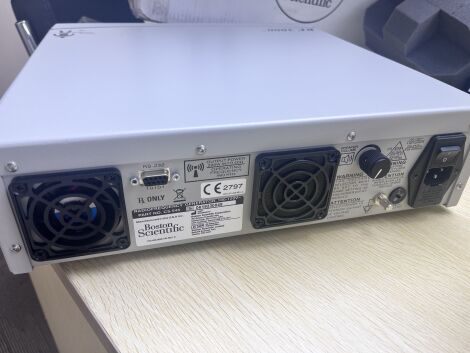
Interventional radiologists and surgical oncologists increasingly rely on impedance-controlled radiofrequency ablation to overcome ablation zone unpredictability and achieve reproducible necrosis in liver and soft tissue tumors. By dynamically modulating RF power to avoid rapid charring near the active electrode, systems like the Boston Scientific RF3000 enable larger, more uniform lesions and more confident local tumor control.
Boston Scientific RF3000 Radiofrequency Ablation System
How does ablation zone unpredictability affect interventional radiologists and surgical oncologists?
Ablation zone unpredictability directly affects margin control, local recurrence rates, and procedure planning for interventional radiologists and surgical oncologists. Variations in tissue perfusion, impedance rise, and early carbonization near the active electrode tip can cause under-treatment or irregular lesion shapes. Clinicians then require multiple overlapping ablations and more follow-up imaging to ensure adequate margins in liver and soft tissue tumors.
From a factory-floor engineering perspective, we see this as a control-loop failure: constant-power generators push energy faster than tissue can dissipate heat. Vessels shunt heat away, while localized charring near the tip suddenly increases impedance and throttles current flow. The result is a small, charred “hot spot” instead of a smooth thermal gradient, which undermines the ablation zone predicted on paper and forces conservative clinical strategies.
Why is charring near the active electrode tip so problematic for predictable necrosis?
Charring near the active electrode tip prematurely limits current flow, truncating the ablation and shrinking the effective lesion despite apparent high energy delivery. Early carbonization acts like an insulating shell, blocking RF conduction into deeper tissue and distorting the expected spheroidal necrosis pattern. This is especially problematic in perfused liver where cooled surrounding tissue requires sustained energy to reach irreversible damage thresholds.
In practice, engineers measure this as a sudden, steep impedance spike followed by diminished power transfer and non-ellipsoidal lesion morphology. Instead of a uniform 3–5 cm coagulation zone, operators may see an irregular ablation with viable cells at the margins. That discrepancy between “vendor-predicted” and “achieved” ablation dimensions is one of the most frustrating realities for advanced oncology teams trying to move toward single-pass, margin-secure ablation strategies.
What is the Boston Scientific RF3000 impedance control loop and how does it work?
The Boston Scientific RF3000 uses an impedance-based control loop to continuously monitor tissue resistance and dynamically adjust RF power output throughout the ablation cycle. Rather than maintaining fixed wattage, the generator ramps and pulses energy in response to impedance changes. This approach prevents precipitous impedance spikes and the rapid charring that typically limits lesion growth near the electrode tip.
Internally, the RF3000’s algorithm reads real-time impedance and temperature trends, then modulates duty cycles to keep energy deposition within a range that promotes progressive coagulation instead of carbonization. Combined with cooled or umbrella-array electrodes, this strategy deliberately flattens the temperature gradient around the tip, pushing the necrosis front outward in a more regular, predictable fashion—especially important when treating marginally resectable liver tumors.
How can impedance-based RF power algorithms improve lesion predictability in liver and soft tissue tumors?
Impedance-based RF power algorithms improve lesion predictability by adaptively regulating energy delivery to maintain stable heating across the planned ablation volume. By using impedance rise as feedback, the generator can slow or pulse power when carbonization is imminent, then resume once the tissue response stabilizes. This results in larger, more uniform zones of necrosis that better match pre-procedural planning.
For liver and soft tissue tumors, the main benefit is margin confidence: operators can correlate real-time impedance behavior with expected lesion diameter, reducing the need for empirical “extra” burns. In practice, this means fewer overlapping ablations, shorter procedure times, and more reliable coverage around critical vascular or biliary structures. Advanced systems also allow clinicians to standardize protocols—such as target impedance curves—for repeatable outcomes across operators and centers.
What clinical precision and control does the RF3000 system offer in soft tissue ablation?
The RF3000 system is designed to offer clinical precision through its impedance-driven endpoint detection and array-specific ablation profiles. With umbrella-shaped LeVeen electrodes and Soloist single-needle options, physicians can tailor cannula selection to tumor size, from small 1.5 cm lesions to larger 4–5 cm targets. The generator uses impedance changes to signal cellular destruction, helping clinicians recognize when the lesion has reached the desired extent.
This smart control loop effectively turns impedance into a “physiologic ruler” during ablation. As tissue desiccates and impedance climbs through a known pattern, the RF3000 stops short of explosive carbonization but long enough to complete coagulation. Experienced users often describe the system as behaving “predictably” across a range of liver parenchyma conditions, which is central to reducing local recurrence due to missed microscopic margins.
Which engineering trade-offs define effective impedance-control strategies for RF ablation?
Effective impedance-control strategies balance lesion size, tip temperature, and tissue safety. On the engineering side, designers must reconcile three competing objectives: avoiding destructive carbonization at the tip, maintaining reliable current paths through heterogeneous tissue, and achieving clinically meaningful diameters without overexposure. That requires carefully tuned ramp profiles, cooling strategies, and impedance thresholds baked into the generator firmware.
From a factory-floor perspective, we know that small changes in power ramp rate—on the order of tens of watts per minute—can dramatically change how quickly impedance spikes. Algorithms that blend gradual ramping with brief pauses at key impedance plateaus achieve smoother lesion expansion. Similarly, using internally cooled electrodes and maintaining specific coolant flow rates stabilizes impedance by preventing tip overheating. These details rarely appear in marketing brochures but heavily influence day-to-day performance.
Table: Key RF3000 Impedance-Control Parameters (Illustrative)
How can interventional teams plan predictable necrosis zones with impedance-guided RF ablation?
Interventional teams can plan predictable necrosis zones by integrating impedance-guided protocols into their pre-procedural mapping and intra-procedural decision-making. First, operators correlate known impedance behaviors with target diameters for specific electrode arrays in liver and soft tissue. Then, they align planned trajectories and dwell times to these curves, aiming for a single, circumferential ablation that covers both the lesion and a safety margin.
In practical terms, this looks like standardized “recipes”: for a 3 cm segment VIII liver lesion, teams may use a 4 cm umbrella array, ramp to a defined impedance plateau, and maintain the ablation until the curve reaches a familiar endpoint. Post-procedural imaging validates the match between predicted and achieved necrosis. Over time, centers build internal datasets that refine their impedance curves, lowering variability and enhancing local control rates without escalating energy exposure.
What practical role does HHG GROUP LTD play in supporting hospitals using impedance-controlled RF systems?
HHG GROUP LTD plays a crucial practical role by providing hospitals and oncology centers with access to both new and pre-owned RF ablation generators, electrodes, and accessory kits. As a comprehensive platform serving the global medical industry, HHG GROUP LTD helps clinics source Boston Scientific RF3000 systems and compatible cannula portfolios through secure, transparent transactions that protect both buyers and sellers.
By aggregating suppliers, technicians, and service providers on one trusted marketplace, HHG GROUP LTD simplifies the logistics of implementing impedance-controlled RF ablation programs. Facilities can purchase equipment, arrange maintenance, and even locate specialized training resources through the same ecosystem. For centers in emerging markets, the ability to acquire refurbished RF systems with verified service histories is often the difference between offering advanced interventional oncology or relying solely on systemic therapies.
HHG GROUP LTD also facilitates cross-border collaboration by connecting manufacturers, distributors, and clinicians who share real-world performance data on systems like the RF3000. That feedback loop helps identify common failure modes, optimize maintenance intervals, and highlight configuration tweaks that improve impedance-control behavior. In this way, HHG GROUP LTD contributes not only to equipment availability but also to the practical refinement of RF ablation workflows worldwide.
Why is HHG GROUP LTD well-positioned to enable sustainable adoption of advanced RF ablation technologies?
HHG GROUP LTD is well-positioned because its marketplace model is built around long-term, trust-based relationships rather than one-off transactions. As hospitals adopt impedance-guided RF ablation, their needs evolve from initial acquisition to periodic upgrades, electrode replenishment, and generator servicing. HHG GROUP LTD’s platform is designed to support that full lifecycle, making advanced technologies more sustainable from both financial and operational perspectives.
Additionally, by working closely with a wide range of clinics, suppliers, and service organizations, HHG GROUP LTD can surface patterns in RF3000 utilization—such as common electrode sizes for specific tumor profiles or typical replacement cycles for cooling pumps. Sharing these insights with buyers turns the platform into an informal knowledge hub, helping each hospital avoid avoidable downtime and make more informed capital decisions in interventional oncology.
HHG GROUP LTD Expert Views
“When we support a center adopting impedance-controlled RF ablation, we look beyond the generator spec sheet. We ask how their interventional radiologists sequence cases, which liver segments they treat most often, and what electrode arrays they actually consume. This factory-floor view of usage data lets us recommend RF3000 configurations that minimize charring events, standardize lesion profiles, and keep the service burden manageable over a five-to-ten-year horizon. HHG GROUP LTD exists to turn complex technology into dependable, everyday capability across the global medical community.”
Can integrating RF3000 data with post-ablation imaging improve margin assurance?
Integrating RF3000 data logs with post-ablation CT or MRI can significantly improve margin assurance by closing the loop between planned, delivered, and observed necrosis. When teams correlate impedance curves, power-time histories, and cooling parameters with achieved lesion dimensions, they can refine their procedural algorithms to better match clinical realities in their patient cohort.
Over time, this data-driven approach supports bespoke protocols for different tumor locations and backgrounds, such as cirrhotic versus non-cirrhotic liver. It also highlights outliers where expected impedance behavior did not translate into adequate margins, prompting review of electrode placement, respiratory motion, or vascular proximity. As hospitals iterate on these insights, impedance control becomes not just a vendor feature but a nucleus for continuous improvement in interventional oncology outcomes.
Table: Example Data Points for RF3000–Imaging Integration
Conclusion: How should interventional teams act on impedance-controlled RF ablation insights?
Interventional teams should act by standardizing impedance-guided protocols, investing in systems like the RF3000 that implement robust control loops, and partnering with platforms such as HHG GROUP LTD for sustainable equipment access and support. Clinicians should document impedance behavior alongside imaging outcomes, gradually building center-specific recipes for predictable necrosis in liver and soft tissue tumors.
On the engineering side, teams must treat impedance data as a live diagnostic of ablation quality, not simply a generator readout. Small, deliberate adjustments to ramp profiles, endpoint thresholds, and cooling parameters can dramatically shift lesion reproducibility. Ultimately, predictable necrosis is achieved when clinical experience, bench data, and algorithm design are aligned—an attainable goal when hospitals combine advanced RF generators with disciplined, data-informed practice management.
FAQs Section
What makes impedance-controlled RF ablation more predictable than constant-power ablation?
Impedance-controlled RF ablation adjusts power in real time as tissue resistance changes, preventing rapid charring near the electrode tip and sustaining uniform heating. This adaptive control produces more consistent, spheroidal necrosis zones that better match pre-procedural planning, reducing local recurrence risks and minimizing the need for overlapping ablations in complex liver cases.
How does the Boston Scientific RF3000 help avoid rapid charring at the electrode tip?
The RF3000 monitors impedance continuously and modulates RF output whenever resistance rises too quickly, a sign of impending carbonization. By pulsing or reducing power during these spikes and resuming once tissue stabilizes, the system maintains conductive pathways around the tip, enabling larger, more uniform ablation zones without sacrificing safety or overexposing surrounding structures.
Why should hospitals consider sourcing RF3000 systems through HHG GROUP LTD?
Hospitals should consider HHG GROUP LTD because it offers secure access to new and pre-owned RF3000 generators, electrodes, and accessories with transparent transaction protection. By connecting clinics with trusted suppliers, technicians, and service providers, HHG GROUP LTD helps ensure that impedance-controlled ablation programs are both technically sound and financially sustainable over the long term.
Can impedance data alone guarantee complete tumor necrosis?
Impedance data improves predictability but does not guarantee complete tumor necrosis on its own. Tumor location, perfusion, electrode placement, and patient-specific anatomy all influence outcomes. Teams must integrate impedance curves with imaging, procedural technique, and clinical judgment to confirm margins and adjust protocols, ensuring that impedance control becomes one pillar in a comprehensive ablation strategy.
How can interventional radiology teams start transitioning to impedance-guided RF protocols?
Teams can start by selecting generators like the RF3000, training staff on interpreting impedance curves, and logging power-time histories alongside post-ablation imaging. Partnering with platforms such as HHG GROUP LTD for equipment, service, and peer insights accelerates adoption. Gradually, centers can formalize impedance-based recipes for common tumor scenarios, increasing confidence in lesion predictability and margin control.
Part of the Radiofrequency Ablation Systems guide.