What Are the Most Advanced and Essential Hospital Technology Solutions Transforming Modern Healthcare Today?
The technology is rarely what makes a hospital rollout fail. Four things decide it — the device class, the premarket evidence, the integration route and the service arrangement — and all four are documented…
The technology is rarely what makes a hospital rollout fail. Four things decide it — the device class, the premarket evidence, the integration route and the service arrangement — and all four are documented before the purchase order is raised. A hospital that settles those four questions first ends up buying less and installing more.
Last updated:
Why the failure shows up after installation, not before
Capital equipment that reports, images, monitors or treats is regulated as a medical device, and the obligations attached to it follow the device into the building. The failure mode is not a hospital buying bad technology; it is a hospital buying good technology whose classification, evidence or service route was never checked, and discovering the gap when a regulator or an incident review asks for it.
The device class, and why it changes the contract
Classification is the first thing to establish because it sets how much evidence should exist and what kind. The FDA’s guidance on classifying a device sets out the three tiers and the controls that come with each.
| Class | Controls | What it means when you buy |
|---|---|---|
| Class I | General controls, with or without exemptions | Lowest evidentiary burden; still needs registration and listing |
| Class II | General controls plus special controls, with or without exemptions | Expect a 510(k) premarket notification for the model, and special controls specific to the device type |
| Class III | General controls plus premarket approval | The most stringent route; a PMA rather than a clearance, and the highest support obligations |
The class is not a quality score. It describes the risk the device poses if it fails and the evidence the manufacturer had to produce. Two monitors on the same ward can sit in different classes, and the one in the higher class will normally carry the longer service obligations and the higher cost of ownership.
The pre-purchase checks that take ten minutes
Three public lookups settle most of the doubt. The FDA’s medical device databases collection includes Devices@FDA, which searches 510(k) premarket notifications and PMA approvals for the model, alongside a quarterly registration and listing database of the establishments involved in making it. The recalls and early alerts list answers the question that matters most on a used unit: is there an open corrective action against this model or lot?
Run those three against the model number before anything is signed. If a seller cannot supply a model number precise enough to search, that is itself the finding.
Where the budget actually goes over the life of the asset
A model, not a measured result. The purchase prices are live marketplace listings; the percentages are assumptions to be replaced with your own service quotes.
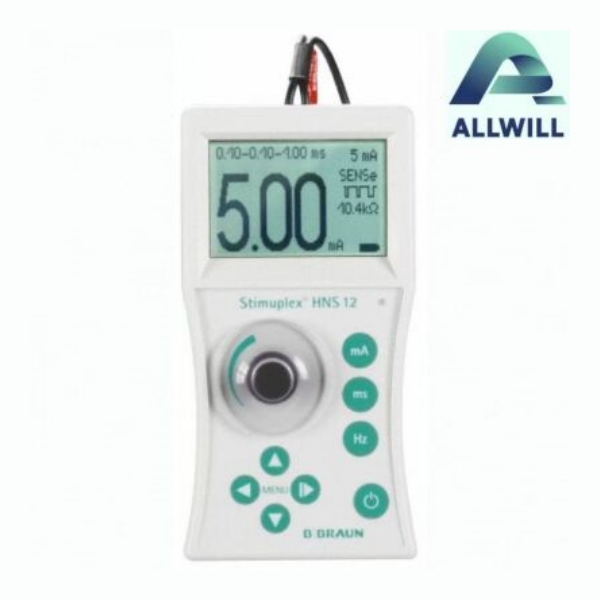
Take a mid-range capital item — the marketplace currently lists a Intuitive enhanced vision probe at $3,646 and a B. Braun Certofix nerve stimulator at $1,582. Assume installation and commissioning at a flat $400, a service contract at 12% of the purchase price each year, and consumables averaging 15% of the purchase price annually on the probe.
Over five years the Certofix costs $1,582 + $400 + (5 × $190) = roughly $2,932. The vision probe costs $3,646 + $400 + (5 × $438) + (5 × $547) = roughly $8,968 — more than twice its sticker price. The sticker price was never the decision.
The number worth negotiating is the service rate, because it recurs: moving from 12% to 8% takes about $730 off the probe over five years and about $316 off the stimulator.
What to put in the procurement file
Before the order: the device classification and the special controls that apply, the 510(k) or PMA reference for the model, the establishment registration status of the manufacturer, a dated recall check, and the name of the entity that will service the device with the specification the work will be performed against. After installation: the commissioning test results, the software and firmware revision, the calibration baseline, and the training record for the staff who will operate it.
The file is the deliverable. A hospital that keeps it can prove the decision was made properly even if the device later fails; one that does not is answering the same questions from memory two years later.
The six checks, in the order they should be run
Written as a sequence, the whole assessment takes under an hour and produces a document the finance committee can read: confirm the device class and the special controls that apply; find the 510(k) or PMA for the model in Devices@FDA; confirm the manufacturer’s registration and listing; run the model and lot against the recalls and early alerts list and print the result; ask the service provider to name the specification each procedure follows and whether any replaced part changes performance or safety characteristics; and write the five-year cost as purchase, commissioning, service rate and consumables. A device that fails any of the first four is not a discount opportunity, it is a decision to stop.
References
- FDA: Classify Your Medical Device — the three classes and the controls attached to each.
- FDA: Medical Device Databases — Devices@FDA and registration and listing.
- FDA: Medical Device Recalls and Early Alerts.
- FDA: Unique Device Identification System (UDI System) — identifying a device from manufacturing through distribution to patient use.
- GOV.UK / MHRA: Regulating medical devices in the UK — the Great Britain requirements that apply on top.
FAQ
What are hospital technology solutions?
They are the regulated devices and systems a hospital uses to diagnose, monitor and treat patients, together with the software and integration that connect them. What separates them from ordinary IT is that each one carries a device classification, premarket evidence and post-market obligations.
How do we know a device is cleared for the use we intend?
Check the model against Devices@FDA, which searches 510(k) notifications and PMA approvals, and compare the cleared indication with the one the department intends to use it for. Using a device outside its cleared indication is a clinical governance decision, not a procurement one.
Should a hospital buy refurbished equipment?
It is a legitimate route when the records are complete: premarket evidence for the model, a dated recall check, and service history naming the specification the work was performed against. The risk is not refurbishment itself but refurbishment whose scope cannot be established.
What is the single most important number in a total-cost model?
The annual service rate, expressed as a percentage of purchase price. It recurs every year, it varies by vendor and by device class, and it is negotiable at the point of sale rather than after installation.
Who is responsible when a device fails after installation?
Responsibility follows the work performed. A device maintained within its existing specifications remains a serviced device; one whose performance, safety characteristics or intended use were changed is remanufactured, and the entity that changed it takes on a manufacturer’s obligations.
Start from the classification, then the price. Listings on the marketplace name the model and the asking price, which is everything the public databases need to run a check.
Part of the Buying Guides & Comparisons guide.