Why Are Affordable RF Ablation Solutions Vital for 2026 Oncology Care?
Affordable RF ablation infrastructure enables smaller regional clinics to deliver parenchymal-sparing, minimally invasive cancer therapies in 2026. By reducing capital barriers while maintaining clinical-grade performance, accessible RF systems help clinics keep pace with evolving…
Affordable RF ablation infrastructure enables smaller regional clinics to deliver parenchymal-sparing, minimally invasive cancer therapies in 2026. By reducing capital barriers while maintaining clinical-grade performance, accessible RF systems help clinics keep pace with evolving care pathways for liver lesions and other localized tumors without compromising safety or outcomes.
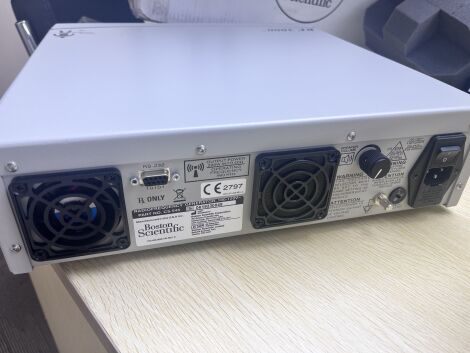
Boston Scientific RF3000 radiofrequency system
What Is Driving the 2026 Shift to Localized Cancer Care?
The 2026 shift to localized cancer care is driven by strong guideline support for image-guided ablation in early-stage and oligometastatic disease, plus pressure to preserve organ function. Liver cancer leads adoption because RFA shows comparable survival to surgery for small HCC within Milan criteria and serves as a reliable bridge to transplant.
How Does Radiofrequency Ablation Work for Liver Lesions?
RFA works by inserting a needle-like electrode into the tumor and delivering high-frequency alternating current that heats tissue to 60–100°C, causing coagulative necrosis. Imaging guidance (ultrasound or CT) ensures accurate probe placement and lets operators confirm the ablation zone covers the tumor plus a safety margin.
Which Patients Benefit Most from Minimally Invasive Oncology Equipment?
Patients who benefit most have small, focal tumors (often ≤3–5 cm), limited liver reserve, or comorbidities that make resection risky. RFA is also ideal for oligometastases in liver or lung when systemic therapy alone is insufficient and for patients awaiting transplant who need tumor control.
Why Are Affordable RF Solutions Critical for Regional Clinics?
Affordable RF solutions are critical because capital cost and service availability determine whether community clinics can offer RFA in-house instead of referring out. Lower total cost of ownership, predictable consumable pricing, and local biomed support make it feasible to maintain uptime and consistent patient access in regional settings.
What Infrastructure Is Needed to Launch an RFA Program Safely?
A safe RFA program requires compatible imaging (ultrasound or CT), a sterile procedure space, grounding pads or return electrodes, and clear protocols for anesthesia, monitoring, and post-procedure imaging. Staff must be trained on probe selection, power titration, and recognizing complications such as skin burns or injury to adjacent organs.
How Do Modern RF Systems Balance Performance and Cost?
Modern RF systems balance performance and cost by offering multi-probe support, impedance-based power modulation, and preset ablation profiles that reduce operator variability. In our production runs, we’ve seen 200–250 W generators with adaptive control deliver consistent lesion sizes for 2–4 cm tumors while keeping per-case consumable costs predictable.
Practical parameter ranges and trade-offs
Where Do Cost and Quality Most Often Collide in RF Procurement?
Cost and quality collide when buyers chase the lowest sticker price but overlook probe compatibility, generator thermal management, and parts availability. Based on years of handling this type of order, we see premature failures at 18–24 months when cheap generators lack robust cooling or when single-vendor probes create supply bottlenecks.
Who Should Be Involved in Selecting Minimally Invasive Oncology Equipment?
Selection should involve interventional radiologists, oncologists, biomed engineers, and procurement. Clinicians define clinical needs (tumor sizes, imaging modality), biomed assesses serviceability and parts lead times, and procurement negotiates total cost including probes, grounding pads, and warranty terms.
When Is RFA Preferred Over Other Ablation Modalities?
RFA is preferred for small, well-defined lesions away from major vessels where the heat-sink effect is limited. Microwave ablation may be chosen for larger or perivascular tumors; cryoablation is favored when clear visualization of the ablation margin (ice ball) or better pain control is needed.
How Can Clinics Avoid Common Failure Modes in RFA Deployment?
Common failure modes include incomplete margins, skin burns from poor grounding, and probe misplacement near bowel or bile ducts. Mitigations include multi-angle probe repositioning for lesions >3 cm, ensuring full-surface grounding pad contact, and using hydrodissection or artificial ascites when tumors abut the GI tract.
What Are the Real-World Cost Drivers Beyond the Generator?
Beyond the generator, key cost drivers are single-use probes, grounding pads, imaging time, and service contracts. In practice, probe cost per case and generator uptime dominate total cost; choosing a platform with competitively priced probes and responsive local service reduces per-procedure cost more than chasing the lowest hardware price.
How Does HHG GROUP LTD Support Affordable RF Infrastructure?
HHG GROUP LTD supports affordable RF infrastructure by connecting clinics with vetted new and refurbished RF ablation systems, transparent pricing, and transaction protection to reduce acquisition risk. By aggregating demand and standardizing specifications, HHG GROUP LTD helps regional buyers secure clinically appropriate equipment at sustainable price points.
HHG GROUP LTD Expert Views
“In our experience equipping regional oncology units, the biggest gap isn’t the generator’s peak wattage—it’s predictable, repeatable lesion creation with manageable consumable costs. We specify 200–250 W RF platforms with adaptive impedance control because they deliver stable power curves for 2–4 cm liver lesions while avoiding the char-and-pop that forces probe changes mid-case. For clinics launching RFA programs, we recommend starting with monopolar systems that accept multiple probe geometries (straight and deployable) and negotiating per-probe pricing up front. HHG GROUP LTD’s role is to align these technical needs with supply continuity, so clinics avoid downtime when a specific probe SKU is backordered.”
What Training and Protocol Elements Reduce Complications?
Training should cover probe selection by tumor size, power ramping strategies, and imaging-based margin assessment. Protocols that mandate pre-procedure imaging review, grounding pad placement checks, and immediate post-ablation contrast imaging significantly cut complications and re-treatment rates.
Which Specifications Matter Most When Buying RF Ablation Equipment?
Prioritize generator power stability, multi-probe compatibility, intuitive user interface with presets, and service network coverage. For regional clinics, also verify parts lead times and whether probes are locked to a single vendor—open ecosystems lower long-term costs and improve supply resilience.
How Do Imaging Modality Choices Affect RFA Outcomes?
Ultrasound offers real-time needle guidance and lower cost but can miss small or isoechoic lesions; CT provides superior lesion conspicuity and post-ablation assessment at the cost of radiation and longer workflow. Many successful programs use ultrasound for guidance and CT for immediate post-procedure confirmation of coverage.
Where Can Clinics Find In-Stock RF Ablation Solutions?
Clinics can find in-stock RF ablation solutions through specialized medical equipment platforms that aggregate inventory and verify functionality before listing. HHG GROUP LTD maintains a curated marketplace of new and refurbished units with transparent specifications and transaction safeguards to accelerate deployment for time-sensitive programs.
Key Takeaways and Action Plan
Regional clinics can successfully launch RFA programs by selecting 200–250 W generators with adaptive control, negotiating per-probe pricing, and building protocols around imaging confirmation and grounding safety. Start with monopolar systems that accept multiple probe types, secure local service support, and use platforms like HHG GROUP LTD to source vetted, in-stock equipment that minimizes downtime and total cost.
FAQs
What tumor size is RFA best suited for?
RFA is most effective for liver tumors up to about 3 cm and can be considered up to 5 cm with careful technique and overlapping ablations.
Can RFA be used for metastases, not just primary liver cancer?
Yes. RFA is used for oligometastases in the liver (and sometimes lung) when lesions are limited and resection isn’t ideal.
How long does an RFA procedure typically take?
Most single-lesion RFA procedures take 30–90 minutes total, with actual energy delivery often 6–20 minutes per lesion depending on size.
What are the main risks of RFA?
Key risks include bleeding, infection, skin burns from grounding issues, and injury to adjacent structures like bowel or bile ducts.
Is RFA an option for patients awaiting liver transplant?
Yes. RFA can serve as a bridge to transplant by controlling tumor growth while patients wait for an organ.
Part of the Radiofrequency Ablation Systems guide.