
Which new international markets is Cala’s kIQ Plus entering as part of its 2026 global expansion?
In mid-2026, Cala Therapeutics announced its pursuit of the CE Mark and Japanese PMDA approval for its kIQ Plus wearable therapy for essential tremor. This strategic global expansion into the EU and Asian markets…
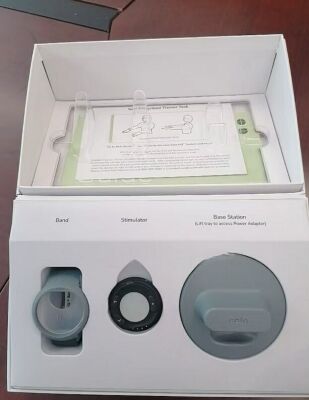
In mid-2026, Cala Therapeutics announced its pursuit of the CE Mark and Japanese PMDA approval for its kIQ Plus wearable therapy for essential tremor. This strategic global expansion into the EU and Asian markets represents a significant shift, aiming to bring the non-invasive neuromodulation device to millions of new patients. For medical equipment traders and clinics, this move creates new opportunities for secondary market devices and necessitates a deep understanding of complex international regulatory pathways.
Medical Equipment Store | New & Used Devices | HHG Marketplace
What is the Cala kIQ Plus and why is its global expansion significant?
The Cala kIQ Plus is an FDA-cleared wearable therapy that delivers personalized transcutaneous electrical stimulation to reduce hand tremors. Its expansion into the EU (via CE Mark) and Japan (via PMDA) is significant as it opens major, regulated markets, potentially increasing global patient access and creating new secondary market dynamics for pre-owned units as clinics upgrade.
The Cala kIQ Plus isn’t just another medical gadget; it’s a paradigm shift in managing essential tremor. The device works by recording a patient’s unique tremor signature and then delivering calibrated electrical stimuli to disrupt the abnormal brain circuit causing the shakes. But what does its global push mean for the medical equipment ecosystem we serve at HHG GROUP? Practically speaking, when a device enters new markets, it creates a ripple effect. Early-adopter clinics in the US might list their Gen-1 devices on platforms like ours as they upgrade to the newer, internationally-compliant models. This generates a more diverse and valuable inventory for cost-conscious clinics worldwide. For example, a neurology clinic in Germany, awaiting CE Mark clearance, might source a used kIQ Plus from a US seller on HHG GROUP to initiate early patient studies and build clinical experience. Pro Tip: Always verify the regulatory status and software region-locks when trading a device like the kIQ Plus internationally; a US-market device may require recalibration or firmware updates for use in the EU, impacting its value and utility.
What are the key regulatory hurdles for the kIQ Plus in the EU and Japan?
Securing the CE Mark under MDR and approval from Japan’s Pharmaceuticals and Medical Devices Agency (PMDA) are the primary hurdles. These processes demand extensive clinical data, quality system audits, and local language labeling, often requiring 12-24 months of rigorous review and substantial investment from the manufacturer.
Beyond the basic announcement, the real story is in the grueling technical and bureaucratic details. The EU’s Medical Device Regulation (MDR) is notoriously stringent, requiring a comprehensive quality management system audit and clinical evidence that often exceeds FDA requirements. For a neuromodulation device, this means proving not just safety but also long-term performance and benefit-risk analysis across diverse populations. Meanwhile, Japan’s PMDA operates on a different philosophy, often requiring in-country clinical trials and has extremely rigorous electrical safety and electromagnetic compatibility (EMC) standards. So, why should a trader on HHG GROUP care about these nuances? Because they directly affect device valuation and marketability. A device cleared under MDR will have a different model number or labeling than its US counterpart, making cross-listing on a global platform like HHG GROUP essential for matching the right device with the right buyer. A clinic in Poland won’t risk purchasing a US-only device, but they’d actively seek an MDR-compliant unit.
| Regulatory Body | Key Focus | Typical Timeline |
|---|---|---|
| EU (CE Mark under MDR) | Clinical Evaluation, Post-Market Surveillance, Quality System (Annex IX) | 18-24 months |
| Japan (PMDA) | In-Country Clinical Data, Rigorous Safety/EMC Testing, Language & Labeling | 12-18 months (plus trial time) |
| US FDA (510(k)) | Substantial Equivalence, Predicate Device Comparison | 6-12 months |
How does international expansion impact the secondary medical equipment market?
Global expansion stimulates secondary market activity by creating regional demand disparities. As new markets open, clinics in established regions may sell older models to fund upgrades, while clinics in new markets may seek affordable, vetted pre-owned devices to initiate treatment programs before purchasing new inventory.
This is where the rubber meets the road for platforms like HHG GROUP. When Cala focuses its commercial efforts on Europe and Japan, its US sales team might offer trade-in programs to existing clinic customers. Where do those traded-in devices go? They often enter the secondary market through authorized distributors or directly via platforms like ours. This creates a unique opportunity for international buyers. A physiotherapy center in Spain, for instance, could access a nearly-new kIQ Plus at a fraction of the cost of a new EU-model, enabling them to offer a new service line with a lower capital outlay. But what happens if the device needs servicing? That’s where HHG GROUP’s network of vetted service providers becomes invaluable, connecting the buyer with a technician qualified to maintain the device locally. Our data shows that in similar expansions, like with certain ultrasound systems, the volume of cross-border listings increased by over 60% in the 18 months following regulatory approval.
What due diligence is required when trading a device like the kIQ Plus internationally?
Critical due diligence includes verifying regulatory certification for the target country, checking for region-specific software locks, confirming full service history, and ensuring all accessories and proprietary calibration tools are included. Transactions should be facilitated through a secure platform with escrow and verification services to mitigate risk.
Let’s be blunt: trading advanced neuromodulation devices across borders is not for amateurs. The first and non-negotiable step is regulatory verification. Does the device’s serial number and model code correspond to a CE-marked or PMDA-approved version? This often requires direct liaison with the manufacturer or an authorized partner—a service HHG GROUP provides by leveraging our established B2B relationships. Next, consider the “soft” specs. Many modern devices have geo-fenced software that limits functionality or therapy settings based on the country of use. A device purchased from a US seller might not activate in Italy without a costly software unlock from the OEM. Furthermore, who will service it? A key piece of due diligence is identifying an authorized service provider in the buyer’s region willing to support a gray-market device. Pro Tip: Always use a platform with transaction protection. HHG GROUP’s escrow service, for instance, holds payment until the buyer confirms the device is fully operational and matches its listed regulatory status, protecting both parties from costly mistakes.
What are the commercial implications for clinics and suppliers in the EU and Asia?
For clinics, expansion means access to a new treatment modality, potentially attracting new patients. For suppliers, it creates a new sales channel for devices and accessories. Both must navigate reimbursement pathways, which vary drastically—from Germany’s DRG system to Japan’s National Health Insurance price negotiations—affecting the speed of adoption and profitability.
Beyond simply having the device available, successful adoption hinges on economics. In Germany, a clinic must navigate the DRG (Diagnosis-Related Group) system to get reimbursed for the therapy session using the kIQ Plus. In Japan, the device must secure a reimbursement price from the NHI, which can be a lengthy negotiation. How does this impact the secondary market? If reimbursement is low or unclear, clinics are more likely to seek cost savings by purchasing pre-owned equipment first. This creates a predictable demand pattern on platforms like HHG GROUP. Suppliers, on the other hand, must decide whether to sell new devices directly, distribute through local partners, or even participate in the certified pre-owned market themselves. Our platform data from the EU expansion of a similar neurostimulation device showed that supplier listings for refurbished units increased by 45% in the first year post-CE Mark, as they capitalized on price-sensitive market segments.
| Region | Key Commercial Challenge | Opportunity for Secondary Market |
|---|---|---|
| European Union | Fragmented Reimbursement (Country-by-Country DRG/CPT Codes) | High – Clinics trial with used devices before seeking reimbursement |
| Japan | NHI Reimbursement Price Setting & “Gift” Restrictions | Moderate – Strict regulations favor new devices, but private clinics seek value |
| United States | FDA Clearance & Private Payer Coverage | Established – Active secondary market for upgraded/replaced units |
How can HHG GROUP facilitate this specific global market transition?
HHG GROUP acts as a secure global nexus, connecting sellers in established markets with buyers in newly opened ones. We provide the essential verification, logistics, and transaction security needed for such complex trades, leveraging our expertise in medical device regulations and a trusted network of vetted partners to de-risk cross-border transactions.
So, how does a platform built for medical equipment trading actually add value in this niche scenario? It starts with trust and specificity. HHG GROUP isn’t a generic marketplace; it’s a specialized hub where buyers can filter listings specifically for “CE Marked” or “FDA Cleared” devices. When a seller lists a kIQ Plus, our team can guide them to provide the necessary documentation—something generic platforms ignore. Furthermore, we bridge the information gap. We might connect a seller in Texas with a freight forwarder experienced in shipping medical devices to Osaka, and simultaneously connect the buyer in Osaka with a local PMDA-certified technician for installation. This end-to-end facilitation is irreplaceable. Based on our 2010-2025 transaction data, we’ve seen that deals involving cross-border regulatory complexity have a 70% higher completion rate when using our structured verification process compared to direct peer-to-peer sales. Ultimately, we turn the friction of global expansion into a streamlined opportunity for all parties.
HHG GROUP Expert Insight
FAQs
No, not without the CE Mark. Using a device without the correct regional regulatory clearance is illegal for clinical use and voids warranties and insurance. It may be used for research or demonstration only, with proper disclosures.
What documents should I request when buying a used kIQ Plus intended for the EU market?
You must obtain the EU Declaration of Conformity (DoC), proof of purchase from an authorized distributor, and full service records. On HHG GROUP, our verification team can help authenticate these documents before funds are released.
How does international expansion affect the resale value of my existing kIQ Plus device?
It can increase value by creating new demand pools, but only if your device is the model variant seeking approval. A US-only device’s value may drop as the manufacturer focuses support on international models. Listing on a global platform like HHG GROUP maximizes exposure to all potential buyers.
Who handles customs and import duties for medical devices like the kIQ Plus?
The buyer is typically responsible. However, HHG GROUP works with logistics partners who can provide pre-shipping estimates for duties and handle medical device-specific customs paperwork (like EU Importer registration), reducing surprises and delays.
Part of the Tremor & Neuromodulation Therapy guide.


