
FDA Requirements for Used Medical Devices: What a Buyer Must Establish Before Purchase
FDA requirements for used medical devices come down to model clearance, the work done on the unit and the seller's claims. Here is the document set to verify.
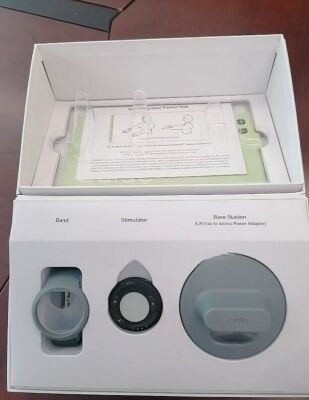
A US buyer looking at a pre-owned unit usually asks whether it is \”FDA approved\” and receives an answer that is either evasive or simply wrong. The question is badly framed. What matters is which configuration was cleared, what has been done to this unit since it left the original manufacturer, and whether the seller can document both. Those are three separate checks, and no listing badge settles any of them.
Three Different Questions Behind FDA Requirements
FDA requirements for used medical devices split into three questions: whether the model configuration has a clearance or approval, whether the work done on the unit changed its regulatory status, and whether the seller\’s description matches the device. A single \”FDA compliant\” statement answers none of them.
The first question is about the product. A clearance belongs to a manufacturer\’s device configuration, with a defined intended use, labeling and technology. The second is about activity. Servicing, refurbishment and remanufacturing are treated differently because they change different things. The third is about the transaction. A seller can describe a unit accurately, approximately, or not at all, and the buyer carries the consequences of accepting that description.
Procurement teams tend to collapse all three into a document check. That is where deals go wrong: a seller supplies a 510(k) number for the model, the buyer treats it as clearance for the unit, and nobody examines the service history or the installed software version. The table below separates what each question actually needs.
| Question | What it asks | Evidence that answers it | Who usually holds it |
|---|---|---|---|
| Model status | Was this configuration cleared, approved or exempt for its intended use? | Clearance or approval number, labeling, indications, model list | Original manufacturer, or the public FDA database |
| Activity status | Has servicing or refurbishment crossed into remanufacturing? | Work scope, parts list, software history, test results | Service provider or refurbisher |
| Transaction status | Does the seller\’s description match the unit being shipped? | Nameplate photographs, serial number, document pack | Seller, verified independently by the buyer |
Clearance Belongs to the Configuration, Not the Unit
A 510(k) clearance attaches to a specific device configuration and intended use, held by a named manufacturer. A used unit does not carry its own clearance; it inherits the model\’s regulatory history only while its configuration, labeling and software remain within what was cleared.
That distinction matters because \”same model\” is a weaker statement than it sounds. Configurations can differ by model number, hardware revision, software version, accessories, and the labeling supplied with the device. A unit rebuilt with a different subsystem, or updated beyond the software version covered by the clearance, may no longer sit inside the configuration the manufacturer cleared. FDA does not issue per-unit certificates for used equipment, and no database record confirms the condition of a specific serial number.
For a buyer, the practical test is to compare three identifiers: the nameplate model and serial number, the software or firmware version reported by the device, and the model numbers listed in the clearance. If any of the three does not line up, the question moves from \”what does the database say\” to \”what changed, and who approved the change\”. That is a document question, not a search question.
What a 510(k) Does and Does Not Cover
A 510(k) records that a manufacturer demonstrated substantial equivalence to a legally marketed predicate device for a stated intended use. It is not a certificate of condition, calibration status or resale readiness, and it does not authorize changes to the cleared configuration.
The clearance is a premarket review outcome. It says the manufacturer provided the information FDA required to find the device substantially equivalent; it does not say the device performs correctly today, that consumables are included, or that a service agent followed the manufacturer\’s procedures. Devices that go through premarket approval carry a different record again, and some device types are exempt from premarket notification altogether. \”Cleared\”, \”approved\” and \”exempt\” are not interchangeable, and none of them means \”certified\”.
The database record is still useful. It identifies the applicant, the device name, the product code, the clearance date, and often the model numbers and a supporting summary. What it cannot tell you is whether the unit in front of you is the configuration described, whether its software was updated, or whether the seller\’s service history is complete. Those gaps are filled by the document pack, not by the database.
| What the record can establish | What it cannot establish |
|---|---|
| The applicant and the date of the premarket decision | That the specific serial number was part of the cleared production |
| The device name, product code and stated intended use | That the unit is in the condition described in the listing |
| Model numbers and supporting summary, where published | That later software or hardware revisions remain within scope |
| Whether a PMA applies instead of a 510(k) | That calibration, performance verification or servicing was performed |
Servicing, Refurbishing and Remanufacturing: Where the Line Sits
Servicing keeps a device within its cleared configuration; remanufacturing changes it enough that FDA may treat the entity doing the work as the manufacturer. Refurbishing sits between them, and the label on the invoice does not decide which applies. The changes made to the device do.
FDA has written about these activities specifically because the vocabulary in the secondary market is loose. In broad terms, servicing maintains or repairs a device without significantly changing its performance, safety or intended use. Remanufacturing involves changes that do significantly affect those characteristics, which can bring premarket requirements back into play. Refurbishment is a commercial term, not a regulatory category; a refurbishment that replaces wear parts and verifies performance is a different act from one that installs a new subsystem or alters specifications.
The line is not academic. If a third party crosses into remanufacturing, the regulatory obligations may attach to that party rather than the original manufacturer, including design controls, labeling and complaint handling. For a buyer, the useful question is not \”was it refurbished\” but \”what was replaced, what was tested, and who concluded the device still matches its cleared configuration\”.
| Activity | Typical work | Question it raises | Record that answers it |
|---|---|---|---|
| Servicing | Repair, replacement of wear parts, preventive maintenance, calibration | Did the work stay within the manufacturer\’s specifications? | Work order, parts list, calibration and test results |
| Refurbishing | Cosmetic work, wear parts, cleaning, performance testing | Does the unit still match the cleared configuration and labeling? | Scope of work, test results, label and nameplate photographs |
| Remanufacturing | New subsystems, altered performance or specifications, changed intended use | Does the change require a new premarket submission? | Change assessment, design file, regulatory determination |
Documents to Request From a US Seller
The document pack is the only part of the transaction a buyer can examine before payment, and it should be requested as a set rather than negotiated item by item. Each document answers a different question, and the absence of one is information in itself. A seller who cannot produce a service history is not necessarily selling a bad unit, but the buyer is now underwriting an unknown.
Ask for the records below. Where a document is unavailable, record that fact in the deal file rather than accepting a verbal assurance; the gap becomes part of the acceptance decision and, where appropriate, part of the commercial terms or the decision not to proceed.
Records and checks: what to request, what each proves
| Document | What it proves | What its absence leaves open |
|---|---|---|
| Service and repair history | Which faults were addressed, by whom, and whether the work followed the manufacturer\’s procedures | Whether the unit has an unresolved fault pattern or a non-standard repair |
| Preventive maintenance records | That scheduled maintenance was performed and which wear parts were replaced | Whether the unit is running on deferred maintenance |
| Calibration and performance verification results | That measured outputs were checked against the manufacturer\’s tolerances on a stated date | Whether the unit met specification at the time of sale; acceptance testing becomes mandatory |
| Software and firmware version | Which version the unit runs and whether it sits within the cleared configuration | Whether an update moved the device outside its cleared version, or added undocumented functions |
| Accessory and consumable status | What is included, what is missing, and whether consumables are single-use | Whether a \”complete system\” claim covers only the capital item |
| Battery and wear-item condition | Age and replacement status of batteries and other limited-life components | Whether replacement cost and downtime fall to the buyer immediately |
| Decontamination status | That the unit was cleaned and, where required, decontaminated before shipment | Handling and transport risk, and possible regulatory exposure at the border |
| Warranty position | What, if anything, the seller or a third party will cover after delivery | Whether every post-delivery failure becomes the buyer\’s cost |
For single-use devices, add the original labeling, the reprocessing status and a written statement that the buyer is responsible for confirming legality in their jurisdiction. HHG does not encourage the reuse or resale of single-use devices without that confirmation, and a recall or safety notice does not change the underlying labelling rules.
Using FDA Databases to Check a Model
The FDA medical device portal publishes the databases that are the right starting point for the model, not the endpoint for the unit. The 510(k) database, the PMA database and the recall database each answer a different question, and reading them well takes less time than reading them literally.
Start with the 510(k) database and search by applicant, device name or product code. Open the record and check the model numbers against the nameplate, not against the seller\’s title. Then check the PMA database for devices that go through the higher review path. Finally, search the recall database for the manufacturer and model; a recall history does not condemn a model, but it tells you which failure modes to ask about and whether the seller\’s unit falls within an affected lot or serial range.
Two limits matter. First, registration and listing records show that an establishment and a device listing exist; they do not certify a unit\’s condition. Second, a database entry is only as good as the identifiers you search with. If the listing title is garbled or the model number is missing, resolve the identity before drawing any conclusion from the search.
What Cannot Be Assumed From a Listing
A listing is a commercial description, not a regulatory record. Several claims that appear routinely in secondary-market listings cannot be assumed to be true for a specific unit, and some of them should not appear at all.
The following should never be inferred without documents: that the unit is FDA approved or cleared as an individual device; that it carries a CE mark or UKCA mark for the configuration being sold; that it is calibrated or performance-verified; that accessories, consumables or software licenses are included; that a single-use component can be reprocessed or resold; that the seller is an authorized distributor; and that any warranty exists. Each is a separate statement that needs its own evidence.
The practical response is to ask the seller to remove ambiguous wording and replace it with specific statements: model, serial number, software version, included accessories, the test performed, the date, and the entity that performed it. A seller who can do that is usually also able to supply the underlying records. A seller who cannot should be treated as an unknown quantity, however confident the listing sounds.
Recording the Verification
Verification is only useful if it is written down in a form someone else can audit. A one-page record attached to the purchase order, listing what was checked, what was received and what remained open, protects the buyer at acceptance and later at resale.
Record the make, model, serial number and UDI where available; the software or firmware version; the clearance or approval number checked and the date of the database search; the documents received and the documents missing; the decontamination status; and the name of the person who reviewed the pack. Add photographs of the nameplate, labels and included accessories. Where a gap was accepted, state why and who approved the acceptance.
This record is also the baseline for the first maintenance cycle. A biomedical team that inherits a unit with no verification file spends the first service visit reconstructing it, often at the buyer\’s cost. The same file supports resale later, because the next buyer will ask for exactly the documents listed above.
If you are assessing a US-market unit and want the document pack reviewed before payment, send the model, serial number and what you already hold to the HHG team. More guides on records, verification and refurbishment are in the Knowledge section.
Questions Buyers Ask About FDA Status
Does a used medical device need its own 510(k)?
A used device does not receive a new 510(k) simply because it is resold. The clearance belongs to the model configuration and its manufacturer. If the unit remains within that configuration, its original regulatory history still describes the model; if it was significantly modified or remanufactured, the party responsible for the change may need to assess whether a new submission is required.
Can I sell a used device in the US without FDA involvement?
Selling a used device is not automatically an FDA approval process, but it is not free of obligations. The seller must describe the device accurately, must not claim clearance or approval it cannot support, and must address labeling, decontamination and any modifications. Whether establishment registration or listing applies depends on the seller\’s role and activities, so the position should be confirmed for the specific transaction rather than assumed.
What is the difference between servicing and remanufacturing?
Servicing maintains or repairs a device without significantly changing its performance, safety or intended use, and is generally performed within the manufacturer\’s specifications. Remanufacturing involves changes significant enough that FDA may treat the entity performing them as the manufacturer, with the premarket and quality obligations that follow. The distinction rests on what was changed and its effect on the device, not on the word used in the sales listing.
What is 21 CFR Part 820 for medical devices?
Part 820 is FDA\’s quality system regulation for device manufacturers. It sets requirements for design controls, purchasing, production, corrective action and records. It applies to the manufacturer\’s quality system, not to a clinic that uses or resells a device, and it is not a per-unit certificate of condition. Buyers should treat it as context about the manufacturer\’s obligations rather than as evidence about the specific unit.
Related articles
 India CDSCO and Imported Used Medical Equipment: Licensing Before LogisticsKnowledge
 ANVISA Registration and Used Medical Equipment in Brazil: The Practical PathKnowledgeTGA and Used Medical Devices: What Australian Buyers and Sellers Must CheckKnowledge
 Importing Used Medical Devices into Canada: Health Canada\’s Requirements in SequenceKnowledge
