
Importing Used Medical Devices into Canada: Health Canada\’s Requirements in Sequence
Health Canada used medical device import runs in sequence: class, device licence, establishment licence, bilingual labelling and records. Here is the order.
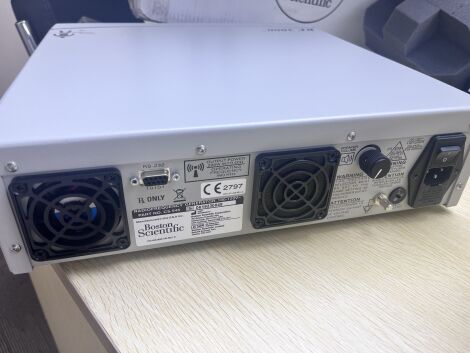
Canada is often treated as a smaller version of the US market. The sequence is different: the licence attaches to the device, the establishment licence attaches to the operator, and the labelling has to work in two languages. A used unit can satisfy all three, but only if the importer checks them in order.
The Canadian Framework in Five Steps
The Canadian route runs in five steps: classify the device, confirm the device licence, hold an establishment licence, meet bilingual labelling and record-keeping duties, then import and sell. Used equipment follows the same sequence, with extra questions about condition and history.
Health Canada regulates medical devices under the Food and Drugs Act and the Medical Devices Regulations. The regulations set out classification, licensing, labelling, record-keeping and recall obligations. The Health Canada medical devices portal is the starting point for the current forms and guidance.
The sequence matters because each step depends on the one before it. You cannot confirm the labelling without knowing the class and the licence position, and you cannot assess the licence without knowing who the manufacturer is and what configuration is being imported. A used unit adds a fourth variable: what happened to the device before it arrived, and whether that changed the device identity or the licence position. Other markets take different routes, including FDA review in the US and the EU Medical Device Regulation 2017/745 in Europe, and WHO guidance frames the shared principles. The Canadian file should be built for Canada, not adapted from another market.
Device Licensing and Class
Health Canada classifies devices from Class I to Class IV by risk. Class II, III and IV devices need a medical device licence before sale or import; Class I devices do not need a device licence but still sit inside the regulatory framework.
The device licence is held by the manufacturer and identifies the device and its intended use. An importer does not obtain a new licence for each used unit; it verifies that the device being imported is covered by a valid licence and that the unit matches the licensed device. That verification is where used equipment becomes complicated, because a unit rebuilt with a different configuration, a changed intended purpose or a new manufacturer identity may no longer sit under the original licence.
Class I devices follow a different path: no device licence, but the manufacturer and importer still need to meet labelling, record-keeping and post-market obligations. The absence of a licence is not an absence of regulation, and an importer who treats Class I as unregulated is building a file that will not survive a recall.
Establishment Licensing
An establishment licence is required for the Canadian establishment that manufactures, imports or distributes devices, and it is separate from the device licence. It is renewed annually and depends on quality-system and record-keeping evidence.
The establishment licence is the operator\’s permission to conduct the activity, not a certificate for a particular product. Health Canada expects the licensee to have a quality management system appropriate to the devices and activities, and to keep distribution records that support recalls. The Medical Device Single Audit Program, known as MDSAP, is the audit route Health Canada recognizes; the older CMDCAS program has been replaced. Confirm that the certificate covers the site and the device family, not just the company name.
For a used-equipment importer, the establishment licence is also the anchor for the records that make traceability possible. If the licence is held by a broker but the actual import, storage and distribution are performed by another entity, the responsibilities should be written down. An establishment licence that exists on paper but does not match the operation is a compliance gap, not a technicality.
What Refurbishment Does to the Licence Position
Refurbishment does not automatically create a new device, but a significant change can move the unit outside the licensed configuration. The refurbisher must decide whether the work is servicing or a modification that requires a new licence or a new manufacturer identity.
The licence describes a device and its intended use. Routine servicing, replacement of wear parts and performance verification keep the unit within that description if the manufacturer\’s procedures are followed. A new subsystem, a changed performance specification, a new user interface or a software function that alters behavior can take the unit outside it. At that point the entity responsible for the change may need to hold the licence as the manufacturer, or the change may be impermissible under the existing licence.
This is a decision to document before the work starts, not after the unit is packed. The file should describe the original configuration, the change, the effect on performance and risk, and the licensing conclusion. If the conclusion is that the device remains within the licensed configuration, the evidence should show why. If it is not, the project needs a different regulatory route and a different timeline.
Bilingual Labelling and Instructions
Medical device labelling for Canada must generally be in English and French, and the importer must ensure the label and instructions meet the applicable requirements. A used unit with a single-language label may need a compliant label before sale.
Bilingual labelling is not only a translation exercise. The label has to carry the required device identification, the manufacturer and, where applicable, the importer, plus the instructions and warnings in both languages. A sticker added at the warehouse can satisfy a language requirement only if it is controlled, legible and does not obscure required information. The artwork, the application and the result should be recorded.
Instructions for use are part of the same requirement. A unit supplied with an English-only manual, or with a manual that describes a different software version, is not ready for the Canadian market even if the device itself is in good condition. Confirm the language, the version and the completeness of the instructions before the unit ships.
Record Keeping and Recall Readiness
Importers and distributors must keep distribution records that allow a recall to reach the current owner, and they must have a recall procedure that can be executed. The record set is the difference between a contained recall and an uncontrolled one.
The records should link each unit to its manufacturer, model, serial number or lot, the date of import, the customer and the date of distribution. Complaints should be logged and routed to the manufacturer, and the importer should be able to show how it would notify customers if a recall were issued. For used equipment, the chain is longer and the records are often thinner, which is exactly why the importer\’s own register matters.
Recall readiness also depends on the service history. A unit that was repaired by a third party may have a modification the manufacturer does not know about, and a recall that assumes the original configuration may not reach the actual risk. That is not a reason to avoid used equipment; it is a reason to document the configuration at import.
Documentation for a Canadian Buyer
A Canadian buyer should receive the documents that prove the device, the operator and the unit are aligned. The list below is the working set; the absence of an item should be recorded and assessed, not covered by a general assurance.
Records and checks: the Canadian import file
| Document | What it proves | What its absence leaves open |
|---|---|---|
| Device licence | That the device is licensed for sale in Canada, where required | Whether the import can lawfully proceed |
| Establishment licence | That the importer or distributor is licensed for the activity | Whether the operator can import, store and distribute |
| MDSAP or quality-system certificate | That the site has been audited against the recognized program | Whether the quality system covers the device family |
| Declaration of conformity and technical file | The configuration and the basis for conformity | Whether the unit matches the licensed device |
| Bilingual label and instructions | That the labelling meets Canadian language requirements | Whether the unit can be sold after import |
| Service and calibration records | What was done and whether performance was verified | Whether the condition matches the description |
| Software and firmware record | The version installed and its place in the licensed configuration | Whether the unit has drifted from the licensed version |
| Accessory and consumable list | What is included and which items are single-use | Whether the system is complete and lawfully resellable |
| Decontamination record | That the unit was cleaned and handled appropriately | Whether transport created an exposure |
| Distribution and complaint records | That the unit can be traced and a recall can reach the owner | Whether post-market action can be completed |
What to Confirm Before Shipping
Most Canadian import problems are detectable before the unit leaves the warehouse. The check is administrative, but it has to happen while the unit is still in the seller\’s control, because remedies are cheaper before freight and customs are involved.
Confirm the class and the licence number, and verify that the licence is current. Confirm the importer\’s establishment licence and the scope of its quality-system certificate. Confirm that the label and instructions are bilingual and that the software version matches the licensed configuration. Confirm the importer of record, the Incoterms rule, the insurance and the decontamination status. Then confirm that the unit\’s serial number and accessories match the documents, and that the buyer has a route to service and parts after import.
Where an item cannot be confirmed, record it as an open item with an owner and a date. A closed shipping decision with an open documentation gap is better than an assumption that the gap will be resolved after arrival, when the leverage has moved to the other side of the transaction. For the logistics sequence around that decision, see the guide to exporting medical equipment from Hong Kong.
Questions About Canadian Import
Do used medical devices need a Health Canada licence?
Used devices are not exempt from the Medical Devices Regulations. Class II, III and IV devices require a valid device licence before sale or import, and Class I devices remain subject to labelling, record-keeping and post-market obligations. The importer should verify the licence position for the specific device and confirm that the used unit matches the licensed configuration.
What is an establishment licence?
An establishment licence authorizes a Canadian establishment to manufacture, import or distribute medical devices. It is separate from the device licence, is renewed annually, and depends on quality-system and record-keeping evidence. Importers and distributors need one for the activities they perform, and the licence should match the actual operation.
Does labelling have to be bilingual in Canada?
Medical device labelling for the Canadian market must generally be in English and French, with limited exceptions. The label and instructions should carry the required identification, warnings and directions in both languages. An importer should confirm the exact requirement for the device and record how the bilingual labelling was applied.
What records should an importer keep for a used device?
Keep the device licence reference, establishment licence, quality-system certificate, declaration of conformity, bilingual labelling and instructions, service and calibration records, software version, accessory list, decontamination record and distribution records. Together they allow the importer to trace the unit, answer a customer question and execute a recall if one is issued.
Related articles
 India CDSCO and Imported Used Medical Equipment: Licensing Before LogisticsKnowledge
 ANVISA Registration and Used Medical Equipment in Brazil: The Practical PathKnowledgeTGA and Used Medical Devices: What Australian Buyers and Sellers Must CheckKnowledgeEU MDR and Used Medical Devices: What Changes When a Unit Crosses the BorderKnowledge
