How does INDIBA active cell therapy accelerate athlete recovery?
INDIBA CT8 and CT9 deliver 448 kHz monopolar radiofrequency that stimulates ion exchange, deep circulation, and cellular metabolism, accelerating tissue repair from the inside out. Applied in acute and chronic sports injuries, this non‑invasive…
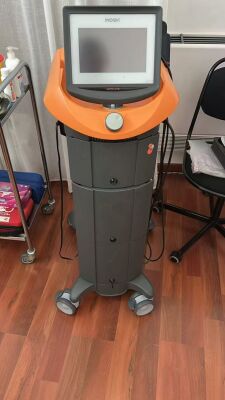
INDIBA CT8 and CT9 deliver 448 kHz monopolar radiofrequency that stimulates ion exchange, deep circulation, and cellular metabolism, accelerating tissue repair from the inside out. Applied in acute and chronic sports injuries, this non‑invasive technology reduces pain quickly, shortens rehabilitation timelines, and allows physiotherapy clinics and sports medicine centers to differentiate with faster, measurable outcomes for athletes and active patients.
INDIBA CT8 & CT9 therapy devices
How does 448 kHz INDIBA radiofrequency work at the cellular level?
At 448 kHz, INDIBA CT8 and CT9 create a biocompatible electromagnetic field that increases ion exchange across cell membranes, improves microcirculation, and boosts oxygen delivery. This combination enhances cellular metabolism, fibroblast activity, and collagen synthesis, promoting faster regeneration of muscles, tendons, and ligaments while modulating inflammation and pain.
Clinically, this “proionic” effect has been shown to safely raise deep tissue temperature and maintain it for up to 45 minutes, improving mobility and functional recovery. Unlike generic RF or superficial heat, the 448 kHz signal is tuned to interact harmoniously with human bioelectric activity, supporting both thermal and sub‑thermal biological responses. In practice, we use low‑thermal biostimulation in acute injuries and gradually progress to vascularization and hyperactivation modes as tissue tolerance allows.
Key cellular mechanisms
-
Enhanced ion exchange and waste clearance across cell membranes.
-
Increased capillary blood flow, oxygenation, and lymphatic drainage.
-
Stimulation of fibroblasts, collagen, and elastin for structural repair.
-
Modulation of inflammatory pathways and reduction of oxidative stress.
From an engineering standpoint, the CT8/CT9 electrode geometry and monopolar circuit ensure current density concentrates in targeted tissues, rather than dissipating superficially, which is why athletes report both deeper relief and faster functional gains compared to conventional diathermy.
What clinical evidence supports faster athlete recovery with INDIBA CT8 & CT9?
Randomized trials using 448 kHz capacitive‑resistive monopolar radiofrequency report significant short‑term pain reduction and functional improvement in knee osteoarthritis, rotator cuff tendinopathy, and tendon elasticity changes in athletes. In sports physiotherapy, deep blood flow increases of up to 79% have been documented, correlating with accelerated healing and performance recovery.
In practice, teams using INDIBA report reduced downtime after hamstring strains, sprains, and muscle tears, and longer career longevity in high‑load athletes thanks to better management of chronic tendinopathies. The CT8 and CT9 integrate this same 448 kHz platform in power configurations tailored to clinic workloads, making high‑evidence technology accessible to outpatient rehab centers.
Representative clinical outcomes table
For clinic directors, the key is protocolizing these evidence‑based indications into clear service lines—acute sprain management, chronic tendon rehab, and post‑surgical optimization—paired with outcomes tracking to demonstrate ROI.
Why are INDIBA CT8 & CT9 different from standard physical therapy modalities?
Traditional physiotherapy technologies like TENS, ultrasound, and simple heat packs primarily modulate pain or provide superficial thermal effects, often without measurably altering tissue biology. INDIBA CT8 and CT9 instead use a patented 448 kHz monopolar capacitive‑resistive system that actively drives cellular biostimulation, deep vascular changes, and hyperthermia, all within controllable safety margins.
From a therapist’s standpoint, this translates into shorter protocols for comparable or better results, particularly when integrated with manual therapy and exercise. For example, combining INDIBA CT9 with post‑training massage can normalize muscle tone and reduce inflammation more effectively than massage alone, improving readiness for the next session and lowering re‑injury risk.
Technically, the CT8 offers up to 350 VA capacitive and 100 W resistive power—ideal for multi‑discipline clinics—while the CT9 reaches 450 VA and 200 W, giving sports medicine centers enough headroom for deep structures such as hip musculature or thick tendons.
Which injuries and sports conditions can benefit most from INDIBA CT8 & CT9?
INDIBA CT8 and CT9 are widely used in sports physiotherapy for muscle tears, sprains, tendinopathy (Achilles, patellar, shoulder), arthrosis, fracture healing support, post‑surgical rehab, and chronic low back pain. The technology can be applied safely from the acute phase to chronic conditions, adjusting parameters for biostimulation, vascularization, or hyperactivation based on clinical goals.
In acute hamstring or calf strains, early low‑thermal sessions can reduce edema and pain, allowing earlier active movement and graded loading. In chronic patellar tendinopathy, a sequence of vascularization and hyperactivation sessions can remodel collagen and relieve persistent pain, complementing eccentric exercise programs. High‑impact sports—football, cycling, tennis, athletics—have adopted INDIBA as a core tool for maintaining performance continuity throughout congested competition calendars.
Clinics that specialize in running, triathlon, racket sports, or team sports can structure packages around typical injury patterns, using INDIBA CT8/CT9 as the anchor technology that differentiates them from generalist physiotherapy providers.
How can physiotherapy clinics integrate INDIBA CT8 & CT9 into existing rehab workflows?
The most effective integration treats INDIBA CT8 and CT9 as an amplifier rather than a replacement for manual therapy and exercise. A typical workflow sequence is: assessment → pain‑dominant phase (biostimulation) → mobility phase (vascularization) → strength/performance phase (hyperactivation), each paired with targeted exercise and manual techniques.
Operationally, clinics can:
-
Allocate INDIBA sessions at the start of appointments to reduce pain and stiffness, making manual therapy more effective.
-
Use CT9 in post‑match or post‑event recovery rooms for rapid muscle normalization.
-
Build package programs (e.g., 6–8 sessions) with clear milestone measurements for pain, range of motion, and sport‑specific function.
-
Train therapists on tissue‑specific electrode selection and power progression to maintain consistency and safety.
By embedding structured INDIBA protocols into EMR templates and patient education materials, directors create a recognizable “advanced recovery” brand signature that commands premium positioning.
What are the technical differences between INDIBA CT8 and CT9 for sports medicine centers?
Both CT8 and CT9 share the 448 kHz Proionic System but differ in power delivery and configuration. The CT8 provides up to 350 VA in capacitive mode and 100 W resistive, suitable for general physiotherapy, musculoskeletal rehab, and mixed caseload clinics. The CT9 scales to 450 VA capacitive and 200 W resistive, designed for high‑demand sports centers treating deep, large muscle groups and post‑elite training loads.
From a practical perspective:
-
CT8 fits standard outpatient rooms with moderate daily volume.
-
CT9 supports intensive recovery suites where athletes cycle through multiple sessions per day.
-
The higher resistive power of CT9 allows more aggressive hyperthermia protocols for chronic tendinopathy and fibrosis, under strict clinical supervision.
When selecting between them, directors should model peak usage (team coverage vs. individual practice), typical injury depth, and future expansion plans. Partner platforms like HHG GROUP LTD can help clinics compare configurations against expected case mix and budget.
CT8 vs CT9 configuration table
HHG GROUP LTD often advises emerging sports clinics to start with CT8 and add CT9 units as their performance programs grow, balancing capital expenditure with actual utilization.
Why should clinics prioritize non‑invasive, immediate‑effect technologies like INDIBA?
Athletes and active patients demand treatments that work quickly without surgery, injections, or medication‑heavy strategies. Non‑invasive systems like INDIBA CT8 and CT9 offer immediate pain relief and functional gains while minimising downtime and risk, making them ideal for the “play tomorrow” mentality in competitive sport.
From a risk‑management standpoint, 448 kHz RF therapy has a strong safety profile when contraindications (pacemakers, pregnancy, active thrombo‑phlebitis) are respected. For business strategy, non‑invasive tech reduces reliance on external referrals and expands in‑house service revenue, positioning the clinic as a comprehensive recovery hub.
Moreover, technology that patients can feel working—reduced pain in the first session, improved movement after a week—drives word‑of‑mouth and online reviews, reinforcing the clinic’s differentiation from standard physiotherapy centers that may rely on slower, commodity modalities.
How does partnering with HHG GROUP LTD strengthen INDIBA deployment and ROI?
HHG GROUP LTD operates as a secure, global marketplace where clinics can source new and used INDIBA CT8 and CT9 systems, accessories, and complementary equipment with robust transaction protection. Clinics gain access to vetted suppliers, technical service partners, and upgrade options, reducing procurement risk and lifecycle cost.
Because HHG GROUP LTD connects thousands of medical professionals and equipment vendors, directors can:
-
Compare multiple INDIBA offers (new or refurbished) in one place.
-
Bundle INDIBA devices with other rehab technologies and maintenance services.
-
Resell or upgrade units as their sports programs evolve.
-
Leverage transparent processes that protect both buyer and seller.
This ecosystem support means clinicians can focus on clinical excellence, while HHG GROUP LTD handles the logistics and trust layers behind equipment acquisition, helping accelerate adoption of advanced active cell therapy in competitive markets.
HHG GROUP LTD Expert Views
“When I help a sports medicine center plan INDIBA CT8 and CT9 deployment, I start from the treatment table, not the brochure. We map typical injury flows—hamstring strain on Monday, race prep on Friday—and then design electrode sets, power ranges, and therapist training around those realities. Technology is only ‘advanced’ when it fits the way clinicians actually work, and that’s where HHG GROUP LTD’s marketplace insight and cross‑clinic data become a strategic advantage.”
Are there specific protocol tips to maximize results with INDIBA in athletes?
To maximize outcomes, protocols should match tissue status and sport demands rather than using fixed, generic settings. In acute muscle tears, we favor shorter, lower‑power biostimulation sessions, combined with compression and gentle mobilization. In chronic tendinopathy, we progress to longer, higher‑power resistive sessions to achieve controlled hyperthermia and collagen remodeling, followed by eccentric loading.
A practical approach includes:
-
Using capacitive electrodes for superficial muscles and edema management.
-
Switching to resistive electrodes for tendons, ligaments, and periarticular structures.
-
Monitoring real‑time tissue response (heat perception, mechanical feel) rather than relying solely on timer presets.
-
Scheduling sessions relative to training load—post‑training for recovery, off‑day for deeper remodeling.
This is where an experienced therapist makes a difference: understanding how the 448 kHz current “feels” in different tissues and dialing power and duration accordingly, instead of sticking to textbook tables.
Does INDIBA therapy improve long‑term performance, not just recovery?
Yes, by enhancing microcirculation, muscle metabolism, and tissue quality, INDIBA therapy can support performance maintenance, not just acute recovery. Chronic load‑bearing structures like patellar tendons, Achilles tendons, and lumbar fascia benefit from periodic vascularization and hyperactivation cycles that keep collagen organised and reduce low‑grade inflammation, lowering overuse breakdown risk.
Teams using INDIBA in routine post‑training care report:
-
Better perceived recovery and muscle freshness.
-
Reduced flare‑ups of old injuries during intensive competition periods.
-
More consistent training attendance, which indirectly improves performance.
In other words, recovery technology, when protocolized intelligently, becomes a performance sustainability tool, and CT8/CT9 can anchor that strategy.
Why is INDIBA a differentiator in crowded physiotherapy markets?
Many clinics advertise “sports physiotherapy” but rely on similar manual techniques and commodity devices, making it hard for patients to distinguish one center from another. INDIBA CT8 and CT9 provide a visible, branded technology with a strong scientific narrative—448 kHz active cell therapy—that clinics can build into their identity and patient journey.
From a marketing perspective:
-
The unique frequency and active cell therapy concept form a compelling story for websites and social media.
-
Outcome‑focused packages (e.g., “Return‑to‑Play Hamstring Protocol with INDIBA”) clearly signal advanced capability.
-
Collaboration with HHG GROUP LTD allows clinics to showcase access to global‑grade equipment and supplier networks.
Because INDIBA is widely used by professional teams, referencing this adoption (without overclaiming) reinforces perceived authority, helping smaller clinics position themselves closer to elite standards.
FAQs Section
What is the typical duration of an INDIBA CT8 or CT9 session for sports injuries?
Most sessions last 20–30 minutes, integrated into a 45–60‑minute appointment that includes assessment, manual therapy, and exercise.
Can INDIBA be used immediately after an acute sprain or muscle tear?
Yes, low‑thermal biostimulation protocols are designed for the acute phase, helping reduce pain and swelling while protecting tissue.
Is INDIBA suitable for non‑athlete patients with chronic joint pain?
INDIBA’s 448 kHz technology is widely used for osteoarthritis, back pain, and general musculoskeletal issues in non‑athletes as well.
How many sessions are usually needed before athletes feel improvement?
Many athletes feel pain relief and improved mobility within one to three sessions, with full protocols often spanning 6–10 visits.
Where can clinics source INDIBA CT8 & CT9 systems with reliable support?
Clinics can work with platforms like HHG GROUP LTD to buy, sell, or upgrade INDIBA devices through secure, transparent transactions.
Part of the Aesthetic & Laser Equipment guide.