
Building a Critical Spares Kit for High-Use Equipment
A spares kit is judged by what it prevents, and most kits are assembled by accumulating parts rather than by analysing failures. The result is a shelf of components that have never been needed…
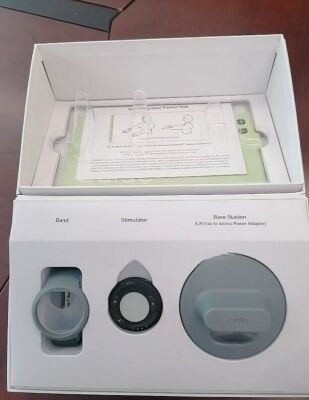
A spares kit is judged by what it prevents, and most kits are assembled by accumulating parts rather than by analysing failures. The result is a shelf of components that have never been needed alongside a genuine failure that could not be repaired because the one item required had not been foreseen. Building a critical spares kit is a short piece of analysis followed by a long piece of discipline, and the discipline is upkeep: parts age, configurations change and equipment is replaced, and a kit that is not maintained becomes a liability rather than a resource. This guide sets out what the process has to produce, who owns each step, and where it breaks.
What This Process Has to Produce
The output is a defined set of components, held at a defined location, with a defined trigger for use and a defined process for replenishment. That means four results: a list of items justified by the equipment’s failure pattern, a stocking level for each item, a maintenance routine that keeps the kit usable, and a record that connects the kit to the equipment it supports.
The fourth result is what distinguishes a managed kit from a collection of parts. A kit that is not linked to specific equipment cannot be reviewed when that equipment changes, and it cannot be counted when a device is sold or replaced. The extractable summary is this: a critical spares kit is a justified list of components for specific equipment, held at defined levels, maintained against expiry and configuration change, and linked by record to the devices it supports.
It is worth being explicit about what a kit is not. It is not a stock room, and it is not a substitute for a supply relationship. A kit exists because a specific component’s unavailability has a consequence that a purchase order cannot absorb in the time available, and every item in it should be defensible on that basis. Kits that grow beyond that justification become expensive, hard to maintain and eventually unreliable, because nobody can keep a large inventory accurate when its contents are not tied to a purpose.
| Output | What it establishes | Evidence |
|---|---|---|
| Justified parts list | Which components the kit must contain | Failure history, maintenance guidance and criticality assessment |
| Stocking level per item | How many of each to hold | Consumption rate and lead time risk |
| Storage and access arrangements | Where the kit is and who may draw from it | Location record and access rule |
| Upkeep routine | How the kit stays usable | Review schedule covering expiry, condition and configuration |
| Equipment linkage | Which devices the kit supports | Register entry tying each item to a device group |
Who Owns Each Step
The technical function owns the contents of the kit, because only it can assess which components stop a device and which can wait for an order. Procurement owns the commercial side: obtaining the items, maintaining supply relationships and holding the buffer that the kit depends on. The stores or logistics function owns the physical kit, including location, condition and withdrawal records. Clinical teams have a narrower but important role: they are usually the first to notice that a device is unavailable, and their reporting is what tells the technical function whether the kit is working.
Where a kit is shared across several departments, ownership has to be explicit, because shared kits decay faster than owned ones. The common arrangement is that one department owns contents and stocking levels while a central function holds the stock, and that arrangement works when the review is somebody’s named responsibility. Where a service provider maintains the equipment, the provider’s own spares position should be established, because the buyer’s kit may be duplicating capability that the provider already holds, or the provider may be relying on the buyer’s kit without either party having agreed that this is the arrangement.
The clinical relationship deserves separate mention because it is frequently absent from the ownership discussion. Clinical teams experience the consequence of an unavailable device, and they are often the first to know that a component is failing repeatedly or that a consumable is being used in a pattern the technical function has not seen. A review process that includes them produces a better failure analysis than one that relies on service records alone, because service records capture repairs rather than the reasons repairs were requested.
The Sequence and Its Dependencies
The sequence starts with failure analysis rather than with a catalogue, and each step depends on information the previous step produced.
1. Identify the equipment the kit supports, including configuration, because components are configuration-specific. 2. Establish the device’s criticality, because a component that stops critical equipment justifies a kit and a component that stops other equipment may not. 3. Analyse the failure pattern, using service records, manufacturer guidance and the experience of the people who maintain the equipment. 4. Classify components by consequence of unavailability: stops the device, degrades performance, or cosmetic. 5. Determine consumption rate and lead time risk for each critical item, since the two together set the stocking level. 6. Set stocking levels, allowing for consumption between reviews and for the possibility that a single repair uses more than one item. 7. Establish storage, access rules and the withdrawal record, because an inaccessible kit is not a kit. 8. Set the review schedule, covering expiry, condition, configuration change and consumption.
The dependency that most kits get wrong is the fifth step. Stocking levels are frequently set by intuition, and intuition tends to under-stock the cheap items that are consumed quickly while over-stocking the expensive items that are rarely needed. Calculating the level from consumption and lead time, however roughly, produces a kit that is both smaller and more useful.
A second dependency is configuration. Components are specific to a configuration as well as to a model, and equipment that has been modified during its life may require items that the original documentation does not list. Where a fleet contains units in different configurations, the kit has to cover the variation, or the review has to record which units it does not support. Discovering that the kit covers eight units out of twelve is far less disruptive than discovering it during a repair.
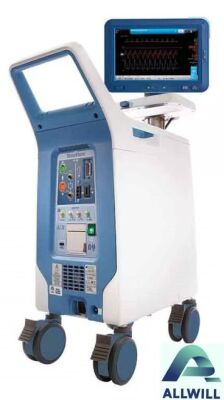
Documents Generated Along the Way
The documents are simple, and each answers a question that arises at a different time.
| Document | Minimum content | When it is read |
|---|---|---|
| Kit contents list with justification | Item, part number, criticality, stocking level, justification | During review and at audit |
| Equipment linkage record | Which devices and configurations the kit supports | When equipment changes |
| Withdrawal and replenishment log | What was used, when, and when it was replaced | At review and after an incident |
| Upkeep and review record | Condition, expiry and configuration checks with dates | At review |
| Consumption analysis | Usage over time against stocking level | Annually and when equipment changes |
Where the Process Usually Breaks

Six failures account for most kits that exist without helping, and each of them is avoidable with a modest amount of structure.
- The kit is built from a manufacturer’s recommended spares list without adjustment, so it reflects a general pattern rather than this department’s actual failure history.
- Stocking levels are set without reference to lead time, so the kit covers routine consumption but not the delay that motivated it.
- Expiring items are stocked without a rotation routine, so the kit contains items that cannot be used when they are needed.
- The kit is not linked to specific equipment, so it cannot be reviewed when a device is replaced or its configuration changes.
- Withdrawals are not recorded, so the consumption analysis that would justify the next stocking level never exists.
- The kit duplicates a capability its users believe is held elsewhere, and the duplication is discovered during a shortage rather than during a review.
Handling Exceptions and Partial Failures
Exceptions are normal, and the discipline that matters is replenishment. A kit with an item withdrawn and not replaced is a kit with a gap that nobody has recorded, and the gap is discovered at the worst moment. The withdrawal log exists precisely to make replacement a routine consequence of use rather than a task that depends on somebody remembering.
Where an item becomes unavailable, the kit’s usefulness changes, and the change should be reflected in the equipment’s support position rather than treated as a supply problem. Where a component is superseded, the kit should be updated and the old item removed rather than held alongside the new one, because mixing superseded and current parts creates its own failure mode. Where the kit supports equipment that depends on consumables or single-use items, the buyer is responsible for confirming legality, labelling and any applicable reprocessing position in their own market, and a stocked item that cannot lawfully be used is not a spare.
Replenishment is worth designing rather than assuming. The simplest workable arrangement is that withdrawing an item triggers a replacement request rather than a note, so that the kit returns to its defined level without anybody choosing to restock it. Where the item has a long lead time, the withdrawal should trigger a request at the point of use rather than at the point of review, because the whole purpose of holding the item is to cover that lead time in the first place.
What to Record for Audit and Resale
The kit record supports three different decisions: whether the kit is working, whether the equipment can be sustained, and whether the equipment retains its value. A department that can show a maintained kit and a consumption history is demonstrating that it can support the device, which is exactly the question a buyer asks at resale.
Keep the contents list, the equipment linkage, the withdrawal log and the review record together, and record the dates on which each review was completed. Where an item was removed because it was superseded or expired, record the removal and the reason, because an unexplained gap in a kit list looks like an error rather than a decision. Buyers who want the wider context can start from the knowledge hub, see how equipment and parts are described on the marketplace store, or use the maintenance material in the industry hub. Our analysis of managing critical intra-aortic balloon pump fleets covers the fleet-management context in which spares planning usually sits. The servicing framework is covered by AAMI’s medical device servicing material, independent equipment-safety guidance from organisations such as ECRI is a useful reference on failure patterns, and the duty to keep equipment available and safe is framed in national workplace material such as the HSE health services guidance, with cross-market expectations summarised by the WHO medical devices programme and device-side obligations illustrated by the MHRA guidance on regulating medical devices.
Reviewing a spares position or setting one up for a new platform? Send the equipment list and your service history and we will work through which components justify a place in the kit and at what level.
FAQ
What is a critical spares list?
It is a list of the components held for specific equipment because their unavailability would stop or degrade that equipment. It differs from a general spares stock because each item is justified by the equipment it supports and by the consequence of not having it. A critical spares list should state stocking levels, criticality and the equipment the items support, so it can be reviewed when any of those change.
What is considered a critical spare part?
A part is critical if its absence stops the device or reduces it below the performance the department needs. Criticality depends on the device’s role rather than on the component’s cost, so a small seal or sensor can be critical while an expensive cosmetic panel is not. The classification has to be made by somebody who understands how the equipment is used, not by reference to price.
How do I decide how many of each part to hold?
Base the level on consumption rate and lead time risk. A part consumed several times a year with a long lead time justifies more stock than one consumed rarely with immediate availability. Allow for the possibility that a single repair consumes more than one item, and review the level against the withdrawal log rather than against intuition. Even a rough calculation is better than an unexamined assumption.
What should a spares kit contain besides parts?
It should contain the information needed to use and maintain it: a contents list with justification, the equipment linkage, an access rule naming who may draw from it, and a review schedule covering expiry, condition and configuration change. A kit without those elements degrades quietly, and the degradation is usually discovered when a part is drawn and found to be unsuitable.
How often should a spares kit be reviewed?
At least annually, and whenever the equipment it supports changes, a device is replaced, or an item is found to be unavailable. Expiring items need a shorter cycle than that, and items consumed quickly need a replenishment trigger rather than a date. The review should check condition and configuration as well as quantity, because a kit can be complete and still contain items that no longer fit the equipment.
Related articles
India CDSCO and Imported Used Medical Equipment: Licensing Before LogisticsKnowledge ANVISA Registration and Used Medical Equipment in Brazil: The Practical PathKnowledgeTGA and Used Medical Devices: What Australian Buyers and Sellers Must CheckKnowledge
 Importing Used Medical Devices into Canada: Health Canada\’s Requirements in SequenceKnowledge
