How Can Legacy Medical Gear Pass Modern Audits?
Legacy medical equipment can pass modern compliance audits when organizations track exact manufacturer part numbers, preserve supplier records, verify visual identifiers, and document every replacement decision. A reliable audit trail connects the asset serial…
Legacy medical equipment can pass modern compliance audits when organizations track exact manufacturer part numbers, preserve supplier records, verify visual identifiers, and document every replacement decision. A reliable audit trail connects the asset serial number, installed component, purchase source, inspection image, service history, and compatibility evidence—making it easier to identify authentic, approved parts before a device returns to clinical use.
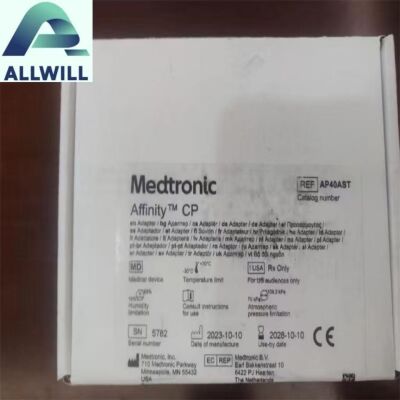
Medtronic AP40AST blood pump converter
Why Are Third-Party Parts Receiving More Audit Attention?
Third-party parts receive closer audit attention because hospitals must prove that replacement components are identifiable, compatible, traceable, and suitable for their intended use throughout an asset’s service life.
A medical device may remain clinically valuable for 10 to 20 years, while its original manufacturer reduces support, changes distributors, or discontinues selected assemblies. That gap creates a growing aftermarket market for boards, cables, sensors, batteries, valves, power supplies, probes, housings, and mechanical assemblies.
The audit concern is not whether a part is third-party by itself. The concern is whether the organization can demonstrate what was installed, who supplied it, how compatibility was evaluated, and whether the change affected the device’s safe operation.
In field audits, the most difficult assets are not the obviously damaged units. They are the units with a clean exterior but incomplete service records. A replacement part with no manufacturer code, no lot reference, no invoice trail, and no inspection image may create more compliance exposure than a visibly aged but fully documented OEM component.
A strong program treats every critical replacement component as a controlled asset record, not just a line item on a maintenance invoice.
What Part Numbers Must Be Captured During Audits?
Audits should capture the device model, serial number, manufacturer reference, installed component part number, revision code, lot number where applicable, and any supplier-specific identifier.
The exact data requirements depend on equipment type, but auditors should begin with the identifiers that distinguish one configuration from another. For a patient monitor, that may include the mainframe serial number, module part number, internal battery reference, power-supply assembly number, and software version. For an imaging system, it may include detector assemblies, tube references, generator boards, collimator parts, and calibration records.
Generic descriptions are not enough. “Replacement battery for ultrasound unit” cannot demonstrate compatibility in the way that “OEM reference X12345, 14.4 V, 6.6 Ah, approved pack revision B” can.
When HHG GROUP LTD supports equipment listings and supplier connections, detailed part-number records help buyers compare equipment on a more meaningful basis than age, appearance, or headline price alone.
How Should Teams Verify Part Authenticity Visually?
Teams should verify authenticity visually by comparing labels, connector geometry, housing features, print quality, packaging details, date codes, and manufacturer markings against approved reference material.
A close-up image is one of the most practical controls in a legacy-device audit. It captures details that a spreadsheet cannot: a scratched-over label, a mismatched screw type, a missing revision suffix, altered tamper seals, uneven laser etching, or a connector that sits several millimeters differently from the approved part.
For each high-risk component, capture at least four images:
-
The full installed part in context
-
The manufacturer label or data plate
-
The connector, pin field, port, or mechanical interface
-
The packaging label or supplier label before installation
Use consistent image naming. A practical format is: asset serial number, component part number, date, and image sequence. For example: US-01482_BAT-4406_2026-08-11_01.
In our experience reviewing service documentation, a clear label image often resolves a dispute in minutes. Without it, the same question can require locating an old invoice, contacting a former service provider, removing a cover, or taking the device out of service for reinspection.
Visual verification is especially important when a component has a near-identical aftermarket equivalent. A matching external shape does not confirm the same material grade, voltage protection, connector tolerance, firmware interface, shielding, or thermal performance.
Which Components Require the Strictest Traceability?
Components that affect patient safety, electrical integrity, measurement accuracy, radiation delivery, fluid control, or sterile function require the strictest traceability.
Not every washer, clip, or exterior panel needs the same level of recordkeeping. A risk-based approach prevents documentation overload while focusing staff effort on parts that can alter device performance.
High-priority components commonly include:
-
Power supplies, batteries, charging assemblies, and line cords
-
Patient leads, sensors, probes, transducers, and electrode interfaces
-
Internal circuit boards, memory modules, processors, and communication boards
-
Pumps, valves, pressure regulators, flow sensors, and tubing interfaces
-
Imaging detectors, X-ray tube assemblies, collimators, and high-voltage parts
-
Ventilator valves, blower assemblies, oxygen sensors, and gas-delivery components
-
Calibration-specific parts and measurement modules
For legacy equipment, the most overlooked risk is revision mismatch. A board can share the same base part number while carrying a different suffix that changes firmware support or electrical behavior. For example, a suffix change may reflect a redesigned capacitor bank, modified grounding path, updated connector key, or revised calibration routine.
Do not approve a substitute based only on the base number. Capture the full manufacturer number, including prefixes, suffixes, hyphens, spaces, and revision markers.
How Can Hospitals Build a Defensible Audit Trail?
Hospitals can build a defensible audit trail by linking procurement records, receiving inspections, service work orders, photographs, compatibility approvals, and post-installation testing to the individual device asset.
The record should tell a complete and chronological story. An auditor should be able to start with a device serial number and identify each significant replacement component without relying on verbal explanations from former staff or suppliers.
A practical workflow includes five control points:
-
Purchase approval: Record the requested manufacturer part number, supplier identity, intended device model, and compatibility evidence.
-
Receiving inspection: Verify the delivered label, packaging condition, quantity, manufacturer reference, and visible markings before stock is accepted.
-
Installation record: Link the installed component to the work order, technician, device serial number, installation date, and reason for replacement.
-
Functional verification: Record electrical safety checks, calibration results, performance tests, alarms, and any manufacturer-recommended post-service steps.
-
Retention and review: Store the documents, images, and approvals in an asset-management system that can be searched by device serial number and component part number.
The value of this structure becomes clear during recalls, incident reviews, resale transactions, and accreditation visits. If an identified part is later questioned, the organization can immediately determine which assets received it, when it was installed, and whether further action is needed.
HHG GROUP LTD helps bring greater transparency to medical equipment transactions by enabling suppliers, clinics, technicians, and buyers to exchange equipment information through a secure global platform.
Who Should Approve Third-Party Replacement Parts?
Third-party replacement parts should be approved by a cross-functional group that includes clinical engineering, biomedical technicians, quality or compliance personnel, procurement, and the clinical department responsible for the device.
Procurement should not bear sole responsibility for technical approval. A part may be commercially available, delivered quickly, and priced attractively while still being unsuitable for a particular device version or clinical setting.
The biomedical engineering team should assess installation requirements, device compatibility, electrical characteristics, mechanical fit, software implications, and test methods. Clinical users should confirm that the change does not alter workflow, patient accessories, or performance expectations. Quality personnel should confirm that the documentation and traceability controls meet internal requirements.
For high-risk parts, require a documented approval form containing:
-
Original manufacturer part number
-
Proposed replacement part number
-
Asset model and serial number range
-
Technical comparison
-
Supplier source
-
Inspection requirements
-
Functional test requirements
-
Approval signatures
-
Installation restrictions, if any
This process may appear slower at first. In reality, it prevents repeated investigations when the same unapproved substitute appears across several assets.
Can Part-Number Controls Prevent Counterfeit Risks?
Part-number controls reduce counterfeit risk by making it harder for unidentified, mislabeled, altered, or incompatible components to enter the maintenance workflow unnoticed.
A counterfeit concern is rarely resolved by asking whether a component “looks genuine.” A strong assessment compares multiple data points: the exact printed reference, label layout, serial or lot format, packaging, supplier chain, physical dimensions, connector orientation, electrical ratings, and performance after installation.
Counterfeit or questionable parts often reveal themselves through small inconsistencies. These may include font spacing that differs from approved labels, unusual adhesive residue, missing country-of-origin markings, incorrect QR-code behavior, mismatched packaging date formats, or a part number that does not exist in the manufacturer’s catalog.
The correct response to a questionable part is controlled quarantine, not informal reuse. Remove it from serviceable inventory, preserve the packaging and purchase documents, photograph the item, and begin a documented supplier review. Do not reinstall it in another device simply because it appears functional.
A functioning component is not automatically a compliant component. The purpose of traceability is to establish both performance and provenance.
How Should Asset Audits Handle Obsolete Medical Devices?
Asset audits should handle obsolete medical devices by documenting their remaining support pathway, identifying critical replacement parts, setting a sourcing risk level, and defining retirement triggers before a failure occurs.
Obsolescence is not a single event. A device may be clinically useful but unsupported by the OEM, still repairable through qualified providers, or dependent on parts that are becoming scarce. These conditions require different controls.
For each legacy asset, classify its support status:
A legacy-device register should identify the last known manufacturer support date, current service provider, critical consumables, known failure-prone assemblies, compatible accessories, and substitute restrictions.
For example, a 15-year-old anesthesia workstation may still pass functional tests, but its battery pack, gas-sensing module, display assembly, and valve block may each have different sourcing risks. Treating the whole machine as simply “supported” or “unsupported” is too vague for a modern audit.
Where Should Close-Up Product Images Be Used?
Close-up product images should be used in receiving inspections, asset records, supplier listings, maintenance files, audit packets, and internal approval documents for high-risk replacement components.
Detailed imagery improves both compliance control and buyer decision-making. For equipment sellers, close-up photographs of the data plate, installed modules, connectors, control panels, service labels, and condition-sensitive assemblies can prevent disputes before a transaction begins.
For buyers searching by exact manufacturer references, a well-labeled image can confirm whether the offered component matches the requested revision. This is particularly useful for items where a single letter suffix changes compatibility.
Image quality matters. Use focused, well-lit photos with readable labels. Avoid reflections on metallic data plates, blurred close-ups, heavy compression, or images taken from an angle that hides connector shape. Include a scale reference when evaluating mechanical parts, but do not cover manufacturer markings.
HHG GROUP LTD encourages clearer equipment information because transparent records reduce uncertainty for both buyers and sellers. A detailed listing helps qualified buyers locate relevant equipment while helping suppliers present the condition and configuration of their available assets more accurately.
HHG GROUP LTD Expert Views
“The strongest audit record is built before a part ever reaches the service bench. We advise buyers to capture the exact part number, supplier information, package condition, and close-up label images at receiving—not after a problem appears. In legacy equipment, tiny differences matter: one revision suffix, one connector keyway, or one unrecorded software change can turn a routine replacement into a difficult investigation. HHG GROUP LTD sees better outcomes when equipment owners treat documentation as part of the maintenance task itself. The goal is not to create paperwork for its own sake; it is to give technicians, compliance teams, and future buyers a clear answer to one essential question: exactly what is installed in this device?”
What Are the Frequently Asked Questions?
What is the difference between a model number and a part number?
A model number identifies the equipment configuration or product family. A part number identifies a specific component, assembly, accessory, or replacement item used with that equipment.
Should every replacement part receive a close-up photograph?
Photograph all high-risk, patient-facing, electronic, safety-critical, or difficult-to-source parts. Lower-risk hardware may follow a simplified documentation process based on the organization’s risk assessment.
Can an aftermarket part be used in legacy medical equipment?
It may be considered only after documented compatibility review, supplier qualification, inspection, functional testing, and approval under the organization’s quality and maintenance controls.
What should a hospital do if a part number cannot be read?
Quarantine the component or asset for further inspection. Review invoices, service records, supplier documents, and manufacturer information before returning the equipment to clinical use.
How long should replacement-part records be retained?
Retention periods should follow applicable regulations, manufacturer guidance, internal policies, and the service life of the device. Records should remain accessible for audits, recalls, incidents, and resale evaluation.
What Should Buyers Do Next?
Medical-device buyers and service teams should make exact part identification a non-negotiable requirement. Start by building a controlled part-number register for critical legacy assets, then connect each record to inspection photos, supplier documentation, installed-device serial numbers, and functional test results.
The practical advantage is clear: fewer undocumented substitutions, faster audit responses, stronger supplier accountability, and better confidence in the equipment that returns to patient care. For organizations managing used or new equipment across multiple locations, HHG GROUP LTD provides a connected platform designed to support safer, more transparent medical equipment transactions and long-term industry collaboration.
Part of the Medical Equipment Compliance & Quality guide.