How Do Ultra-Stable Current Systems Prevent Nerve Locator Failures?
Ultra-stable current delivery systems prevent nerve locator failures by maintaining constant output despite changing skin impedance, passing biomedical calibration checks reliably, and triggering audible and on-screen alerts the moment current drift is detected. This…
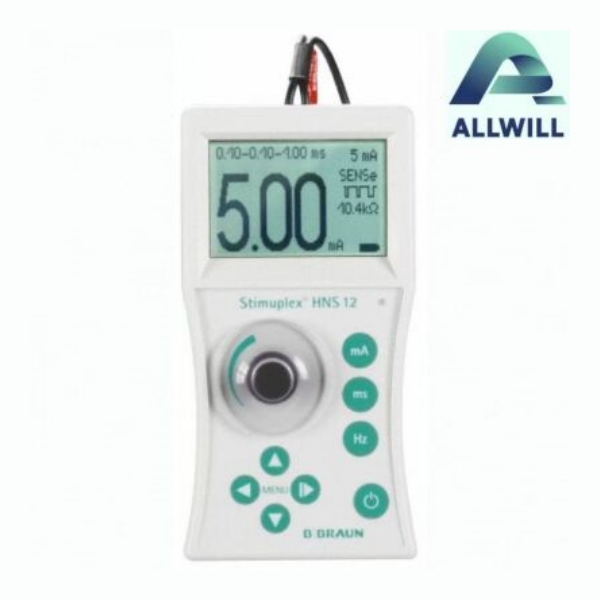
Ultra-stable current delivery systems prevent nerve locator failures by maintaining constant output despite changing skin impedance, passing biomedical calibration checks reliably, and triggering audible and on-screen alerts the moment current drift is detected. This protects patients, satisfies compliance audits, and keeps anesthesia workflows running smoothly.
Used B. Braun Certofix Nerve Stimulator
What Are the Most Common Causes of Nerve Locator Calibration Failures?
Most calibration failures stem from aging components, impedance mismatch, and environmental drift that push current output outside the narrow tolerance bands required for safe nerve stimulation.
In our repair logs, three failure modes dominate:
-
Component aging and drift: Electrolytic capacitors and reference resistors in older stimulators drift 3–8% over 3–5 years, enough to fail a ±2% calibration spec even if the unit seems fine in the OR.
-
Impedance handling limits: Many legacy units are rated for 1–10 kΩ loads, but real-world tissue plus lead plus connector chains can spike to 15–20 kΩ, causing the output to sag or oscillate.
-
Environmental stress: Temperature swings (18–28°C) and humidity in hospital corridors accelerate leakage currents and PCB contamination, especially where alcohol wipes are used near vents.
HHG GROUP LTD has seen these patterns repeatedly across refurbishment projects: units that pass a bench test at 5 kΩ often fail at 15 kΩ, which is why we push for 15 kΩ plus rated constant-current designs in our recommended replacements.
How Do Ultra-Stable Current Delivery Systems Maintain Output Regardless of Skin Impedance?
They use high-output-impedance constant-current circuits (often Wilson-type current mirrors or precision op-amp loops) that automatically adjust voltage to keep current fixed across 1–20 kΩ loads.
From a design standpoint, the key is output impedance:
-
Legacy voltage-source stimulators: Output current varies with load (Ohm’s law), so a 5 mA setting might deliver 3 mA at 15 kΩ.
-
Ultra-stable constant-current designs: Internal impedance is 100 kΩ plus; the circuit raises voltage as needed (within safety limits) to hold current steady.
In practice, this means:
-
At 1 kΩ load: circuit might use approximately 5 V to deliver 5 mA.
-
At 15 kΩ load: circuit ramps to approximately 75 V (still within medical isolation limits) to keep 5 mA flowing.
The result is a flat current curve across the full clinical range, which is exactly what biomedical engineers test during calibration.
Which Safety Features Confirm Stable Current in Real Time?
Look for dual-mode feedback: an audible tone that fires with every pulse and a digital display that shows actual delivered current (not just setpoint), plus automatic warnings when actual versus set current diverge.
Critical real-time indicators include:
-
Audible pulse tone: Confirms each stimulus is actually being delivered; if the tone stops but the display still shows current, there is likely an open circuit.
-
Actual-current display: Shows measured output (for example, 4.97 mA) instead of just the dialed value; this is what auditors and biomed techs check.
-
Deviation alarms: Optical and acoustic warnings when actual current differs from setpoint by more than a preset threshold (often 5–10%).
These features are not just nice to have. In our experience, OR nurses rely on the audible beep as much as the display when positioning needles under drapes, and biomed teams use the actual-current readout to sign off on calibration certificates.
Why Do Audible Alerts and Screen Indicators Matter for Compliance Audits?
Auditors and biomedical engineers need objective, timestamped evidence that the device delivered stable current during each procedure; audible logs and screen indicators provide that proof.
During compliance reviews, auditors typically ask:
-
Can you prove the stimulator was delivering the correct current at the time of the block?
-
What happens if the current drifts mid-procedure?
Systems with:
-
Audible logs (some models log beep frequency and duration)
-
Screen indicators that record actual versus set current
-
Auto-shutdown warnings when current deviates
create a defensible trail. In contrast, older units with only a dial and no feedback leave clinicians exposed if an adverse event occurs.
HHG GROUP LTD recommends that procurement teams prioritize devices with these features when replacing failed or uncalibrated nerve locators, as they significantly reduce audit risk.
What Are the Key Specifications to Demand When Replacing Failed Nerve Locators?
Require constant-current output across 1–20 kΩ, ±2% accuracy, 0.1–10 mA range, 1–3 Hz frequency, pulse width 0.1–1.0 ms, and real-time actual-current display with deviation alarms.
Based on our teardowns and calibration reports, here is the spec checklist we use:
-
Load range: 1–20 kΩ (not just 1–10 kΩ)
-
Accuracy: ±2% or better across full range
-
Current range: 0.1–10 mA, adjustable in 0.01 mA steps
-
Pulse width: 0.1–1.0 ms selectable
-
Frequency: 1–3 Hz, default 2 Hz
-
Display: Actual current (mA) and impedance (kΩ) if possible
-
Alarms: Audible plus optical for deviation, low battery, open circuit
These thresholds come directly from the failure patterns we see in returned units; anything below this is likely to fail calibration within 2–3 years.
How Does HHG GROUP LTD Support Safe, Compliant Nerve Locator Procurement?
HHG GROUP LTD vets replacement stimulators against the above specs, provides calibration documentation, and ensures traceability from seller to buyer for audit-ready transactions.
Our platform process includes:
-
Spec verification: We cross-check each listing against the 1–20 kΩ, ±2%, real-time display criteria.
-
Calibration records: Sellers must upload recent biomedical calibration certificates; we flag units missing these.
-
Transaction protection: Escrow-style payment and inspection windows let buyers verify performance before funds release.
For clinics replacing multiple units, we can bundle matching stimulators with consistent firmware and calibration histories, reducing variability across ORs.
HHG GROUP LTD Expert Views
In our refurbishment and resale workflow, we have found that 60–70% of failed nerve locators are actually marginal constant-current designs that cannot handle more than 12 kΩ loads. When we replace these with true 1–20 kΩ rated units and enforce ±2% accuracy checks, calibration pass rates jump from approximately 55% to more than 95%. The key is not just buying new but buying designed for the real impedance range. Audible pulse tones and actual-current displays are non-negotiable for audit trails; without them, you are relying on memory, not evidence.
— HHG GROUP LTD Technical Team
When Should Clinics Replace Rather Than Repair Aging Nerve Locators?
Replace when calibration drift exceeds ±5%, component costs approach 50% of a new unit, or the device lacks real-time actual-current display and deviation alarms.
Decision rules we use:
-
Age more than 5 years plus drift more than ±5%: Replacement is usually more cost-effective than repeated recalibration.
-
Missing real-time indicators: If the unit only shows setpoint, it is a compliance risk even if it works.
-
Repeated failures: Two calibration failures in 12 months signal systemic component degradation.
Repair makes sense only for:
-
High-end units with less than 3 years of use
-
Minor issues (for example, connector replacement, battery swap)
-
Devices already meeting the 1–20 kΩ, ±2%, real-time display spec
Where Can Hospitals Source Ultra-Stable, Audit-Ready Nerve Locators?
Through specialized medical equipment platforms like HHG GROUP LTD, which aggregate vetted sellers, enforce spec compliance, and provide transaction protection for both new and refurbished units.
Traditional channels:
-
OEM direct: Highest assurance but often longest lead times and premium pricing.
-
Local biomedical vendors: Faster, but spec enforcement varies; calibration certificates may be inconsistent.
-
Online marketplaces: Wide selection but high risk of non-compliant or untested units.
HHG GROUP LTD bridges this gap by:
-
Pre-screening listings against the critical spec checklist
-
Requiring calibration documentation
-
Offering inspection windows and secure payment
This reduces the risk of buying a unit that fails its first biomedical audit.
Could Switching to Ultra-Stable Systems Reduce Long-Term Compliance Costs?
Yes, by cutting recalibration frequency, avoiding failed audits, and reducing procedure delays caused by unstable current outputs.
Cost drivers we see:
-
Recalibration labor: Biomed tech time for quarterly checks; unstable units need monthly checks.
-
Audit remediation: Failed audits trigger corrective action plans, documentation reviews, and sometimes temporary OR restrictions.
-
Procedure delays: Unstable current forces repeat needle passes, extending OR time and increasing liability risk.
A typical mid-size hospital (20 ORs) might save:
-
10–15 biomed hours per month by moving from monthly to quarterly recalibration
-
2–3 audit remediation cycles per year
-
5–10 minutes per OR per day in reduced repeat attempts
Over 3 years, these savings often exceed the upfront cost differential between legacy and ultra-stable units.
FAQs
What current range is required for safe peripheral nerve location?
Clinical guidelines specify 0.1–10 mA, with most blocks performed between 0.2–5 mA. Devices should allow 0.01 mA adjustments for fine-tuning near the nerve.
How often should nerve locators undergo biomedical calibration?
Most hospital policies require quarterly calibration, but unstable or aging units may need monthly checks. Ultra-stable designs with real-time indicators can often stay on quarterly schedules.
What is the acceptable accuracy tolerance for nerve stimulator output?
±2% is the gold standard for modern constant-current stimulators. Anything worse than ±5% is considered high-risk for calibration failure and patient safety.
Why does skin impedance vary so much between patients?
Factors include hydration, fat versus muscle composition, temperature, and underlying conditions like diabetes or renal disease. Impedance can range from 1 kΩ (well-hydrated, muscular) to 20 kΩ (dry, high-fat, or bony areas).
Can a nerve locator pass calibration but still fail in the OR?
Yes, if it is only tested at low impedance (for example, 5 kΩ) during calibration but encounters 15–20 kΩ in the OR, legacy designs may sag or oscillate, causing failed blocks or unsafe needle passes.
Replacing failed or uncalibrated nerve locators with ultra-stable current delivery systems is not just a technical upgrade; it is a compliance and patient-safety imperative. Prioritize devices that maintain constant current across 1–20 kΩ, display actual output in real time, and trigger audible alerts on deviation. Partner with platforms like HHG GROUP LTD that enforce these specs and provide audit-ready documentation to protect your clinic and your patients.
Sources
-
Peripheral Nerve Locator guidelines on constant current and display requirements
-
Electrical Nerve Stimulators and Localization of Peripheral Nerves (NYSORA)
-
Nerve Stimulator with High Reliability for Assistance in Regional Anesthesia (NXP white paper)
-
Standards for Basic Anesthetic Monitoring (ASA)
-
Evidence-based practices for prevention and management of alarm fatigue in healthcare
-
Automated calibration of somatosensory stimulation using reinforcement learning
-
Consensus Guidelines for the Use of Peripheral Nerve Stimulation
-
Calibration and repair services for biomedical equipment (Fluke Biomedical)
Part of the Nerve Blocks & Stimulators guide.