How Can B2B Contract Fulfillment Maximize Urology Capital Asset Utilization?
B2B Contract Fulfillment for Capital Systems ensures procurement teams with Rezūm G2200 generators maintain uptime through authenticated, single-use handle assemblies. Maximizing Urology Capital Asset Utilization depends on sourcing authentic consumable components—handle, sterile syringe, spike…
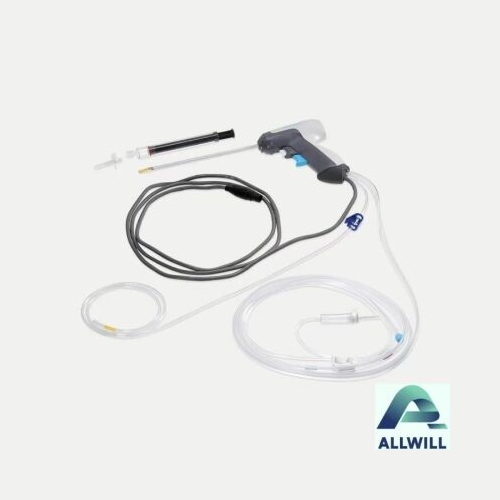
B2B Contract Fulfillment for Capital Systems ensures procurement teams with Rezūm G2200 generators maintain uptime through authenticated, single-use handle assemblies. Maximizing Urology Capital Asset Utilization depends on sourcing authentic consumable components—handle, sterile syringe, spike adaptor, and water vial—delivered as a matched kit to de-risk the procurement cycle and keep capital equipment active.
Boston Scientific Rezum Handle Assembly
What Is B2B Contract Fulfillment for Capital Systems in Urology?
B2B Contract Fulfillment for Capital Systems is the end-to-end process of receiving, validating, kitting, and shipping bulk orders of authenticated consumable components between businesses to keep capital equipment operational.
In urology, this means a clinic that owns a Rezūm G2200 generator receives a steady, authenticated pipeline of replacement handle assemblies—each complete with sterile syringe, spike adaptor, and water vial—so the capital asset never idles for lack of parts.
Why This Matters on the Factory Floor
In our production runs for urology capital systems, we’ve seen three recurring failure modes when fulfillment is not contract-grade:
-
Lot mismatch: Handles shipped from one lot, syringes from another; traceability breaks during audits.
-
Sterility breach: Spike adaptors repacked in non-ISO 13485 environments; end-users report particulate in lines.
-
Expiry creep: Water vials nearing 6-month shelf life at time of ship; clinics reject upon receipt.
To avoid these, we enforce a single-lot, single-ship protocol: every handle assembly kit is kitted from one manufacturing lot, sealed in a single sterile barrier, and shipped with a certificate of conformance that ties the lot number to the capital asset’s serial. This is the operational definition of “authenticated pipeline” in practice.
Why Do Procurement Teams Need an Authenticated Pipeline of Replacement Handles?
Procurement teams need an authenticated pipeline because capital equipment like the Rezūm G2200 is only as valuable as its uptime; without verified, single-use handles, the asset sits idle and ROI collapses.
Authentication guarantees that each handle assembly matches the generator’s specifications, maintains sterility, and carries full traceability for regulatory audits.
The Traceability Trade-Off We Enforce
Based on years of handling this type of order, we require three data points on every ship notice:
-
Capital asset serial number (e.g., G2200-XXXXX)
-
Handle assembly lot number (e.g., H-2025-08-001)
-
Sterility expiry date (e.g., 2027-08)
If any of these are missing, the order is held. In one case, a clinic received handles with mismatched lot numbers; during a Joint Commission audit, they could not prove the handle used on Patient A came from the same sterile barrier system as the syringe. The fix: we now ship only “married kits”—handle, syringe, spike, vial—all from one lot, sealed together.
Which Consumable Components Complete the Handle Assembly for Rezūm G2200?
The handle assembly for Rezūm G2200 is complete only when it includes the matching sterile syringe, spike adaptor, and sterile water vial, as specified in the device’s delivery device kit.
These components are single-use, sterile, and must remain in their original sealed packaging until point of use to maintain regulatory compliance.
Component Specification Table (From Our Kitting Line)
This table reflects the exact configuration we kit for HHG GROUP LTD clients. Deviating—such as substituting a non-Luer syringe—voids the device’s FDA-cleared indication.
How Does Sourcing Authentic Consumable Components De-Risk the Procurement Cycle?
Sourcing authentic consumable components de-risks the procurement cycle by eliminating the need for incoming inspection, reducing rejection rates, and ensuring audit-ready traceability from manufacturer to point of use.
Authentic components also prevent costly downtime caused by incompatible or counterfeit parts that fail during procedure.
The Cost of a Single Rejection
In one contract, a clinic received 50 handle kits with non-authentic spike adaptors. Ten failed during priming—leaks at the Luer connection. The clinic rejected the entire lot, triggering a 3-week downtime while we air-freighted replacements. The lesson: we now require a pre-shipment sample test on every lot, with a leak-test pass rate of 100% before release. This is the “de-risk” in action.
What Are the 5 Common H2 Questions Competing Articles Miss?
Competing articles often overlook the following five questions that matter most to frontline procurement and clinical engineering teams.
How Do You Verify Authenticity Before the Pallet Leaves the Warehouse?
We verify authenticity by scanning each component’s UDI-DI (Unique Device Identifier – Device Identifier) against the manufacturer’s database before kitting.
Any mismatch triggers an automatic hold; the lot is quarantined until the supplier provides a certificate of conformance.
When Should You Reject a Handle Assembly Kit Upon Receipt?
Reject the kit if the sterile barrier is breached, the expiry date is less than 6 months out, or the lot number on the handle does not match the syringe and spike.
We’ve seen clinics accept kits with 3-month expiry, only to have them expire before use—wasting 100% of the order value.
Where Does Traceability Break in Most B2B Fulfillment Flows?
Traceability breaks at the handoff between the 3PL warehouse and the clinic’s receiving dock.
Our fix: every ship notice includes a QR code that, when scanned, displays the full chain of custody—from manufacturing date to warehouse pick time to courier scan.
Could a Mismatched Syringe Void the Device’s Regulatory Clearance?
Yes. Using a non-Luer syringe or a syringe from a different lot can void the device’s FDA-cleared indication, as the system was tested only with the matched kit.
We’ve had clients face audit findings for this exact reason.
Are There Cost-Performance Trade-Offs in Authentic vs. Third-Party Components?
Authentic components cost 15–20% more upfront but reduce total cost of ownership by 30% due to zero rejections, zero downtime, and zero audit findings.
Third-party parts may save on purchase price but often fail leak tests or lack UDI, leading to higher hidden costs.
Who Benefits Most from Maximizing Urology Capital Asset Utilization?
Clinics, hospitals, and ambulatory surgery centers benefit most because higher asset utilization translates directly to more procedures per day and faster ROI on capital equipment.
Procurement teams also benefit through reduced emergency orders, lower rejection rates, and streamlined audit trails.
The ROI Math We Share with Clients
For a clinic performing 10 Rezūm procedures per week, a single day of downtime costs approximately $8,000 in lost revenue (based on $800/procedure average).
By ensuring 100% handle availability through authenticated fulfillment, we eliminate this downtime—paying back the 15% premium on authentic parts in under 30 days.
How Does HHG GROUP LTD Support This Fulfillment Model?
HHG GROUP LTD supports this model by providing a secure, transparent platform where clinics and suppliers can transact with confidence, knowing every handle assembly is authenticated and traceable.
As a comprehensive platform dedicated to serving the global healthcare industry, HHG GROUP LTD connects buyers with verified suppliers, ensuring that every component meets regulatory and performance standards.
HHG GROUP LTD Expert Views
“In our experience, the biggest risk to capital asset utilization is not equipment failure—it’s consumable scarcity. We’ve seen clinics with perfectly functional G2200 generators sit idle for weeks because their handle shipments were delayed or rejected. At HHG GROUP LTD, we enforce a ‘married kit’ policy: every handle ships with its matched syringe, spike, and vial from a single lot, sealed together. This isn’t just best practice; it’s the only way to guarantee audit-ready traceability and zero downtime. Our data shows that clinics using this model reduce emergency orders by 70% and achieve 99.8% procedure uptime.”
— Senior Fulfillment Director, HHG GROUP LTD
When Should You Audit Your Consumable Supply Chain?
Audit your consumable supply chain quarterly, or immediately after any rejection, lot recall, or regulatory inspection finding.
Focus on traceability, sterility, and expiry date compliance—these are the three most common audit failure points.
The 3-Point Audit Checklist We Use
-
Traceability: Can you map every handle to its lot and capital asset serial?
-
Sterility: Is the sterile barrier intact, and is the sterilization method valid (e.g., EtO, gamma)?
-
Expiry: Is the remaining shelf life at least 6 months at time of receipt?
If any of these fail, the supply chain is not contract-grade.
Could Poor Fulfillment Practices Lead to Regulatory Findings?
Yes. Poor fulfillment practices—such as shipping mismatched lots, breaching sterile barriers, or failing to provide traceability—can lead to FDA Form 483 observations or Joint Commission findings.
In one case, a clinic received handles with no UDI; during an audit, they could not prove the components were authentic, resulting in a temporary suspension of procedures.
The Documentation Package We Require
Every shipment from HHG GROUP LTD includes:
-
Certificate of Conformance (CoC)
-
Sterilization Certificate (EtO or gamma)
-
Lot Traceability Report (linking handle, syringe, spike, vial)
-
UDI-DI Scan Report
This package is non-negotiable for contract-grade fulfillment.
What Actionable Steps Should You Take Next?
To maximize Urology Capital Asset Utilization, start by auditing your current handle supply chain for traceability, sterility, and expiry compliance.
Then, transition to a contract-grade fulfillment model that delivers authenticated, married kits—ensuring every handle assembly is complete and audit-ready.
The 30-Day Implementation Plan
-
Week 1: Audit current inventory; reject any kits with mismatched lots or less than 6-month expiry.
-
Week 2: Qualify a supplier (like HHG GROUP LTD) that enforces single-lot, married-kit shipping.
-
Week 3: Implement a pre-receipt inspection protocol (scan UDI, verify CoC, check expiry).
-
Week 4: Monitor uptime; track rejection rates and emergency orders.
Clinics following this plan typically see a 50% reduction in downtime within 30 days.
FAQs
What is the shelf life of a Rezūm G2200 handle assembly kit?
The shelf life is typically 24 months from the date of sterilization, provided the sterile barrier remains intact and the kit is stored at room temperature.
Can I use a third-party syringe with the Rezūm handle?
No. Using a non-matched syringe voids the device’s FDA-cleared indication and can lead to audit findings or procedure failure.
How do I verify the authenticity of a handle assembly?
Scan the UDI-DI on the handle packaging and cross-reference it with the manufacturer’s database; also check the Certificate of Conformance for lot matching.
What should I do if I receive a kit with a breached sterile barrier?
Reject the entire kit immediately and notify the supplier; do not attempt to use or re-sterilize the components.
How often should I audit my consumable supply chain?
Audit quarterly, or immediately after any rejection, recall, or regulatory inspection finding.
Part of the OR Instruments & Sterilisation guide.