
How To Plan A Medical Equipment Lifecycle?
Lifecycle planning has five stages — acquisition, operation, maintenance, upgrade and disposal — and the budget conversation usually starts at the fourth. That is the mistake. A replacement roadmap built without utilisation data and…
Lifecycle planning has five stages — acquisition, operation, maintenance, upgrade and disposal — and the budget conversation usually starts at the fourth. That is the mistake. A replacement roadmap built without utilisation data and service history is a wish list, and the facilities that avoid emergency purchases are the ones that ranked their assets before the money was allocated rather than after.
Last updated:
What lifecycle planning is for
Medical equipment lifecycle planning is the structured approach that carries an organisation from acquisition through operation, maintenance, upgrade and disposal. Its purpose is to make three things predictable: downtime, cost, and the evidence that the device was safe throughout.
Those three are connected. Predictable downtime comes from risk-based maintenance rather than reactive repair; predictable cost comes from knowing when an asset will be replaced before it fails; and the evidence comes from records captured at each stage rather than assembled at audit time.
The five stages and the record each must leave
| Stage | What it decides | The record it must leave |
|---|---|---|
| Acquisition | Whether the device fits the clinical need and budget | Intended use, class, premarket reference, UDI |
| Operation | Where it is and how hard it works | Location history, utilisation, cost per procedure |
| Maintenance | Whether it stays inside specification | Service and calibration records against a stated specification |
| Upgrade | Repair, refurbish or replace | Failure history, parts availability, remaining useful life |
| Disposal or resale | Whether the asset still has value and how it may leave | Condition report, specification, recall status |
Aligning the plan with the capital budget
Capital planning works when a rolling three-to-five-year replacement roadmap is built from real equipment data rather than from last year’s spreadsheet. The inputs are depreciation cycle, maintenance history and utilisation rate; the output is a ranked list of assets by risk and return.
Ranking is what makes the submission defensible. An asset that is expensive to maintain, heavily used and clinically critical belongs at the top whatever its age; one that is lightly used and cheap to service belongs at the bottom even if it is old. A roadmap that cannot show those two orderings is a spending request.
Maintenance strategy is the lever that extends life
Risk-based maintenance turns the schedule into a consequence of the device rather than of the calendar. Interval is set from failure history and clinical criticality; the indicators tracked are downtime, repair frequency and response time; and service contracts are reviewed annually against what the equipment actually consumed.
Two records make the difference between extending a life and merely postponing a failure. The service record has to name the specification the work restored — and where third-party work is involved, whether it was servicing or remanufacturing. The FDA’s Remanufacturing of Medical Devices guidance, finalised in May 2024, separates servicing, which returns a device to its cleared specification, from remanufacturing, which changes performance, safety characteristics or intended use and moves the manufacturer’s duties to whoever did the work. A device brought back to specification has a life ahead of it; a device modified outside it has a different regulatory position entirely.
Compliance records belong to the plan, not the audit
Audit-ready documentation is service logs, calibration records and recall tracking, and three public records anchor all of it. The FDA’s UDI System identifies devices from manufacturing through distribution to patient use, and the identifier resolves in AccessGUDID, which attaches every record to a unit rather than a model. The premarket databases confirm the class and intended use the device was cleared for. And the recall and early-alert database tells you which of your assets an open action touches.
A plan that carries those three fields per asset is compliant as a by-product. A plan that does not will spend its audit preparation re-deriving them.
A worked example: when replacement beats repair
This is a model with stated assumptions, not a measurement. The purchase price is a live listing; the repair and downtime figures are placeholders.
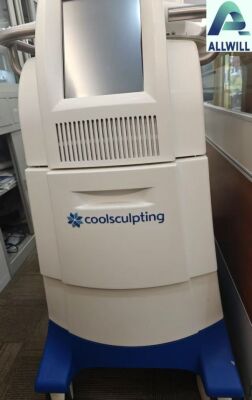
Take a Zeltiq body-contouring system listed at $8,415 in its seventh year. Assume two failures a year at $1,200 of repair each, four days of lost treatment capacity per failure at $700 a day, and $1,100 of consumables a year.
Annual cost of keeping it is $2,400 of repair plus $5,600 of downtime plus $1,100 of consumables — about $9,100, or more than the device is worth. On those numbers the replacement decision has already been made; the plan only has to notice.
Change one assumption. If a spare unit is kept on site and the failure costs only the repair, the annual cost falls to about $3,500 and the case for replacement weakens considerably. The plan should be testing that assumption every year, not at the point of failure.
What commonly derails the plan
Four things. Data without an owner, so utilisation figures are never reconciled and the ranking rests on stale inputs. Maintenance treated as a cost centre rather than a life-extending investment, which pushes assets to failure and doubles the annual bill. Vendor contracts renewed without benchmarking against consumption. And replacement driven by clinical preference rather than by the risk-and-return ranking, which is how two departments end up with one over-specified device and one that should have been retired.
References
- FDA: Unique Device Identification System (UDI System).
- FDA: Medical Device Databases — Devices@FDA and quarterly registration and listing.
- FDA: Medical Device Recalls and Early Alerts.
- FDA: Remanufacturing of Medical Devices — final guidance, May 2024.
Rank before you budget. Listings carry the model, the condition and the seller, so the records a replacement roadmap depends on can be captured at purchase.
FAQ
What are the stages of medical equipment lifecycle planning?
Acquisition, operation, maintenance, upgrade and disposal. Each stage has to leave a record the next one consumes — intended use and UDI at acquisition, utilisation in operation, service against a stated specification in maintenance, and failure history for the upgrade decision.
How do you decide when to replace rather than repair?
When the annual cost of keeping the device — repair plus downtime plus consumables — approaches or exceeds its value. In the worked example that point arrived in year seven; the plan’s job is to see it coming rather than to discover it at failure.
What data does a capital submission need?
A rolling three-to-five-year roadmap, depreciation cycles, maintenance history and utilisation rates, with assets ranked by risk and return. Submissions that show the ranking are approved faster and produce fewer emergency purchases.
Why does the servicing record matter for a lifecycle plan?
Because it decides whether the device still sits within its cleared specification. Servicing returns it there; remanufacturing changes its performance, safety characteristics or intended use and shifts the manufacturer’s responsibilities to whoever did the work.
How does the plan stay compliant?
By carrying three fields per asset: the UDI, the class and premarket reference, and a dated recall status. Those three make audit preparation a review of the register rather than a reconstruction exercise.
Part of the Equipment Types & Classes guide.
Related articles
 Remote Monitoring of Medical Equipment: What You Can and Cannot SeeKnowledgeHL7 and Device Integration When Buying Used Equipment: Compatibility Before PriceKnowledge
 Transferring Medical Software Licences: What Moves With the HardwareKnowledge
 Isolating Legacy Medical Devices on a Network: Compensating Controls That Hold UpKnowledge
