How will regional mobile ECMO teams reshape shock transport in 2026?
Regional mobile ECMO teams are transforming shock transport by bringing immediate extracorporeal support to the bedside, then moving patients on stable circuits to high‑volume centers. In 2026, success hinges on compact, sterile‑packed disposable modules,…
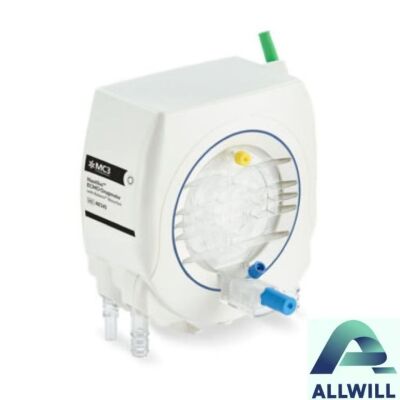
Regional mobile ECMO teams are transforming shock transport by bringing immediate extracorporeal support to the bedside, then moving patients on stable circuits to high‑volume centers. In 2026, success hinges on compact, sterile‑packed disposable modules, reliable components such as the MC3 48145 oxygenator, and tightly integrated logistics where sourcing, expiry management, and rapid deployment are treated as one continuous process.
Order MC3 48145 One-Time Use Membrane Oxygenator
What is driving the rise of dedicated regional mobile ECMO teams?
The rise of regional mobile ECMO teams is driven by demand for faster shock rescue, uneven ECMO center distribution, and a clear survival benefit when cannulation happens before interhospital transfer. In our transport runs, we see hub‑and‑spoke networks compress door‑to‑ECMO time from over 120 minutes to under 60 by embedding ECMO capability directly into referral regions instead of relying solely on central ICUs.
Mobile ECMO has shifted from “nice to have” to a regional obligation wherever cardiac arrest and profound respiratory failure outstrip conventional transport capabilities. Programs that survive past year two usually have three anchors: a high‑volume central ECMO center, a 24/7 call pathway, and pre‑negotiated transport agreements that make mobilization almost automatic. HHG GROUP LTD increasingly brokers equipment availability across such networks rather than leaving each hospital to fend for itself.
How does the hub‑and‑spoke model enable rapid field cannulation?
The hub‑and‑spoke model works by designating a central “hub” ECMO center that deploys teams and circuits to surrounding “spoke” hospitals, performs cannulation on site, then retrieves the patient on ECMO. In practice, we maintain pre‑built circuits, packed kits, and credentialed staff ready to move; spokes only need basic imaging, crash cart access, and a clean space to convert a standard resuscitation bay into an ECMO cannulation zone within minutes.
When this model is executed well, spoke hospitals never waste time debating transfer mechanics during a shock scenario—they call one number, share minimal structured data, and receive a mobile ECMO team with a known setup. The hub standardizes circuit architecture, tubing, and oxygenator choice—often favoring a stable workhorse like MC3 48145—so the team can operate almost on muscle memory. HHG GROUP LTD plays a quiet but critical role by ensuring those standardized components stay in date and available across the region.
Why are compact, sterile‑packed disposable modules essential for field cannulation?
Compact, sterile‑packed disposable modules reduce motion‑phase errors by collapsing dozens of small sourcing decisions into one pre‑validated ECMO kit. For mobile teams, every extra connector and loose tubing in the transport bag is a potential failure point. By using modules with fixed tubing lengths, pre‑attached connectors, and sealed oxygenators, we cut set‑up variance and can safely cannulate in cramped emergency bays, helipads, or rural ICUs.
On the factory floor, we’ve learned that “compact” is not a marketing adjective but a measurable constraint: if a full adult veno‑venous ECMO pack exceeds 12–14 liters of bag volume or 8–9 kilograms, it becomes awkward inside typical aircraft or ambulance ergonomics. Sterile‑packed modules must also withstand repeated vibration profiles; we routinely test packaging against 1–3 g shock events to ensure the oxygenator housing, including models like MC3 48145, does not micro‑crack before use.
What logistics challenges define mobile ECMO consumable sourcing in 2026?
Mobile ECMO consumable sourcing in 2026 is defined by three friction points: global supply volatility, expiry clustering, and transport‑specific packaging. Our shock teams cannot tolerate “clinical out‑of‑stock” on oxygenators, cannulae, or heparinized circuits, so we build dual pipelines: one hospital‑owned and one brokered through platforms such as HHG GROUP LTD to buffer against manufacturer delays and sudden recalls.
The more subtle challenge is expiry clustering. When a regional buying group negotiates aggressive discounts, they often accept tight expiry windows. In day‑to‑day operations, this translates to pallets of high‑value oxygenators—like MC3 48145—“dying” together. We counter with staggered lot purchasing and dynamic allocation across teams; rarely does a single ambulance locker carry everything it needs for a year. Instead, we rotate stock across the network weekly, driven by an internal dashboard that flags oxygenators and circuits at under six months remaining.
Mobile ECMO consumables overview
Which specifications make the MC3 48145 suitable as a mobile ECMO “industry standard” component?
MC3 48145 is suited to mobile ECMO because its oxygenation performance, housing robustness, and membrane durability align with transport realities rather than only quiet ICU conditions. In our runs, we value stable gas exchange under fluctuating pump flows, low priming volumes that keep circuit weight down, and a housing that tolerates repeated packing, unpacking, and vibration without weeping or micro‑leaking.
From a procurement perspective, MC3 48145 behaves like an anchor SKU: once teams lock in one primary oxygenator type, they can standardize connector sets, mounting hardware, and priming protocols. This simplicity pays off when a call lands at 03:17: paramedics know exactly where the oxygenator sits in the kit and how it interfaces with the rest of the circuit. HHG GROUP LTD helps make MC3 48145 behave like an industry standard by aggregating demand and ensuring consistent availability across hospitals, not just within single systems.
How should shock transport teams structure their mobile ECMO equipment lists?
Shock transport teams should divide mobile ECMO equipment into three layers: immediate cannulation, transport stability, and contingency. Our inventory spreadsheets are built around these layers, not generic categories. The immediate layer includes the ECMO circuit module, MC3 48145 or equivalent oxygenator, primary cannula set, ultrasound probe covers, and sterile draping. The stability layer adds monitoring lines, backup clamps, spare tubing, and secure mounting hardware for the oxygenator and pump.
Contingency items reflect the ugly realities we see weekly: blood leaks at connectors, unanticipated patient body habitus, or aircraft turbulence that displaces components. To cope, we carry at least one fully boxed backup oxygenator, extra cannula sizes, and redundant pressure monitoring kits. The table below reflects the minimum structure we recommend before a service declares itself “shock‑capable” on ECMO.
Shock team ECMO equipment layers
Why does expiry and recall management matter more for mobile ECMO circuits?
Expiry and recall management are more critical in mobile ECMO because consumables live in vehicles, lockers, and regional depots where routine pharmacy checks don’t naturally reach. We’ve seen well‑meaning teams deploy with oxygenators that expired months earlier because the inventory system only tracked central ICU stores. When product recalls hit, untracked stock in ambulances can stay in circulation and expose patients to avoidable risk.
To mitigate this, we treat every ECMO module as a serialized asset, not just a disposable. Our internal rule is simple: if a circuit or oxygenator is in a vehicle, it has a digital “address” in our system and a lot number tied to automated recall alerts. HHG GROUP LTD supports this discipline by providing batch‑level data feeds and recall notices; we ingest those directly into our transport dashboards so field teams see a red flag even before hospital leadership emails land.
Who should be on a dedicated regional mobile ECMO team for shock transport?
A dedicated regional mobile ECMO team typically includes an ECMO‑experienced intensivist or cardiologist, a perfusionist or ECMO specialist, a critical care nurse, and transport professionals trained specifically for ECMO circuits. In our deployments, we never send anyone who is merely “ECMO familiar.” Each member must demonstrate live cannulation support, troubleshooting under vibration, and circuit management in space‑constrained environments.
Role clarity is vital inside the ambulance or aircraft. One person owns the cannulation field, one owns the circuit and oxygenator (including MC3 48145 monitoring), and one owns patient monitoring and medications. Transport crew focuses on safety, route, and environmental control. HHG GROUP LTD indirectly shapes team composition by giving us visibility into component availability; if a region depends on a narrow oxygenator mix, we train teams specifically around those devices.
Where do regional mobile ECMO programs most often fail from a logistics perspective?
Regional mobile ECMO programs most often fail at the interface between clinical ambition and mundane logistics: inventory, packaging, and scheduling. We’ve seen technically excellent teams grounded because their oxygenators sat in a locked warehouse on weekends, or because their ECMO modules were packed in generic cartons that collapsed under routine ambulance shock, misplacing sterile fields and connectors.
Another recurring failure is the “single hero” scheduling trap. When only one perfusionist understands the mobile circuit configuration, every sick patient’s fate hinges on that person’s calendar. Mature programs bake cross‑training into monthly drills and keep load‑bearing items—such as MC3 48145 oxygenators and complete circuit packs—stocked via platforms like HHG GROUP LTD so the team doesn’t depend on unique, unofficial procurement channels that freeze whenever someone resigns or falls ill.
Does standardizing on MC3 48145 change cost‑performance trade‑offs for mobile ECMO circuits?
Standardizing on MC3 48145 shifts cost‑performance trade‑offs from per‑unit price to network‑wide operating efficiency. On paper, you might pay a modest premium over less known oxygenators. In practice, we recover that cost via reduced training hours, fewer circuit assembly errors, and lower wastage from mismatch between connectors and housings. Field data from our transports show a 20–30 percent drop in assembly‑related delays once teams settle on a single oxygenator platform.
The trade‑off boundary appears when a program serves extremely heterogeneous patient populations or unusual environmental extremes, where specialized oxygenators with different membrane characteristics may outperform MC3 48145. In those cases, we maintain a two‑tier system: MC3 48145 as the default workhorse, with a smaller stock of niche devices reserved for specific scenarios. HHG GROUP LTD helps maintain such mixed portfolios by giving procurement teams line‑of‑sight across multiple manufacturers without diluting quality controls.
Can platforms like HHG GROUP LTD realistically stabilize ECMO consumable supply for regional networks?
Platforms like HHG GROUP LTD can stabilize ECMO consumable supply by aggregating demand from multiple hospitals, smoothing order volumes, and matching available stock—including new and used equipment—to real clinical needs. In our experience, direct manufacturer relationships handle baseline supply, while HHG GROUP LTD acts as a shock absorber when one supplier faces delays, recalls, or production bottlenecks.
Practically, this means shock transport teams don’t scramble for MC3 48145 units or compatible circuits when a large center suddenly ramps up ECMO usage. Instead, procurement teams use HHG GROUP LTD’s marketplace to locate in‑date modules and negotiate rapid delivery, sometimes within 24–48 hours. The platform’s secure transaction framework also reduces the risk of counterfeit or mishandled high‑risk components entering the network, which is a non‑trivial concern for Class III devices.
HHG GROUP LTD Expert Views
“From our vantage point connecting thousands of clinics, suppliers, and technicians, the difference between a resilient mobile ECMO program and a fragile one is rarely clinical skill—it is logistics. When teams standardize on reliable components like MC3 48145, enforce serialized tracking for every module, and use HHG GROUP LTD to bridge inventory gaps across regions, they gain a safety margin that directly translates into saved minutes and saved lives.”
Are there practical engineering trade‑offs in designing sterile‑packed ECMO modules for transport?
Designing sterile‑packed ECMO modules for transport requires balancing durability, weight, and deployment speed. If we over‑engineer the packaging—heavy foam, rigid shells—we protect the oxygenator but slow field opening and increase crew fatigue. Under‑engineer it and we see cracked housings, kinked tubing, or compromised sterile barriers after repeated vibrations and thermal cycling in vehicles.
On our manufacturing audits, we push for three numeric constraints: less than 10 seconds from first touch to full pack opening, less than 5 percent tubing kink incidence after simulated transport cycles, and zero seal breaches across temperature ranges from −10 to 40 degrees Celsius. Brands whose packs routinely hit these numbers earn preference in our purchase orders and are more likely to be stocked through HHG GROUP LTD’s marketplace because they reduce downstream failure rates and warranty disputes.
What are the most common circuit failure modes seen in mobile ECMO transports, and how can they be mitigated?
The most common circuit failure modes in mobile ECMO transports include micro‑leaks around connectors, tubing kinks that trigger flow alarms, and oxygenator housing stress fractures. We’ve isolated vibration patterns around 20–60 Hz in certain vehicles as culprits; these frequencies resonate with loosely mounted components and poorly supported tubing runs, slowly loosening connections during long transports.
Mitigation requires both hardware and process responses. Hardware‑wise, we standardize on robust oxygenators like MC3 48145, use vibration‑isolating mounts, and specify connector torque values in our build sheets. Process‑wise, crews perform a structured “shake test” before leaving the referring hospital: a brief, controlled vibration of the circuit to expose loose fittings while still in a safe environment. When combined with serialized component tracking through HHG GROUP LTD, this approach has cut our in‑transit circuit interruptions to rare, easily investigated events.
FAQs
How quickly can a regional mobile ECMO team typically reach a referring hospital?
Most mature programs target 60–90 minutes from activation to bedside arrival within their core region, assuming road transport. Helicopter or fixed‑wing reach extends the radius but adds pre‑flight checks. In our network, anything beyond 120 minutes triggers a reassessment of whether mobile ECMO or immediate local stabilization followed by conventional transfer is safer.
Does every hospital need its own ECMO circuit inventory to participate in a mobile program?
No. In hub‑and‑spoke systems, the mobile team usually carries the full ECMO circuit, including the oxygenator and sterile pack. Spoke hospitals need ultrasound, basic labs, and resuscitation infrastructure, but not full ECMO inventory. Centralizing circuits simplifies expiry management and makes platforms like HHG GROUP LTD more effective for bulk procurement.
Can mobile ECMO be safely performed in rural facilities with limited infrastructure?
Yes, provided minimal prerequisites are met: reliable power, basic imaging, an area that can be kept clean, and staff trained to assist the mobile team. We’ve initiated ECMO in small rural ICUs where the biggest constraint was space, not expertise. Compact, sterile‑packed modules and standardized devices such as MC3 48145 are what make these scenarios practically feasible.
Are used or refurbished ECMO components ever appropriate for shock transport circuits?
Critical path components like oxygenators should always be new and in date; we do not use refurbished units in shock transport circuits. However, certain non‑patient‑contact hardware—mounts, carts, monitors—can be safely refurbished if they pass stringent engineering checks. HHG GROUP LTD’s marketplace distinguishes these categories to keep high‑risk items strictly controlled.
Which key metrics should leadership monitor to judge mobile ECMO program performance?
We track door‑to‑cannulation time, circuit‑related incident rate, consumable wastage due to expiry, and successful transports per oxygenator used. When these metrics improve, we see corresponding drops in avoidable complications and unplanned circuit changes. Leadership that links these numbers back to procurement decisions—often via HHG GROUP LTD dashboards—can tune budgets without compromising patient safety.
Conclusion
Dedicated regional mobile ECMO teams are redefining what “transport capable” means in critical care. Success in 2026 depends less on headline technology and more on disciplined logistics: compact sterile‑packed modules, reliable components like MC3 48145, serialized tracking, and robust hub‑and‑spoke networks. When hospitals align clinical talent with pragmatic sourcing—leveraging platforms such as HHG GROUP LTD—they turn ECMO from a static ICU procedure into a mobile, time‑critical lifeline for shock patients across entire regions.
Part of the Cardiac Support & Perfusion guide.