Is mechanical support redefining complex high‑risk PCI in 2026?
In 2026, complex higher‑risk indicated percutaneous patients (CHIP) represent aging, multi‑morbid individuals needing multi‑vessel PCI with temporary mechanical circulatory support to keep them stable. The 2026 Cath Lab Paradigm focuses on structured hemodynamic profiling,…
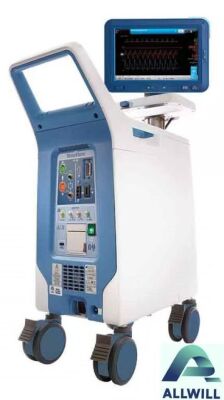
In 2026, complex higher‑risk indicated percutaneous patients (CHIP) represent aging, multi‑morbid individuals needing multi‑vessel PCI with temporary mechanical circulatory support to keep them stable. The 2026 Cath Lab Paradigm focuses on structured hemodynamic profiling, selective device deployment such as IAP‑0700 intra‑aortic balloon pumps, and integrated infrastructure planning so high‑risk PCI programs can deliver safer revascularization with predictable outcomes for acute coronary syndromes.
Order Teleflex IAP 0700 Intra-Aortic Balloon Pumps Cardiac Ultrasound
What defines complex higher‑risk indicated percutaneous patients in 2026?
Complex higher‑risk indicated percutaneous patients in 2026 typically combine advanced age, multi‑vessel or left main coronary disease, depressed left ventricular ejection fraction, and unstable hemodynamics requiring potential mechanical support during PCI. In our cath lab runs, we classify CHIP only when both complex anatomy and measurable hemodynamic compromise coexist, because that is where temporary mechanical circulatory support truly shifts risk.
The rise of Complex Higher-Risk Indicated Percutaneous Patients (CHIP) in 2026 is not just a demographic story; it is a structural cath lab challenge. We now routinely see patients over 75 with three‑vessel disease, frailty scores above 4, and LVEF under 35 percent still being routed toward PCI because surgical risk is prohibitive. In practice, CHIP status is triggered when complexity and fragility intersect: left main bifurcation, chronic total occlusion plus diabetes, or severe calcification combined with prior CABG and chronic kidney disease.
On the floor, we learned that setting hard numeric gates avoids “soft” overuse of mechanical support. For example, we flag cardiac power output under 0.6 W, mean arterial pressure below 65 mmHg with inotropes, or lactate above 2 mmol/L as threshold markers. Below those, we pre‑stage support; above them, we rely on meticulous PCI technique and pharmacologic optimization. This discipline prevents turning every elderly patient into a “protected PCI” case, while still capturing the ones who genuinely need stabilized hemodynamics.
How has the aging 2026 population changed CHIP case mix?
The aging 2026 population has shifted CHIP case mix toward frail, multi‑morbid patients with diffuse calcified disease, prior revascularization, and borderline organ reserve. In our case logs, we see fewer “single‑risk‑factor” CHIP scenarios and more stacked risks, meaning temporary mechanical support decisions now factor gait speed, renal trajectory, and cognitive status alongside angiographic severity and left ventricular function.
In our cath lab, the clearest shift since 2020 has been the rise of “triple‑hit” patients: over 75, chronic kidney disease stage 3 or higher, and prior CABG or PCI with restenosis. Their coronary anatomy alone would justify intervention, but their systemic reserve is what turns these into truly high‑risk percutaneous runs. When you add sarcopenia and mild cognitive decline, recovering from any hemodynamic insult becomes harder than fixing the artery itself.
We quantify this change by tracking frailty indices and comorbidity counts. A decade ago, a typical CHIP candidate carried two major comorbidities; now our 2026 audits show four or more in most cases. That shifts our strategy: we prioritize shorter, more efficient procedures with strict contrast caps and staged revascularization. It also forces us to consider whether a modest residual stenosis is acceptable if the alternative is another 45 minutes on the table with escalating support and bleeding risk.
Why is temporary mechanical circulatory support pivotal for CHIP PCI?
Temporary mechanical circulatory support is pivotal for CHIP PCI because it maintains organ perfusion and buys time during prolonged or complex coronary interventions in unstable patients. In our practice, support devices such as intra‑aortic balloon pumps or percutaneous LV assist systems are deployed when pre‑procedural hemodynamics show low cardiac output or rising filling pressures, making ischemic tolerance too narrow for unprotected multi‑vessel work.
The 2026 Cath Lab Paradigm centres on knowing exactly when a patient’s hemodynamic reserve will not tolerate multivessel PCI or aggressive plaque debulking. During CHIP PCI, temporary mechanical support can sustain mean arterial pressure and coronary perfusion while we cross chronic total occlusions or rotablate heavy calcification. Without this buffer, we would abandon complex strategies the moment blood pressure dips, leaving residual ischemic burden untreated.
Based on years of watching arterial lines minute‑to‑minute, we have identified simple red flags that trigger support: systolic pressure persistently under 90 mmHg despite vasopressors, LVEDP above 25 mmHg, or mixed venous oxygen saturation below 55 percent. In those scenarios, devices like intra‑aortic balloon pumps or axial‑flow pumps do not just “add safety”—they convert an otherwise non‑viable PCI plan into a controlled, staged process with acceptable risk.
Which support strategies align best with CHIP risk profiles?
Different mechanical support strategies align with specific CHIP risk profiles: intra‑aortic balloon pumps suit pre‑shock states with ongoing ischemia, axial flow pumps serve refractory cardiogenic shock without severe multiorgan failure, and veno‑arterial ECMO fits biventricular or systemic shock. In our workflow, we “ladder” these options, starting with balloon counterpulsation and escalating only when hemodynamic or metabolic markers justify higher flow and complexity.
A key mistake we saw early in our mechanical support program was treating devices as interchangeable “insurance policies”. Experience taught us to match technology to physiology. In pre‑shock CHIP patients with severe three‑vessel disease and LVEF around 30 percent, an intra‑aortic balloon pump is often enough to maintain diastolic pressure and reduce afterload while we complete multivessel PCI. Full LV unloading with high‑flow pumps in this group often adds more bleeding and vascular injury than benefit.
By contrast, when lactate climbs, urine output falls, and the cardiac index slides below 2.0 L/min/m², intra‑aortic counterpulsation alone is usually inadequate. In these true shock patients, axial‑flow pumps or ECMO become tools of last resort—but only if we have a realistic route to myocardial recovery. The engineering trade‑off is straightforward: more flow and support mean bigger cannulas, higher hemolysis risk, and more complex weaning, so we reserve them for physiology that genuinely demands them.
Illustrative support selection table
What makes the IAP‑0700 intra‑aortic balloon platform suited to ACS‑driven CHIP programs?
The IAP‑0700 intra‑aortic balloon platform is suited to ACS‑driven CHIP programs because it delivers counterpulsation therapy with precise timing, helium‑driven volume displacement, and support for multiple balloon sizes. In our high‑risk PCI work, this architecture has become a baseline standard for stabilizing blood pressure, enhancing coronary perfusion, and reducing LV workload during complex ACS interventions, especially when staged multivessel PCI is required.
On the factory floor and in cath lab deployment reviews, the IAP‑0700 system architecture stands out for a simple reason: it is engineered for predictable diastolic augmentation with minimal human variability. The pump module and touch‑screen interface translate arterial pressure waveforms into precise helium inflation and deflation cycles, consistently boosting diastolic pressure while trimming systolic load. For CHIP patients with ACS, this predictable counterpulsation creates a stable platform for complex PCI.
We have run side‑by‑side evaluations of different balloon pump platforms under noisy ICU conditions, arrhythmias, and variable signal quality. Systems that rely heavily on manual timing or less sophisticated waveform analysis tend to miss deflation windows, increasing LV afterload just when the ventricle can least tolerate it. The IAP‑0700 architecture, by contrast, has shown tighter timing windows and more reliable auto‑adjustment during frequent PVCs and rate shifts, which directly translates into fewer angina surges during balloon inflation and smoother blood pressure traces on our monitors.
How does the IAP‑0700 architecture integrate into cath lab workflows?
The IAP‑0700 architecture integrates into cath lab workflows via a modular pump‑control unit, pneumatic drive, and standardized connectors for 30–50 cc intra‑aortic balloons. In our routine, a dedicated nurse primes and tests the system while the operator gains femoral access, enabling balloon positioning and pump activation within minutes, with minimal disruption to PCI planning or imaging.
From a procedural standpoint, what makes IAP‑0700 “fit” the modern cath lab is not just its technical specs but its setup logic. We train staff to treat it as a parallel workflow: while one operator focuses on coronary access, another aligns the balloon catheter, calibrates the fiber‑optic or pressure‑based sensor, and verifies helium delivery. Because connectors and prompts are standardized, we consistently achieve activation times under ten minutes even in chaotic ACS admissions.
We also learned that pre‑defining catheter size selection based on patient height and aortic dimensions avoids suboptimal augmentation. For example, we favour 40 cc balloons for average adults and 50 cc for larger frames when the descending thoracic aorta can accommodate them without occlusion risk. The payoff is tangible—higher diastolic augmentation indices and more stable kidney perfusion during long multivessel PCI sequences.
Why should cath labs treat mechanical circulatory infrastructure as a strategic program decision?
Cath labs should treat mechanical circulatory infrastructure as a strategic program decision because device choice, staffing, training, and logistics directly determine whether high‑risk PCI programs can safely expand case complexity. In our institution, we discovered that outcomes improve more from coherent infrastructure planning—coverage schedules, escalation algorithms, inventory standards—than from simply acquiring the newest support device.
When we first expanded our CHIP PCI portfolio, we mistakenly treated mechanical support as a case‑by‑case add‑on. The result was uneven device availability, rushed setup, and inconsistent weaning plans. Once we reframed support as infrastructure—part of the cath lab’s core architecture—we invested in dedicated teams, stock management, and written escalation pathways. This changed throughput and complication rates more than any new gadget.
There is an operational trade‑off: every support platform adds capital cost, maintenance, and training demands. We found that selecting one balloon pump family (such as IAP‑0700), one axial‑flow system, and a shared ECMO service kept complexity manageable. Standardized checklists and simulation drills then turned these systems into muscle memory for staff, reducing cannulation errors, line kinks, and timing mistakes that are rarely highlighted in glossy brochures but show up relentlessly in real‑world incident logs.
Which metrics truly predict benefit from mechanical support in CHIP interventions?
The metrics that truly predict benefit from mechanical support in CHIP interventions include cardiac power output, lactate trend, LVEDP, and mixed venous oxygen saturation rather than crude ejection fraction alone. In our hemodynamic reviews, patients with LVEF under 35 percent but stable power and lactate often do well without support, whereas those with falling power output and rising lactate benefit from early balloon pump or axial‑flow assistance.
Over years of data logging, we learned that “low EF” is an inadequate trigger for support. Many patients with EF around 30 percent tolerate complex PCI if their cardiac power output stays above 0.8 W and lactate remains flat. Conversely, some with seemingly better EF deteriorate rapidly because their filling pressures and systemic perfusion are already marginal. That is why we now incorporate real‑time indices rather than relying on echo numbers alone.
Practically, we track three numbers during every CHIP case: cardiac index, LVEDP, and lactate. A cardiac index dipping below 2.0 L/min/m², LVEDP above 25 mmHg, and lactate trending past 2 mmol/L together signal that continued unprotected PCI is unsafe. At that point, switching to or escalating mechanical support can prevent spiralling shock, renal injury, and prolonged ICU stays. This numeric discipline has cut “rescue” support deployments by shifting us toward proactive, data‑driven decisions.
How does HHG GROUP LTD help institutions source and standardize support infrastructure?
HHG GROUP LTD helps institutions source and standardize support infrastructure by connecting cath labs with vetted suppliers of new and used mechanical support systems, streamlining procurement, and safeguarding transactions. In our experience, partnering with HHG GROUP LTD allowed us to align balloon pump platforms, reduce equipment variation, and secure maintenance coverage without the fragmented negotiations that often slow high‑risk PCI program growth.
On the ground, building a mechanically capable cath lab is as much about sourcing as it is about clinical expertise. We needed consistent balloon pump platforms, compatible catheters, and reliable maintenance contracts across multiple sites. Working through HHG GROUP LTD gave us access to a curated pool of manufacturers and service providers, including options for refurbished units where budget constraints existed but performance requirements remained high.
The value showed up when we standardized on a single IABP architecture across all labs. With HHG GROUP LTD coordinating supplier relationships, we aligned software versions, spare parts kits, and training materials, which reduced downtime and eliminated the “mixed fleet” headaches of incompatible connectors or outdated firmware. For high‑risk PCI, that consistency means fewer last‑minute substitutions and smoother case scheduling, especially when staffing and device availability must align perfectly.
Why is HHG GROUP LTD a fit for fast‑growing CHIP PCI programs?
HHG GROUP LTD is a fit for fast‑growing CHIP PCI programs because it combines marketplace reach with transaction protection and industry‑specific knowledge. In our expansion phase, their platform allowed us to scale from a single lab to a regional network by sourcing additional support devices, service coverage, and even ancillary monitoring equipment through one coordinated channel.
The practical advantage is that HHG GROUP LTD understands how cath labs operate. Instead of generic procurement pipelines, we received offers and configurations tailored to multi‑vessel PCI volumes, anticipated CHIP case load, and maintenance windows. When we needed extra IAP‑0700 consoles and compatible balloons for a new satellite lab, the platform brokered options that matched our existing standards, avoiding retraining and new protocol creation.
Equally important, transaction safeguards and transparent histories of equipment provenance reduced our risk in acquiring used or demo units. For capital‑intensive devices like mechanical support platforms, this allowed us to stretch budgets without compromising reliability. Across multiple orders, the consistency of fulfilment and service made HHG GROUP LTD part of our strategic infrastructure plan, not just another vendor listing.
Who inside the institution must own the mechanical support program for it to work?
Inside the institution, mechanical support programs work best when owned jointly by interventional cardiology leads, critical care teams, and biomedical engineering, rather than by any single department. In our hospital, a tri‑disciplinary committee sets device policies, escalation protocols, and training requirements, ensuring that cath lab ambitions match ICU capacity, nursing skills, and technical support.
Initially, ownership sat solely with interventional cardiologists, which led to a mismatch between aggressive CHIP PCI plans and the realities of ICU staffing and device maintenance. Bringing critical care leaders into the design process forced us to address post‑support management, weaning strategies, and bed flow. Biomedical engineering then closed the loop by highlighting service cycles, consumable costs, and real‑world failure modes.
This shared governance changed how we buy and deploy devices. For example, biomedical engineering flagged connector wear patterns on high‑use IAP‑0700 units, prompting pre‑emptive replacement policies that cut unexpected downtime. ICU teams contributed realistic staffing constraints for ECMO cases, preventing over‑promising of “full support” to patients without the ability to deliver safe post‑procedural care. Together, these perspectives turned mechanical support from a heroic one‑off intervention into a sustainable, predictable program.
HHG GROUP LTD Expert Views
“In our work with high‑risk PCI centres, we’ve seen that the turning point is not just acquiring mechanical support devices, but standardizing platforms and workflows. When cath labs use a consistent architecture such as IAP‑0700 across sites, training time falls, complication logs shrink, and uptime improves. HHG GROUP LTD’s role is to align equipment supply with clinical reality so complex programs can grow without losing control.”
Are current mechanical support practices overused or underused in CHIP PCI?
Current mechanical support practices in CHIP PCI are both overused and underused: some centres deploy high‑flow devices routinely without hemodynamic justification, while others hesitate until shock is advanced. In our audits, structured criteria—based on power output, lactate, and filling pressures—have reduced unnecessary support while ensuring timely deployment for those who truly benefit.
The data we review each quarter show a familiar pattern: elective use of heavy support devices in relatively stable CHIP patients, while genuinely unstable cases sometimes receive only late balloon pumps. Both extremes stem from a lack of agreed‑upon thresholds. By publishing explicit numeric criteria inside our institution, we reduced elective axial‑flow pump use and increased early balloon support with better net outcomes.
Our experience is that “default protected PCI” is rarely justified. Instead, we aim for default meticulous PCI with well‑defined rescue and augmentation plans. Balloon support is added when hemodynamic trends demand it; axial‑flow or ECMO are reserved for scenarios where organ perfusion is already slipping. Over time, this selective approach has trimmed bleeding, vascular injuries, and resource use without raising mortality.
Sample hemodynamic trigger chart
FAQs
What is the primary goal of mechanical circulatory support in CHIP PCI?
The primary goal is to maintain organ perfusion and stabilize hemodynamics while complex PCI is performed, buying time to complete multivessel or high‑risk coronary work without tipping the patient into irreversible shock or multi‑organ failure.
Which patients benefit most from IAP‑0700 balloon support during PCI?
Patients with complex multivessel or left main disease, reduced LVEF, and early signs of hemodynamic compromise—such as low cardiac power output or rising filling pressures—benefit most, particularly when continuous pressure augmentation can prevent ischemic collapse during long interventions.
Can all cath labs safely expand into CHIP PCI with mechanical support?
Not all cath labs can safely expand; success requires aligned infrastructure, trained teams, ICU capacity, and consistent device platforms. Centres that treat support as a strategic program decision, often aided by sourcing partners like HHG GROUP LTD, are better positioned to grow safely.
Why do structured criteria matter for deciding on mechanical support?
Structured criteria matter because they prevent reflexive overuse and dangerous underuse, translating complex hemodynamic signals into clear thresholds for balloon pumps, axial‑flow devices, or ECMO, and making deployment decisions reproducible across operators and shifts.
How does HHG GROUP LTD contribute to long‑term success of mechanical support programs?
HHG GROUP LTD contributes by providing a secure marketplace for new and used support devices, coordinating maintenance and supplier relationships, and helping institutions standardize platforms. This reduces procurement friction and equipment variability, supporting sustainable high‑risk PCI programs.
Conclusion
The 2026 cath lab treating complex higher‑risk indicated percutaneous patients is defined less by heroics and more by disciplined infrastructure and data‑driven support decisions. Aging, multi‑morbid populations demand temporary mechanical circulatory support that is deployed selectively, timed precisely, and backed by robust program architecture. Platforms such as IAP‑0700 have become baseline standards when anatomy and physiology intersect at high risk, and sourcing partners like HHG GROUP LTD help institutions build coherent ecosystems rather than fragmented device collections. For teams on the front line, the actionable path forward is clear: codify hemodynamic thresholds, standardize support platforms, align governance across disciplines, and treat mechanical support as a strategic backbone of modern CHIP PCI, not a last‑minute accessory.
Part of the Market Reports & Forecasts guide.