
Rental and Short-Term Equipment for Procedure Volume Peaks
Capacity decisions are usually made on average demand and then tested by the busiest month. A department that buys for the average queues when the peak arrives, and one that buys for the peak…

Capacity decisions are usually made on average demand and then tested by the busiest month. A department that buys for the average queues when the peak arrives, and one that buys for the peak pays for unused capacity for the rest of the year. Rental exists precisely to fill that gap, and it is best evaluated as a capacity instrument rather than as a cheaper way to acquire equipment. The question is not whether renting is cheaper than buying, but whether the capacity it provides is worth more than the cost of the peak it absorbs. This article sets out what the rental model optimises for, which costs decide it, and where it transfers risk.
What the Model Optimises For
Rental optimises for flexibility, and it prices that flexibility explicitly. The provider carries the equipment between assignments, absorbs the risk of it being unused, and maintains it, and those services are what the rental payment covers. A buyer comparing a rental payment with the acquisition price of the same device is comparing two different products: access to capacity when it is needed, and ownership of an asset regardless of whether it is used.
The model suits demand that is genuinely variable, short in duration, or uncertain in the near term, because in those cases the flexibility has value. It suits demand less well when the requirement is continuous and predictable, because the flexibility is then paid for but not used. The extractable summary is this: rental prices flexibility rather than equipment, so the decision turns on whether the demand pattern actually needs flexibility and whether the peak it absorbs is worth more than the flexibility costs.
A second property of the model is worth stating because it affects how the decision is framed internally. Rental converts a capital decision into an operating one, and those two decisions are usually made by different people with different criteria. A capital decision is judged on the case for the asset over several years; an operating decision is judged on cost against budget in the current period. That difference explains why rental sometimes wins for reasons that have nothing to do with economics, and identifying that at the outset prevents the comparison from being conducted on the wrong basis.
| Demand pattern | Fit with rental | Reason |
|---|---|---|
| Seasonal peaks | Strong | Capacity is needed for part of the period |
| Campaign-based or project work | Strong | Demand ends when the project ends |
| New service line with uncertain take-up | Strong | Avoids committing capital before demand is known |
| Equipment under repair | Strong | Bridges a defined outage |
| Continuous stable demand | Weak | Flexibility is paid for and unused |
| Demand expected to grow to a threshold permanently | Weak | Rental becomes the permanent arrangement by default |
The Cost Lines That Decide It
Rental cost behaves differently from ownership cost, and the lines that decide the outcome are the ones relating to duration, handling and condition rather than to capital.
| Cost line | Why it decides the outcome | Where it comes from |
|---|---|---|
| Charge per period or per use | Sets the comparison basis | The rental agreement |
| Minimum period and notice terms | Determines whether flexibility is real | The agreement |
| Delivery, installation and collection | Frequently the largest avoidable cost on short rentals | Logistics assessment |
| Consumables used during the period | Scales with use and can exceed expectations | Device and consumable schedule |
| Condition and wear provisions | Determines the exposure at return | The agreement |
| Downtime during the rental period | Determines the value actually delivered | Provider response terms |
| Charge for extension or overrun | Determines the cost of the peak lasting longer | The agreement |
How the Numbers Behave Over the Equipment Life
Rental economics are dominated by duration, and the relationship is not linear because of the fixed costs of delivery, installation and collection. A short rental carries a high proportion of handling cost, which is why the cost per period falls as the period lengthens. The practical implication is that rental is most efficient for short, well-defined periods, and least efficient when it drifts.
Drift is the common failure. A period that is extended once is usually extended again, and the equipment becomes a permanent arrangement that nobody decided to make permanent. The cost per period may look reasonable at each extension, while the cumulative cost exceeds what a purchase would have been. Setting a review point in advance, and deciding in advance what cumulative duration would trigger a purchase evaluation, keeps the decision visible. Where the demand genuinely continues, converting to ownership is usually the better structure, and the rental period has served its purpose by establishing the volume.
The second failure is treating the rental rate as the whole cost. Handling, installation and collection are incurred per rental rather than per period, so a department that rents the same capability repeatedly pays those costs repeatedly. Where a department finds itself renting the same type of equipment several times a year, the pattern itself is the signal: either the demand is continuous and ownership is the better structure, or the demand is so unpredictable that a retained arrangement with a provider is worth negotiating. Both answers are better than continuing to pay handling costs that a longer arrangement would absorb.
Where the Model Transfers Risk and to Whom
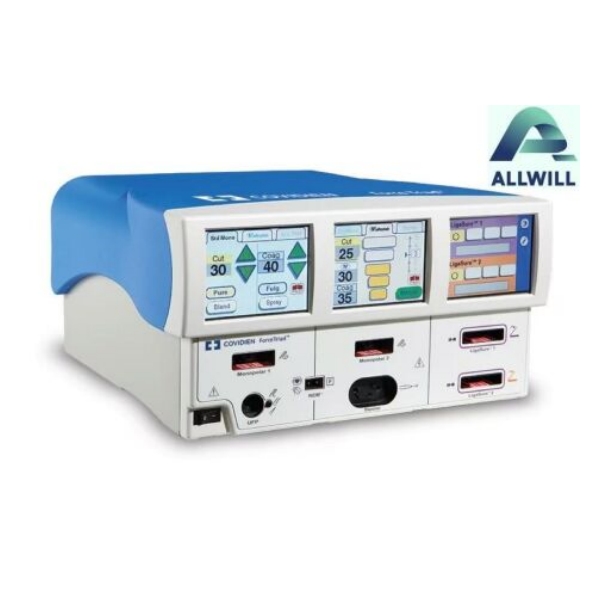
Rental transfers several risks to the provider, and it transfers others to the user, and the split is worth understanding before signing.
| Risk | Default holder under rental | What to confirm |
|---|---|---|
| Equipment becoming unused | Provider | Whether a minimum charge applies regardless of use |
| Maintenance and repair | Provider | Response times and what counts as misuse |
| Damage and loss | User in most agreements | The condition provisions and the return standard |
| Consumable supply | User | Whether consumables are included or must be sourced |
| Downtime during the period | Shared | Whether a credit applies for unavailable time |
| Peak overrunning | User | The extension charge and notice terms |
Sensitivity to Volume and Utilisation
Rental economics are highly sensitive to utilisation within the rental period, because the fixed handling cost is spread across however many procedures are performed. A device rented for a month and used at high volume carries a low cost per procedure, while the same device rented and used lightly carries a much higher one. That is the opposite of the acquisition case, where the cost is dominated by the purchase regardless of use.
The practical consequence is that rental should be evaluated against a realistic utilisation estimate rather than a nominal one, and the estimate should be tested at the low end. A department that rents capacity for a peak it expects to be busy and is not carries the full cost without the benefit. Where utilisation within the period is uncertain, a shorter rental with the option to extend is usually a better structure than a longer commitment at a lower rate, because it preserves the ability to stop paying for capacity that is not being used.
There is also a clinical dimension to utilisation that belongs in the estimate. Peak demand is not only a volume figure; it is a pattern of timing, and equipment that arrives after the peak has passed has delivered no capacity at all. Lead time from request to availability therefore belongs in the plan alongside the cost, because the value of rental depends on the equipment being present when the peak occurs rather than when the paperwork allows.
Exit and Early-Termination Positions
The exit position in a rental is defined by the notice terms rather than by the residual value of an asset, and that is where the flexibility is either real or nominal. A rental that requires long notice or carries a substantial early-termination charge offers less flexibility than its structure suggests, and the requirement to confirm the notice period before committing is not a formality.
Two further elements define the exit. The first is the condition standard applied at return, because a strict standard converts normal wear into a charge. The second is the collection arrangement, since a return that requires the user to organise and pay for collection adds a cost at the point where the user has the least negotiating position. Where the equipment has been installed, the de-installation obligation belongs in the same assessment.
How to Compare Two Models Fairly
A fair comparison puts rental and acquisition against the same capacity requirement over the same period, and it includes the handling costs that a headline rate does not.
| Comparison input | Why it has to be identical |
|---|---|
| Capacity provided and configuration | Otherwise the comparison is between two different capabilities |
| Period and notice terms | Determines how much flexibility is being bought |
| Delivery, installation and collection costs | Often decisive on short periods |
| Consumable and accessory requirements | Determines the true operating cost |
| Downtime exposure during the period | Determines the value actually delivered |
| Residual or exit position | Determines the cost of changing the plan |
Buyers who want the wider commercial context can start from the knowledge hub, compare how equipment is described on the marketplace store, or use the commercial material in the industry hub. Our analysis of scaling a clinic with flexible equipment financing covers the wider range of structures available for capacity decisions. The servicing framework that determines who may maintain the equipment is covered by AAMI’s medical device servicing material, independent guidance from organisations such as ECRI is a useful reference on equipment risk, and cross-market expectations for health technology management are summarised by the WHO medical devices programme.
Where equipment is supplied for clinical use, the obligations that attach to it continue to apply regardless of who owns it, and the device-side framework in one market is illustrated by the MHRA guidance on regulating medical devices. The duty to keep equipment safe and available is framed in national workplace material such as the HSE health services guidance, and where any measurement or test supports an acceptance decision on rented equipment, the traceability of the instrument used forms part of the evidence, which the ILAC accreditation directory allows you to check.
Planning capacity for a peak or considering a rental for a defined period? Send the demand pattern and the intended period and we will work through the cost lines that decide whether flexibility is worth its price.
FAQ
How does renting medical equipment work?
A provider supplies equipment for an agreed period in exchange for a charge, retaining ownership and usually responsibility for maintenance. The agreement defines the minimum period, the notice required to end it, the condition standard applied at return, and the costs of delivery, installation and collection. Because those terms determine how much flexibility the arrangement actually provides, they matter more to the comparison than the headline rate.
When is renting better than buying equipment?
Renting fits demand that is variable, short or uncertain, because the flexibility it provides has value in those situations. Buying fits demand that is continuous and predictable, because the flexibility would be paid for and unused. Where demand is expected to continue permanently, converting to ownership is usually the better structure once the volume is established, and the rental period has served its purpose by proving that volume.
What costs should be compared between renting and buying?
Compare the total cost over the same period, including delivery, installation, collection, consumables, downtime exposure and any extension charges, against the acquisition and ownership costs for the same capacity. The handling costs are frequently decisive on short periods and are usually the element missing from a headline rate. A comparison that uses only the periodic charge against the purchase price is comparing two different things.
Can medical equipment be obtained at no cost?
Equipment is sometimes provided through donation, research collaboration or loan arrangements, and those routes carry their own conditions, including who maintains the equipment, whether it may be sold, and what happens when the arrangement ends. They are not a general route to free capacity, and the obligations attached to them should be established in writing. Where an arrangement appears to have no cost, the cost is usually being carried by another party or deferred until the arrangement ends.
What happens if the equipment is damaged during a rental period?
The agreement defines the position, and rental terms commonly distinguish between fair wear and damage, with a condition standard applied at return. The distinction determines whether a charge arises and how it is calculated, so it should be read before the equipment is used rather than at the point of return. Where the equipment requires installation, the de-installation obligation belongs in the same review.


