What Are Certified Pre-Owned Medical Devices and Why Consider Them?
Certified pre-owned medical devices are units that have been refurbished to the original manufacturer's specification by a documented process and then tested before resale. The word doing the work is certified, not pre-owned: a…
Certified pre-owned medical devices are units that have been refurbished to the original manufacturer’s specification by a documented process and then tested before resale. The word doing the work is certified, not pre-owned: a second-hand ventilator with no service history is a used device, while the same ventilator with a multi-point inspection record, OEM parts, performance and sterilisation test results and a warranty is a different asset at a different price. The saving is real — this market quotes 30–70% against new — and it exists because the buyer is taking on the refurbisher’s paperwork as part of the purchase.
Last updated:
What does “certified pre-owned” actually mean?
A defined process, a technician, and a document at the end of it.
The unit is disassembled, cleaned and sterilised, inspected for function and safety, repaired with original equipment manufacturer (OEM) parts where parts are needed, tested for performance and validated after sterilisation, and finally signed off against a quality management system (QMS) so that the device can be warranted. Certification is therefore a claim about process rather than about age: what was checked, what was replaced, and who put their name to it.
What it is not: a synonym for “used”, and not a description that a seller can apply to a device they have not opened. If the answer to “which steps were carried out, and by whom?” is a photograph and a price, the device has not been certified.
How does the certification process work?
Five stages, and each one produces evidence a buyer can ask for.
| Stage | What happens | What it protects |
|---|---|---|
| Initial inspection | Visual and functional checks of the unit as received | Catches the fault early, before parts are ordered |
| Repair and replacement | Faulty components replaced, using OEM parts | Restores the original specification rather than a working approximation |
| Testing and validation | Performance testing and sterility validation | Proves the device does what it is sold to do |
| Final certification | Sign-off against a QMS | Makes the warranty meaningful and the documentation auditable |
| Documentation | Records for every stage | Supports the buyer’s own compliance position |
Certified pre-owned, refurbished, used: what is the difference?
Three different levels of paperwork, and they command three different prices.
- Used — a device sold as it stands. The buyer accepts the risk, and the price reflects it.
- Refurbished — a device that has been repaired or serviced, with a variable amount of documentation. This is the widest and least defined category in the market.
- Certified pre-owned — refurbished to a stated process with a QMS sign-off and a warranty, so the refurbisher is accountable for the result.
The practical test between the last two is the warranty: a certified unit is one that somebody is prepared to warranty for a defined period, because they know what was replaced.
Is it safe, and what does regulation actually require?
Safety comes from testing; the regulation decides who is responsible when work is done on a device.
For reprocessed single-use devices in the United States, the requirement is a 510(k) clearance covering the reprocessing — substantial equivalence has to be demonstrated for the cleaned and reprocessed device, not assumed from the original clearance. Multi-use equipment is refurbished under the OEM’s quality management protocols, and ISO quality standards apply across markets.
The distinction that matters most when a device changes hands is the one the FDA set out in its 2024 guidance: the guidance exists because of the “lack of clarity regarding the distinction between ‘servicing’ and ‘remanufacturing'”, and remanufacturing “has implications for the regulatory responsibilities of entities performing these activities”. A refurbisher who changes a device’s performance or safety specifications is not merely servicing it, and the buyer inherits the consequences of that difference. In Great Britain the equivalent reference point is the Medical Devices Regulations 2002, published by the MHRA. Non-OEM imports without certification are where the safety risk concentrates.
What does certified pre-owned actually save?
Thirty to seventy per cent on the device, and a warranty that is shorter than new.
Put the two against each other rather than looking at the saving alone. A new capital device typically carries a one-to-five-year warranty; certified pre-owned typically carries one to two years. So the trade is: pay 30–70% less, and accept a warranty that may expire two or three years earlier, plus the cost of a service contract if the device is critical. For a device whose failure stops a clinical service, the service contract is part of the purchase rather than an optional extra.
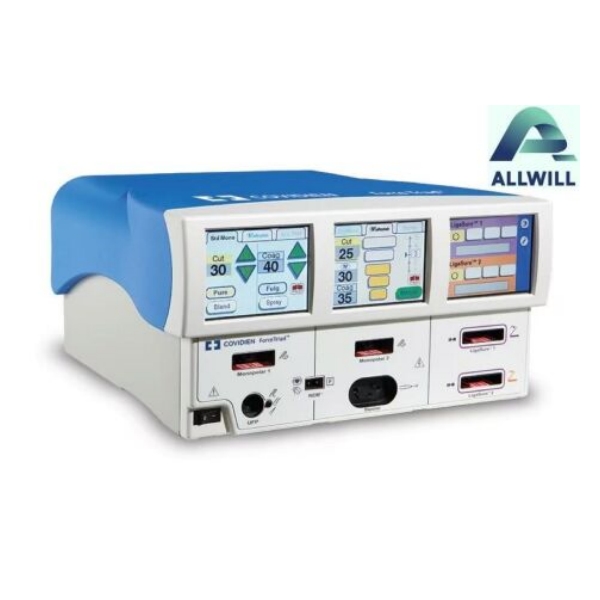
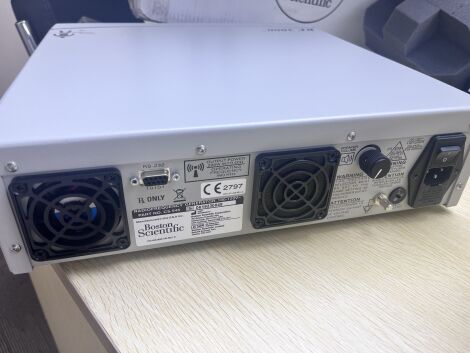
Real listings show what the saving looks like in a catalogue: a Covidien Valleylab Force Triad electrosurgical unit at $15,124, a Boston Scientific RF3000 radiofrequency ablation system at $42,625, and a single-use radiofrequency probe at $2,652. The third is the reminder that not every consumable belongs in this category: a single-use probe is worth buying pre-owned only if its reprocessing is covered by a clearance.
Which devices are worth buying certified pre-owned?
Durable, high-cost equipment with a long service life — and not the items where the manufacturer controls the consumable.
The categories that work are flexible and rigid endoscopes, surgical power tools, washer-disinfectors, imaging systems such as ultrasound, CT and digital X-ray, and video monitors. Each is expensive when new, repairable when it fails, and supported by an aftermarket in parts and service. Two categories need more care: reprocessed single-use devices, where the clearance question above applies, and any device whose economics depend on a proprietary consumable, because the consumable cost is what actually drives the total.
When does certified pre-owned make sense?
Four situations, and one that it does not fix.
Expansion or a new service line where the capital budget will not stretch to new equipment; replacing an ageing system where a certified unit buys several more years; adding a backup unit so that a single failure does not stop a list; and sourcing when new lead times are long and the clinical need is now. What it does not fix is a device that was wrong for the job in the first place — buying a cheaper version of the wrong machine is still buying the wrong machine.
What should you ask before you buy?
- The certification record: inspection, parts replaced, test and sterilisation results, and the QMS sign-off.
- The device label or UDI, checkable against the FDA’s AccessGUDID database.
- Whether the work was servicing or remanufacturing, since the two carry different regulatory consequences.
- Warranty period, what it covers, and the remedy — repair, replacement or credit.
- Installation and service support in your own country, with response times.
- Total cost of ownership: price plus carriage, installation, consumables and any service contract.
References
- FDA: Unique Device Identification System (UDI) — the UDI label requirement, AccessGUDID and premarket submission numbers.
- FDA: Remanufacturing of Medical Devices (guidance, May 2024) — the servicing-versus-remanufacturing distinction.
- GOV.UK / MHRA: Regulating medical devices in the UK — the Medical Devices Regulations 2002.
FAQ
Are certified pre-owned medical devices FDA approved and fully compliant?
Certified pre-owned devices have to comply with FDA requirements and the applicable medical device law before resale. The original device may already be cleared, but a refurbisher must follow servicing and documentation requirements, and reprocessed single-use devices need their own 510(k) clearance. Ask for the compliance records rather than assuming them from the original approval.
How are certified pre-owned devices tested before clinical use?
Through a multi-point process: inspection, parts replacement with OEM components, software updates, calibration, performance validation and sterilisation validation, signed off against a quality management system. The documentation from each stage is what the buyer should be given with the device.
Is certified pre-owned more cost effective than buying new?
Typically yes, at 30–70% below new, with lower depreciation and a faster deployment. The trade-off is warranty length — usually one to two years rather than one to five — so the comparison should be made on total cost of ownership including any service contract.
What warranty and service options come with certified pre-owned equipment?
Limited warranties, service contracts and technical support are the usual options, and coverage may include parts, remote diagnostics and on-site repair. Ask what is excluded, whether support is available in your country, and what the response time is for a device that is clinically critical.
How do you choose a reliable certified pre-owned supplier?
Judge the documentation: stated refurbishment standards, technician qualifications, the parts used, transparent pricing and a clear warranty policy. Request service records and references, and use a venue where the seller’s identity has been verified and payment is protected until the device is delivered and accepted.
Certification is a document, so ask for the document. The marketplace behind this guide lists new and used medical equipment with documented equipment histories and transaction protection.
Part of the Selling & Trading In Medical Equipment guide.