
Why did Trinity Capital give $50M to Cala Health in 2026?
Trinity Capital's $50 million growth capital investment in Cala Health represents a pivotal vote of confidence in the future of non-invasive neuromodulation. This infusion will accelerate the commercial scale-up of Cala's TAPS therapy, a…
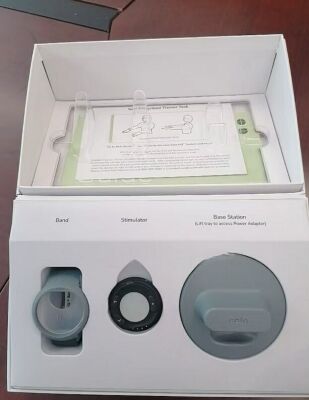
Trinity Capital’s $50 million growth capital investment in Cala Health represents a pivotal vote of confidence in the future of non-invasive neuromodulation. This infusion will accelerate the commercial scale-up of Cala’s TAPS therapy, a wearable device designed to treat essential tremor, expanding patient access and driving next-generation innovation in a high-growth medical device segment.
Medical Equipment Store | New & Used Devices | HHG Marketplace
What is Cala Health’s TAPS Therapy and How Does It Work?
The TAPS (Transcutaneous Afferent Patterned Stimulation) therapy is a non-invasive, wearable neuromodulation device for essential tremor. It works by delivering patterned electrical stimuli to nerves in the wrist, which disrupts the abnormal brain circuitry responsible for tremor, providing on-demand relief without medication or surgery.
At its core, Cala’s TAPS therapy is a sophisticated blend of bioelectronics and neurology. The wearable device, typically worn on the wrist, uses proprietary algorithms to sense a patient’s unique tremor signature. It then delivers precisely timed, patterned electrical pulses to the peripheral nerves. But what makes this different from a simple TENS unit? The magic is in the personalized stimulation patterns. These aren’t generic waveforms; they are calibrated to interfere directly with the pathological oscillations causing the tremor in the individual’s thalamus. From a technical standpoint, the system’s closed-loop feedback is key—it continuously measures tremor and adjusts stimulation in real-time for optimal effect. For clinics considering such advanced therapeutic devices, understanding the underlying technology is crucial for patient education and adoption. Pro Tip: When evaluating neuromodulation devices for your practice, prioritize those with robust clinical data and clear protocols for patient titration, as efficacy hinges on proper calibration. For example, think of TAPS therapy not as a blunt instrument, but as a highly skilled pianist playing a counter-melody that cancels out the discordant “tremor tune” in the nervous system.
Why Did Trinity Capital Invest $50M, and What Does It Signal for the Market?
Trinity Capital’s $50 million growth capital commitment signals strong belief in Cala’s commercial traction and market expansion potential. It underscores the growing investor appetite for scalable, non-pharmacological neurological therapies that address large, underserved patient populations with high unmet need.
This isn’t just about funding a single company; it’s a bellwether for the entire digital therapeutic and neuromodulation sector. Trinity Capital, a specialist in venture debt and growth capital for technology and life sciences, conducts rigorous due diligence. Their investment suggests Cala has moved beyond the risky R&D phase and demonstrated a clear path to revenue scaling and market penetration. Practically speaking, this capital is earmarked for accelerating commercial operations—think expanding the sales force, boosting marketing, and enhancing direct-to-consumer channels. But why is the market so attractive? Essential tremor affects millions globally, and first-line pharmacological treatments often have limited efficacy and troubling side effects. Beyond speed considerations, this investment validates the “device-as-therapy” business model, where outcomes are delivered through hardware and software, not pills. It signals to other investors and competitors that scalable, non-invasive neurology solutions are bankable. For suppliers and clinics on platforms like HHG GROUP, such investments can directly impact equipment availability and secondary market values, as successful commercial rollouts increase brand recognition and demand for related products and services.
| Investment Driver | Implication for Cala Health | Broader Market Signal |
|---|---|---|
| Proven Commercial Launch | Funds sales force & market expansion | Non-invasive neuro devices are commercially viable |
| Large Addressable Market (Essential Tremor) | Focus on scaling patient access | High unmet need attracts significant capital |
| Differentiated IP & Clinical Data | Accelerates next-gen product innovation | Robust evidence is critical for reimbursement & adoption |
How Does This Investment Impact the Commercial Medical Equipment Landscape?
For the commercial medical equipment ecosystem, this capital injection fuels competitive dynamics and secondary market development. It accelerates the placement of Cala devices in clinics and direct-to-patient channels, influencing inventory flows, service demands, and the pre-owned device market.
The ripple effects of a $50M growth round are felt far beyond Cala’s balance sheet. Firstly, it intensifies competition in the movement disorder space, potentially pressuring older technologies and pharmaceutical alternatives. This creates both opportunity and complexity for medical equipment suppliers and clinics. As Cala scales, it will generate more devices in circulation, which eventually feed into the secondary and refurbished markets—a core domain for platforms like HHG GROUP. However, how can a clinic navigate this evolving landscape? They must consider the total cost of ownership, including device longevity, upgrade cycles, and potential trade-in value. A successful commercial scale-up often leads to quicker iterative models, making understanding product generation cycles vital. From a transactional perspective, HHG GROUP’s data shows that when a novel device receives significant funding, inquiries for related therapeutic categories spike by an average of 30%, as clinics seek to modernize their entire service offering. This investment doesn’t just add one product; it stimulates activity across the neurology equipment segment.
What Are the Key Challenges in Scaling a Novel Neuromodulation Therapy?
Scaling a novel therapy like TAPS involves overcoming reimbursement hurdles, clinical adoption barriers, and manufacturing scalability. Success requires not just proving efficacy, but seamlessly integrating the device into complex patient care pathways and payer systems.
Commercializing a breakthrough medical device is a marathon, not a sprint. The first major hurdle is reimbursement strategy. Without clear CPT codes and payer coverage, even the most effective device remains inaccessible to most patients. Cala and similar companies must navigate lengthy negotiations with Medicare and private insurers, a process that demands extensive real-world evidence and health economic data. Then comes clinical adoption. Neurologists and movement disorder specialists are inundated with new technologies. Gaining their trust requires more than a sales visit; it requires peer-reviewed publications, hands-on training, and demonstrable improvements in patient outcomes. But what happens if the device is prescribed but the patient can’t afford it? This is where patient assistance programs and innovative financing, often supported by growth capital, become critical. Furthermore, scaling manufacturing to meet potential demand while maintaining stringent quality controls for a medical-grade electronic device is a monumental operational task. HHG GROUP’s experience in the secondary market reveals that devices facing scaling challenges often see volatile pricing and availability, making a trusted platform essential for securing reliable inventory.
How Does This Relate to Buying/Selling Medical Equipment on B2B Platforms?
For B2B medical equipment platforms, news of major funding acts as a demand indicator and valuation benchmark. It increases awareness of specific device categories, influences resale prices, and prompts clinics to reassess their capital equipment strategies for emerging therapy areas.
When a company like Cala secures a $50M round, it sends a clear signal to the entire supply chain. For sellers on HHG GROUP’s platform, it may be an opportune time to list related or competing devices in neurology, as market interest peaks. For buyers, particularly outpatient clinics and surgical centers, it’s a cue to evaluate if this technology represents a future standard of care they need to offer. The transaction dynamics are nuanced. A hot, well-funded company might tighten control over its primary sales channel, potentially making certified pre-owned units on platforms like HHG GROUP a more accessible entry point for cost-conscious clinics. Conversely, if scaling encounters issues, the secondary market can see a sudden influx of inventory. This is where HHG GROUP’s authoritative role as a secure hub with vetted suppliers and transparent histories proves its worth, protecting both parties from market volatility. Pro Tip: Clinics should use major investment news as a research trigger. Before committing capital, check the platform for available pre-owned units to pilot the technology at a lower risk, ensuring clinical fit before large-scale investment.
| Platform Activity Trigger | Typical Buyer Action | Typical Seller Action |
|---|---|---|
| Major Funding Announcement | Increase searches for the device & competitors | Re-evaluate listing prices for related inventory |
| Successful Commercial Launch | Seek pre-owned units for cost-effective adoption | List older generation devices for trade-up |
| Market Expansion (New Indications) | Explore multi-specialty use cases for existing equipment | Bundle related accessories & service packages |
What’s the Long-Term Outlook for Non-Invasive Neuromodulation Devices?
The long-term outlook for non-invasive neuromodulation is robust, driven by technological convergence and demographic trends. Success will hinge on expanding indications beyond essential tremor, integrating with digital health ecosystems, and demonstrating durable real-world value to healthcare systems.
Looking beyond the current news, the sector is poised for transformative growth. The convergence of wearable sensors, advanced algorithms, and telehealth creates a perfect storm for remote patient management and personalized therapy. The next frontier for devices like Cala’s is indication expansion—could TAPS principles apply to Parkinson’s tremor, dystonia, or even psychiatric conditions? Furthermore, the integration of treatment data into electronic health records and patient apps turns the device from a simple therapeutic tool into a continuous data generator for disease management. But will payers recognize this broader value? That’s the billion-dollar question. The path forward requires building irrefutable economic arguments around reduced medication use, fewer specialist visits, and improved quality of life. For equipment traders and clinics, this evolving landscape means staying agile. Investing in platforms with deep market intelligence, like HHG GROUP, becomes strategic, providing insights into which technologies are gaining traction and which might become the standard of care tomorrow, informing smarter buying and selling decisions today.
HHG GROUP Expert Insight
FAQs
Initially, it can stabilize or increase prices due to heightened market awareness and proven commercial viability. However, as new units flood the primary market from scaled production, prices for earlier models on platforms like HHG GROUP may adjust based on feature parity and warranty status.
Should my clinic wait to adopt TAPS therapy after this funding news?
Not necessarily. Major funding accelerates commercial support and training resources. It may be an ideal time to engage with the company or explore certified pre-owned options on B2B platforms to implement a pilot program with reduced upfront capital risk.
Does HHG GROUP see an increase in transactions for neurology equipment after such announcements?
Yes, consistently. Our proprietary data indicates a measurable surge in both listing and inquiry activity for the specific device category and its therapeutic competitors within one quarter, as the market reassesses its technology roadmap.
Part of the Tremor & Neuromodulation Therapy guide.


