
EU MDR and Used Medical Devices: What Changes When a Unit Crosses the Border
EU MDR used medical devices face a different test at the border: who places the unit on the market and what refurbishment changed. Build this file.
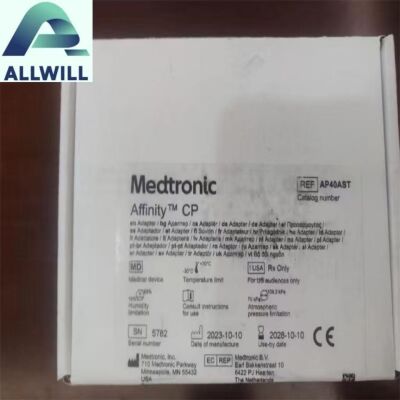
A used unit can be sold inside the EU without becoming a new device, or it can cross the border and become one, depending on who does what and where. The trigger is not the word \”used\”. It is the act of placing the device on the EU market and the changes made before it gets there.
Where the Obligation Attaches
Under the EU MDR, obligations attach when a device is placed on the market, when it is put into service, or when an economic operator changes it enough to take on the manufacturer\’s role. A used unit already in service inside the EU is treated differently from one imported from outside.
The Medical Device Regulation 2017/745 applies to devices placed on the EU market, which generally means the first making available of a device for distribution or use. A unit already in service in the EU and transferred between users is not automatically placed on the market again. A unit arriving from outside the EU is. That distinction is the starting point for every used-equipment transaction, and it determines whether the seller is a distributor, an importer or a manufacturer.
Refurbishment can change the analysis. If the work amounts to a significant modification, or if the unit is placed on the market under a new name, the entity doing that work may take on the manufacturer\’s obligations. The regulation does not decide the question by the label on the invoice; it looks at the change and its effect on conformity. National competent authorities enforce the result, and their interpretation of a borderline refurbishment can differ from the seller\’s.
The Importer\’s Duties
The importer is the EU-established operator that brings a device from a third country onto the EU market. It must verify the manufacturer\’s conformity, ensure labelling and UDI, keep a register, check storage and transport, and forward complaints and incidents.
In practical terms, the importer checks that the device carries the CE marking, that an EU declaration of conformity exists, that the manufacturer and, where applicable, the authorised representative are identified, and that the technical documentation can be made available to the authority. It confirms that the label and instructions are in the required language, adds its own name and contact details where the rules require it, and records the UDI. For a used unit, the same duties sit alongside a condition question: what happened to the device before it arrived, and does the documentation support the description?
| Importer duty | What it means for a used unit | Evidence to hold |
|---|---|---|
| Verify conformity | The CE mark and declaration of conformity match the configuration being imported | Declaration of conformity, certificate details, model and software identifiers |
| Verify identification | Manufacturer, authorised representative and importer details are present | Label and IFU copies, photographs of the nameplate |
| Check language and labelling | Instructions and safety information are in the required language for the destination market | Approved label artwork, translated IFU |
| Register and trace | The importer can identify who supplied each unit and to whom it went | Supply register, UDI record, distribution records |
| Handle complaints and incidents | User reports and service findings reach the manufacturer and the authority where required | Complaint log, vigilance file, correspondence |
| Cooperate with corrective action | The importer can locate and contact affected customers | Recall procedure, contact list, disposition records |
When Refurbishment Creates a Manufacturer
A refurbisher becomes the manufacturer when it places the device under its own name, changes its intended purpose, or modifies it in a way that significantly affects compliance. Routine servicing does not, but the boundary is set by the change, not by the invoice.
The MDR addresses this directly: an importer or distributor that modifies a device, changes its intended purpose or places it on the market under its own name is treated as a manufacturer for the purposes of the regulation. The same logic applies to a refurbisher that rebuilds a unit beyond maintenance. A new subsystem, a changed performance specification, a new user interface or a software function that alters the device\’s behavior can all move the work across the line.
The assessment should be written down before the work begins. It should describe the original configuration, the change, the effect on risk and performance, and the reasoning for the chosen regulatory route. If the conclusion is that the unit remains the original manufacturer\’s device, the file should still show why; if the conclusion is that a new conformity assessment is required, the project timeline and cost change substantially.
| Work performed | Likely role | What follows |
|---|---|---|
| Preventive maintenance, wear-part replacement, calibration | Service provider | Service records; no new CE marking on that basis alone |
| Cosmetic restoration and testing within the original specification | Refurbisher, usually still distributor or service provider | Evidence that configuration, labelling and performance remain within the original device |
| New subsystem, changed performance or new intended purpose | Manufacturer | Conformity assessment, technical documentation, CE marking and post-market obligations |
| Device placed on the market under a new name | Manufacturer | The entity whose name appears takes the manufacturer\’s obligations |
Technical Documentation for a Refurbished Unit
A refurbished unit that is treated as a new device needs technical documentation proportionate to its class, covering design, risk, verification, labelling, software and the changes made. Reusing the original manufacturer\’s file without assessing the changes is not a technical file.
The documentation should describe the device and its intended purpose, identify the configuration and UDI, set out the risk management process, and show the verification and validation performed against the applicable requirements. It should include the labelling and instructions, the post-market surveillance plan and the clinical evaluation or justification for relying on existing evidence. For a refurbished unit, the file also needs the change assessment, the parts traceability and the test results that show the unit meets the specification claimed.
The manufacturer\’s original documentation remains valuable, but it describes the original device. It does not automatically describe what the refurbisher changed. The gap between the two is where most documentation weaknesses sit, and it is the first thing a competent authority or a notified body will ask about.
CE Marking and Labelling Questions
A CE mark on the original device does not automatically cover a refurbished or imported unit. The mark must correspond to the conformity assessment for the configuration being placed on the market, and the label must identify the responsible operator.
The label also carries the information a buyer uses to verify the chain: manufacturer, authorised representative, importer, model, serial number, UDI and, where relevant, the single-use symbol. Replacing a label is not a cosmetic act. A new label can change the regulatory identity of the device if it names a different manufacturer, omits required information or obscures the original markings. Where the original label is worn, the replacement should reproduce the required content and be documented, not improvised.
Language is part of conformity. Instructions and safety information must be in the language required by the destination member state, and the importer is usually the party that ensures this. A unit with an English-only manual sold into a market that requires another language is not ready for placement, however good its technical condition.
Vigilance and Incident Reporting
Importers and distributors must pass serious incident reports and field safety notices to the manufacturer and, where required, the competent authority. They also need to cooperate with corrective actions and keep records of complaints.
For used equipment, the information flow is often weaker than for new devices. The user may report a fault to the service company rather than the manufacturer, and the service company may not see itself as part of the vigilance chain. The importer\’s complaint log is therefore a control, not a formality: it should capture the unit, the symptom, the action taken and whether the manufacturer was informed.
Field safety corrective actions can require locating units that have moved between owners. That is only possible if the importer kept distribution records and the customer kept the unit\’s identifiers. The same records support the trend analysis the manufacturer is expected to perform, and they are the first thing requested when an authority examines a cluster of failures.
Market Surveillance and Enforcement Reality
Market surveillance is run by national competent authorities, supported by Eudamed and customs cooperation. Enforcement focuses on documentation, labelling, traceability and incident history, and it can stop a shipment before the device reaches a user.
A used unit attracts attention for a simple reason: the paperwork is often thinner than the device. Authorities can request the declaration of conformity, the technical documentation, the importer\’s records and the evidence that the unit matches the description. If the unit was refurbished, they can ask who performed the work and under what regulatory route. If the answers are inconsistent, the device can be withdrawn, recalled or refused entry.
The European Commission\’s MDCG guidance is the practical reference for how the regulation is applied, including questions around refurbishment and significant change. Reading the guidance before structuring a transaction is cheaper than arguing about it after the container arrives. The same documentation questions appear in other markets, including FDA review in the US and MHRA oversight in the UK, while WHO guidance frames the shared principles.
Building an EU Entry File
An EU entry file should let an authority or a customer answer four questions: what the device is, who is responsible, how conformity was established and what happened to it before entry. Build it once per unit and keep it current. The market-facing requirements are summarized in the EU MDR marketing checklist; this article covers the file that supports entry.
| Document | What it proves | What its absence leaves open |
|---|---|---|
| EU declaration of conformity | That conformity was declared for the device and the applicable rules | Whether the CE mark relates to this configuration |
| Certificate and notified body details | The scope and validity of any third-party assessment | Whether the certificate covers the class and configuration |
| Technical file or change assessment | How the device was designed, changed and verified | Whether the refurbishment created a new device |
| UDI and label records | The identity of the unit and the responsible operators | Whether the unit can be traced through the supply chain |
| Instructions and translations | That the required language and safety information are present | Whether the unit can lawfully be placed in the destination market |
| Service and calibration records | What was done before entry and whether performance was verified | Whether the condition matches the description |
| Software and firmware record | The version installed and whether it is within the declared configuration | Whether the unit has drifted from the conformity assessed |
| Accessory and consumable list | What is included and which items are single-use | Whether the system is complete and lawfully resellable |
| Decontamination and transport records | That handling, packaging and transport conditions were controlled | Whether the unit arrived in the condition assessed |
| Complaint and vigilance file | What the importer knows about failures and corrective actions | Whether an open safety issue is attached to the unit |
The file should also name the importer, the authorised representative and the person who approved entry. A file without an owner is a file that will not be updated when the software changes or a field safety notice arrives.
If you are preparing an EU entry file for a used unit and want the documentation reviewed before shipment, send the model, the conformity route and what you already hold to the HHG team. More guides on records, refurbishment and cross-border entry are in the Knowledge section.
Questions About EU Entry
Can refurbished devices be CE marked under MDR?
Yes, a refurbished device can be CE marked if the entity placing it on the market takes the manufacturer\’s responsibilities and demonstrates conformity for the configuration being sold. The original CE mark does not automatically transfer to a significantly modified unit. The route depends on the change, the device class and the conformity assessment procedure that applies.
Who is responsible for a used device imported into the EU?
The EU importer is responsible for verifying conformity, identification, labelling, language and traceability, and for cooperating on complaints and corrective actions. The manufacturer remains responsible for the device\’s conformity, and the importer shares responsibility for the unit it places on the market. If the importer modifies the device or sells it under its own name, it can become the manufacturer.
Does MDR apply to devices sold between hospitals?
A transfer of a device already in service in the EU between users is not automatically a new placing on the market, so the full premarket route does not necessarily apply. The position changes if the device is refurbished, significantly modified, imported from outside the EU or placed under a new name. The transaction should be assessed on those facts, not on the word \”used\”.
What is MDR in Europe?
MDR is the EU Medical Device Regulation, Regulation (EU) 2017/745, which sets the requirements for placing medical devices on the EU market. It covers classification, conformity assessment, CE marking, clinical evaluation, post-market surveillance, vigilance and traceability, and it applies to economic operators throughout the supply chain.
Related articles
 India CDSCO and Imported Used Medical Equipment: Licensing Before LogisticsKnowledgeANVISA Registration and Used Medical Equipment in Brazil: The Practical PathKnowledgeTGA and Used Medical Devices: What Australian Buyers and Sellers Must CheckKnowledge
 Importing Used Medical Devices into Canada: Health Canada\’s Requirements in SequenceKnowledge
