
Consignment Agreements for Medical Equipment: Who Holds Stock, Who Holds Risk
A medical equipment consignment agreement must settle title, risk, insurance and the conversion trigger. Here is what to write before any stock moves.
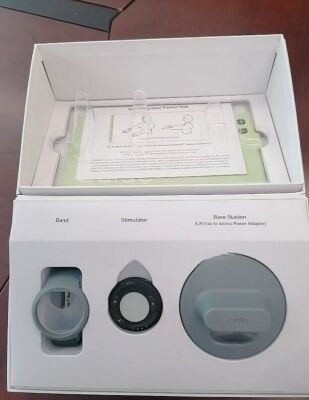
Consignment looks like a sale with delayed payment. It is not. The consignor keeps title, the consignee holds stock it does not own, and the sale happens only when a defined trigger converts the stock. Most disputes come from leaving that trigger, or the risk allocation around it, implicit.
Consignment Is Not a Sale
Consignment is a bailment for sale, not a transfer of ownership. The consignee holds and may sell the goods, but the consignor retains title until the conversion event, and the consignee usually pays only for what has been sold or used.
That structure changes the accounting, the insurance and the regulatory question. The stock may sit in the clinic for months without becoming the clinic\’s asset. The supplier may retain the right to recall it. The buyer of the clinic\’s business may not acquire it. Each of those consequences should be visible in the agreement, not discovered during an audit. The regulatory layer varies by market, from FDA rules and the EU Medical Device Regulation 2017/745 to MHRA, TGA and PMDA requirements, while WHO guidance frames the shared principles; the consignment terms should fit the market where the stock is held.
Consignment is common for high-value implants, instruments, probes and service parts because it keeps stock close to the procedure without forcing the clinic to buy it. The commercial benefit is real, but it depends on a clean record of what is on hand, what has been used and what has been returned. The agreement should answer that question before any stock moves.
Title Stays With the Consignor
Title remains with the consignor until the conversion trigger is met. The agreement should say so expressly, and it should require the consignee to keep the stock identifiable and separate from its own assets.
Identification matters because a lender, insolvency practitioner or buyer may treat stock on the premises as the consignee\’s asset. Serial numbers, lot numbers, segregated storage and a current inventory schedule are the practical protections. The agreement should also require the consignee to tell its landlord, lender or insolvency adviser that the stock is owned by the consignor, where that is appropriate.
In the United States, a consignment can be treated as a security interest if it does not meet the requirements for a true consignment, and filing rules may apply. The parties should take local advice on perfection and priority rather than assuming that the word \”consignment\” settles the legal position.
Risk and Insurance Allocation
The agreement should state who bears risk of loss, damage, theft and obsolescence at each stage: in transit, in storage, during use and on return. It should also name who insures the stock and whether the consignee is an additional insured.
Risk does not have to follow title. The consignor may keep title while the consignee bears risk for stock in its custody, or the consignor may insure the stock and pass the cost through. The important point is that the agreement says which, and that the insurance policy actually covers consigned goods rather than only owned inventory.
The consignee should confirm that its property policy does not exclude goods held in trust or on consignment. A certificate of insurance that names the consignor and the stock is stronger than a general assurance that the clinic is insured. The allocation should also address who bears the cost of replacing expired or short-dated stock. A consignee that is responsible for rotation may bear the loss if it fails to report; a consignor that controls the stock mix may bear it if it over-supplies. The clause should make that split explicit rather than leaving it to the end-of-year negotiation.
Storage and Handling Duties
The consignee should store the stock under the conditions the manufacturer specifies, keep it secure and segregated, and follow the handling and traceability rules for the device. Expiry, temperature, humidity and access control may all matter.
For single-use devices, the storage duty includes preserving the original packaging and labelling. A consigned implant or probe that is opened, relabelled or stored outside its conditions may no longer be usable, and the agreement should say who bears that loss. For reusable instruments, the duty includes cleaning, inspection and segregation from the consignee\’s own stock.
The agreement should also set a stock rotation rule. Consigned stock can sit for a long time; the consignee should use the oldest eligible stock first and report short-dated items so the consignor can replace or recall them.
The Conversion Trigger
The conversion trigger is the event that turns consigned stock into a sale: use in a procedure, sale to a patient or customer, invoicing, removal from the consignment location or the end of a reporting period. The agreement must define it precisely.
\”When used\” sounds clear until the procedure is cancelled, the item is opened but not implanted, or the item is returned to stock. The agreement should say which events count and which do not, and it should require a written record for each conversion. A monthly report that lists used, returned and remaining stock is the minimum.
The price and payment terms should attach to the conversion event, not to the delivery of the stock. The agreement should also say whether the consignee pays for lost or damaged stock even if it was never used, because that is a risk allocation question rather than a sale.
Reporting and Stock Verification
The consignee should provide a periodic stock report showing what is on hand, what was used, what was returned and what is short-dated. The consignor should have a right to verify the count, physically or through records.
The report should use the identifiers the consignor can reconcile: product code, lot or serial number, quantity, location and status. A report that lists only product families cannot support a recall or a reconciliation. The agreement should say how often the report is due and what happens if it is late.
Physical verification can be annual, quarterly or event-driven. The agreement should give the consignor access during business hours and require the consignee to explain discrepancies. A count that cannot be reconciled is a commercial dispute waiting to happen. The report should be sent even when there is no activity. A nil return confirms that the stock is still on hand and that the consignee is still managing it. Silence is not a report, and it makes a later discrepancy harder to explain.
Recall and Retrieval Rights
The consignor should have the right to recall consigned stock for a safety notice, expiry, quality issue or termination. The consignee should quarantine the affected stock and stop using it until the consignor gives instructions.
The recall clause should connect to the device\’s post-market system. The consignee must be able to identify which patients or procedures used the affected stock, and it must pass that information to the consignor. For implants, that traceability is part of the device record, not only a commercial record.
The agreement should also cover the cost of retrieval and the responsibility for replacement stock. A recall that leaves the clinic without an alternative may create pressure to use affected stock; the clause should make the safe path the practical one.
Termination and Return
Termination should state the notice period, the treatment of stock on hand, the return costs and the condition required for credit. The consignee should return unused stock in its original packaging, with the identifiers intact, and the consignor should inspect it before credit.
The agreement should distinguish between stock returned in resalable condition and stock that is damaged, opened, expired or missing. The consignee should not assume that every unused item will be credited. A return authorization and a receiving record protect both sides. The termination clause should also deal with stock that is subject to a recall or a safety notice. It should not be returned to the consignor for credit as if it were ordinary stock; it should follow the recall route. The agreement should say who bears the cost of quarantine and disposal.
| Consignment record | What it proves | What its absence leaves open |
|---|---|---|
| Consignment agreement | Title, risk, trigger, reporting and termination terms | Who owns and bears loss for the stock |
| Inventory schedule | What is on hand, with identifiers and locations | Whether the stock can be reconciled or recalled |
| Insurance certificate | That the stock is covered and who is insured | Who pays for loss, theft or damage |
| Storage and handling record | That conditions and segregation were maintained | Whether the stock remained usable |
| Conversion report | What was used, sold or returned in the period | What the consignee owes and when |
| Recall notice and quarantine record | That affected stock was contained | Whether patients or procedures were exposed |
| Return authorization and receipt | What was returned and in what condition | Whether credit is due |
The medical equipment marketplace guide covers the wider transaction sequence, and the Knowledge section has related contract and records guides.
If you are setting up a consignment arrangement and want the title, risk and conversion terms reviewed before stock moves, send the draft to the HHG team.
Questions About Consignment
Who owns consigned medical equipment?
The consignor retains title until the conversion trigger is met. The consignee holds the stock but does not own it, and it should keep the stock identifiable and separate from its own assets. The agreement should state the ownership position expressly.
Who insures consignment stock?
The agreement should allocate insurance. Either party may insure, but the policy must cover goods held on consignment, and the certificate should name the insured parties and the stock. Risk does not have to follow title, so the clause should state both separately.
When does a consignment become a sale?
It becomes a sale when the agreed conversion event occurs, such as use in a procedure, sale to a customer, invoicing or removal from the consignment location. The agreement should define the event precisely and require a written record for each conversion.
What should be included in a consignment agreement?
It should cover the parties, the stock and its identifiers, title, risk, insurance, storage and handling, the conversion trigger, pricing and payment, reporting and verification, recall and retrieval, termination and return. It should also address what happens on loss, damage, expiry or insolvency.
{ \”@context\”: \”https://schema.org\”, \”@type\”: \”FAQPage\”, \”mainEntity\”: [ {\”@type\”: \”Question\”, \”name\”: \”Who owns consigned medical equipment?\”, \”acceptedAnswer\”: {\”@type\”: \”Answer\”, \”text\”: \”The consignor retains title until the conversion trigger is met. The consignee holds the stock but does not own it, and it should keep the stock identifiable and separate from its own assets. The agreement should state the ownership position expressly.\”}}, {\”@type\”: \”Question\”, \”name\”: \”Who insures consignment stock?\”, \”acceptedAnswer\”: {\”@type\”: \”Answer\”, \”text\”: \”The agreement should allocate insurance. Either party may insure, but the policy must cover goods held on consignment, and the certificate should name the insured parties and the stock. Risk does not have to follow title, so the clause should state both separately.\”}}, {\”@type\”: \”Question\”, \”name\”: \”When does a consignment become a sale?\”, \”acceptedAnswer\”: {\”@type\”: \”Answer\”, \”text\”: \”It becomes a sale when the agreed conversion event occurs, such as use in a procedure, sale to a customer, invoicing or removal from the consignment location. The agreement should define the event precisely and require a written record for each conversion.\”}}, {\”@type\”: \”Question\”, \”name\”: \”What should be included in a consignment agreement?\”, \”acceptedAnswer\”: {\”@type\”: \”Answer\”, \”text\”: \”It should cover the parties, the stock and its identifiers, title, risk, insurance, storage and handling, the conversion trigger, pricing and payment, reporting and verification, recall and retrieval, termination and return. It should also address what happens on loss, damage, expiry or insolvency.\”}} ] }
Related articles
 Inspection Clauses in Medical Equipment Contracts: Giving Yourself a Real RemedyKnowledge
 India CDSCO and Imported Used Medical Equipment: Licensing Before LogisticsKnowledge
 ANVISA Registration and Used Medical Equipment in Brazil: The Practical PathKnowledgeTGA and Used Medical Devices: What Australian Buyers and Sellers Must CheckKnowledge
