
Dealer and Reseller Operations in Medical Equipment Trade
A medical equipment dealer occupies a position that is easy to describe and hard to run: it takes equipment from sources that want to dispose of it, prepares it, and supplies it to buyers…

A medical equipment dealer occupies a position that is easy to describe and hard to run: it takes equipment from sources that want to dispose of it, prepares it, and supplies it to buyers who need it, and it carries the documentation position between the two. That position is where a dealership’s value and its exposure both sit, because the dealer is usually the party that can neither produce the manufacturer’s records nor rely on the original owner’s memory. This article sets out what the role is accountable for, what it needs in writing, and the records that make the operation sustainable.
What This Role Is Accountable For
The dealer is accountable for the accuracy of what it sells and for the records it holds about the equipment it has handled. Those two are connected: a dealer that describes equipment accurately but cannot produce its history is relying on the description, and a dealer that holds records but describes them loosely has not used them.
The role is not accountable for the manufacturer’s position on the device, and it should not present itself as holding one. Referring to manufacturer brands for identification is factual and useful; implying a dealership, distribution right or authorisation that does not exist is a representation the dealer cannot support. The extractable summary is this: a dealer is accountable for the accuracy of its description and for the records it holds on the equipment it has handled, and it should not present itself as holding a manufacturer’s position it does not have.
A second characteristic of the role is that its reputation is built from the reliability of the equipment it sells rather than from the volume. A dealer whose equipment arrives as described and whose records answer questions builds a position in a market where participants deal with each other repeatedly. A dealer whose documentation is thin competes on price alone, which is the position that attracts the buyers least able to absorb a problem.
| Accountability | What it covers | Evidence it should retain |
|---|---|---|
| Description accuracy | The equipment as it is rather than as it was described | Condition and configuration records |
| Work performed | What the dealer did and against which specification | Service and parts records |
| Accessory and consumable position | What is included and what is single-use | Packing and item records |
| Support position | Parts, service and software availability | Manufacturer or provider position |
| Provenance | Where the equipment came from | Purchase and intake records |
| Buyer position | What was agreed and what was excluded | Terms and correspondence |
What the Role Needs in Writing Before Acting
A dealership’s operations depend on documents it receives rather than on documents it can create, which is why what it obtains at intake determines what it can sell later. Before work begins on a unit, the dealer needs the equipment’s identification and configuration, its condition as received, its provenance, and whatever records the source can provide.
Two of those are frequently missing and both matter. The provenance record is what allows the dealer to answer a question about where the equipment came from, and without it the equipment’s history begins at intake. The records from the source are what establish the equipment’s life before the dealer had it, and an equipment file that starts at intake is a shorter file than a buyer expects.
Where the Role Interfaces With the Other Party
The dealer interfaces with sources on intake, with buyers on supply, and with service providers on the work performed. Each interface produces documents, and the dealer’s position is the sum of them.
The interface with the source determines what the dealer knows, and it is the one where a dealer most often accepts less than it needs because insisting would slow the transaction. The interface with the buyer determines what the dealer has to produce, and it is where a complete file pays for itself. The interface with service providers determines the technical record, and it is where the specification the work was measured against is either captured or lost.
Evidence the Role Should Retain
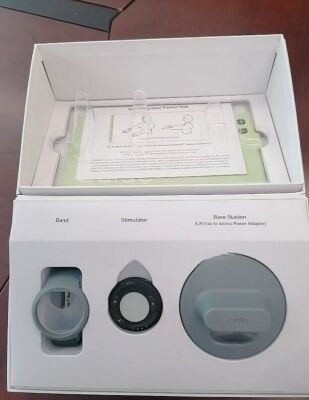
The evidence a dealer retains is what makes its operation repeatable and its sales defensible, and each element is produced at a different point.
| Evidence | Where it originates | What it supports |
|---|---|---|
| Intake record with condition and photographs | At receipt | The starting condition |
| Provenance documentation | From the source | Where the equipment came from |
| Records received from the source | From the source | The equipment’s earlier history |
| Work and parts records | From service activity | What the dealer did |
| Configuration and support statement | From assessment | What the buyer is acquiring |
| Buyer terms and correspondence | From the transaction | What was agreed |
Scope Boundaries and What the Role Must Not Do
The boundaries exist because exceeding them creates representations the dealer cannot support, and they apply regardless of the dealer’s technical competence.
A dealer should not state or imply regulatory status for a device, should not describe clinical suitability, and should not describe work in terms broader than what was performed. It should not present a manufacturer relationship that does not exist, and it should not describe single-use items as usable without addressing their status. Where such items are supplied, the buyer is responsible for confirming legality, labelling and any applicable reprocessing position in their own market. Each of those is a common commercial shortcut, and each of them transfers a risk to the buyer that the buyer will eventually discover.
Evaluating the Counterparty
For a buyer, evaluating a dealer is a matter of establishing what the dealer holds and what it can produce.
| Question | What a satisfactory answer looks like |
|---|---|
| What is the equipment’s history | Records from before the dealer held it |
| What work was performed | Records naming the specification followed |
| What is included | An itemised list distinguishing accessories and consumables |
| What is the support position | Parts, service and software availability |
| What is unknown | A stated list |
| What does the dealer represent itself as | Its own role rather than a manufacturer’s position |
Red Flags in Practice
The warning signs are consistent across the trade, and each of them indicates that the dealer’s position rests on assurance rather than on records.
- The equipment’s history begins at intake, with nothing from before the dealer received it.
- Work is described as refurbished or fully serviced without naming what was done.
- The dealer’s documentation refers to manufacturer relationships without any basis for them.
- Accessories are described as a set without an itemised list.
- Single-use items appear within a package without their status being stated.
- The support position is described as available rather than established.
- Condition is described in a single word rather than per component.
Two further warning signs are worth naming. The first is a refusal to allow inspection, since a dealer confident in the equipment’s condition has no reason to withhold it. The second is a description that changes between the listing and the answers to questions, which indicates that the listing was written from an impression rather than from records.
Where a dealer’s descriptions are subject to expectations in the market concerned, those are illustrated in one market by the MHRA guidance on regulating medical devices, and cross-market expectations around equipment and its description are summarised by the WHO medical devices programme.
Buyers who want the wider context can start from the knowledge hub, see how equipment and its condition are described on the marketplace store, or use the commercial material in the industry hub. Our analysis of how tariffs are reshaping refurbished device trade covers the market conditions dealers operate in. The professional framework for equipment management is covered by AAMI’s medical device servicing material, independent guidance from organisations such as ECRI is a useful reference on equipment risk, and the device-side expectations that apply to equipment and its description are illustrated in one market by the MHRA guidance on regulating medical devices, with the duty to keep equipment safe and available until transfer framed in national workplace material such as the HSE health services guidance.
Operating a dealership or buying from one? Send the equipment details, the records you hold and what you are representing and we will identify where the position rests on assurance rather than on evidence.
FAQ
What is a medical equipment dealer accountable for?
A dealer is accountable for the accuracy of what it sells and for the records it holds on the equipment it has handled, including the work it performed, the parts used and the provenance of the equipment. It is not accountable for the manufacturer’s position on a device and should not present itself as holding one. The two accountabilities are connected, because a description without records is an assertion rather than a disclosure.
What documents should a dealer hold?
An intake record with condition and dated photographs, provenance documentation, whatever records the source provided, work and parts records naming the specification followed, a configuration and support statement, and the buyer terms with the correspondence. Each is produced at a different point in the process, which is why obtaining them at the time is easier than reconstructing them later.
Why does provenance matter in equipment resale?
Because it establishes where the equipment came from and therefore the earlier part of its history. Without it, the equipment’s file begins when the dealer received it, which leaves a buyer assessing a device whose earlier life is unknown. Provenance is also what allows a dealer to answer a question about a unit later, which is a question that arises more often than sellers expect.
What should a dealer avoid claiming?
It should avoid stating or implying regulatory status, describing clinical suitability, or claiming a manufacturer relationship that does not exist. It should also avoid describing work more broadly than it was performed and describing single-use items as usable without addressing their status. Each of those is a shortcut that transfers a risk to the buyer, who will discover it.
How does a buyer evaluate a dealer?
By establishing what the dealer holds rather than what it asserts: the equipment’s history from before the dealer received it, the work performed and the specification followed, an itemised list of what is included, the support position, and a stated list of what is unknown. A dealer that answers those precisely is easier to buy from, and the answers are checkable rather than reassuring.
Related articles
India CDSCO and Imported Used Medical Equipment: Licensing Before LogisticsKnowledge ANVISA Registration and Used Medical Equipment in Brazil: The Practical PathKnowledgeTGA and Used Medical Devices: What Australian Buyers and Sellers Must CheckKnowledge
 Importing Used Medical Devices into Canada: Health Canada\’s Requirements in SequenceKnowledge
