
Vendor Qualification for Medical Equipment Service Providers
Appointing a service provider is a decision made on reassurance and reviewed on cost, which is the reverse of the order that produces good outcomes. Qualification is the process of establishing, before work begins,…
Appointing a service provider is a decision made on reassurance and reviewed on cost, which is the reverse of the order that produces good outcomes. Qualification is the process of establishing, before work begins, that a provider can do what it claims and that the claim can be substantiated. It is not an audit for its own sake; it is the mechanism by which a department converts an assurance into evidence it can rely on when the equipment is down and the explanation matters. This article sets out what the role is accountable for, what has to be established in writing, and how to review a provider once appointed.
What This Role Is Accountable For
The provider is accountable for the work it performs, for the records it produces, and for the accuracy of the claims it makes about its own capability. Those three are connected: a provider that performs work without records leaves the department unable to demonstrate the equipment’s position, and a provider that overstates its capability creates an exposure the department inherits.
The department remains accountable for the equipment’s condition and safe use. That is the boundary that is most frequently misunderstood, and it is the reason qualification matters rather than being a formality: the department cannot transfer its own duty by appointing somebody else, so the appointment has to be made on evidence. The extractable summary is this: a service provider is accountable for the work and the records it produces, while the department remains accountable for the equipment, which is why the provider’s claims have to be substantiated before appointment rather than accepted.
Qualification also has a second practical purpose that is unrelated to risk. It produces a written description of what the arrangement covers, which is the document that resolves disagreements during the relationship rather than after it. A department that has agreed the scope, the record format and the escalation route in advance can settle most disputes by reference to the document, while a department that has not will negotiate each dispute on its merits with the equipment out of service.
| Accountability | Held by the provider | Held by the department |
|---|---|---|
| Technical correctness of the work | Yes | No |
| Records of the work performed | Yes, produced | Yes, obtained and retained |
| Competence of personnel | Yes, evidenced | Yes, confirmed as adequate |
| Equipment condition and safe use | No | Yes |
| Regulatory position of the device | No | Yes |
| Access to records after the arrangement ends | No | Yes, agreed in advance |
What the Role Needs in Writing Before Acting
Work performed without a defined basis produces a record that cannot be assessed. Before work begins, the provider needs the device’s identification and configuration, the specification the work is measured against, and the documentation the work will follow. Each of those should come from the department rather than be assumed by the provider.
The same applies to the commercial basis. The scope, the response terms, the parts position and the records that will be provided should be written down, because those elements determine what the department receives rather than what it hoped for. Where the provider is to perform work that changes a device’s configuration, that should be identified explicitly, since the position differs from routine maintenance and the provider’s competence has to cover it.
A third item belongs in the written basis and is frequently missing: the boundary of the provider’s authority. Whether the provider may order parts without approval, whether it may leave a device out of service, and who decides when a repair is complete are all practical questions that determine how the relationship runs. Writing them down costs an hour and removes the ambiguity that otherwise gets resolved under time pressure.
Where the Role Interfaces With the Other Party
The provider interfaces with the department’s technical function on the work, with the clinical teams on access and priority, and with procurement on commercial terms. The interface that causes most difficulty is the one between the provider’s engineer and the department’s own staff, because the two may have different views about what the equipment needs.
That difficulty is manageable if the arrangement anticipates it. Agreeing in advance who decides when the provider considers a repair complete, what happens when the provider’s engineer and the department’s technician disagree, and how a finding outside the agreed scope is escalated, converts a potential conflict into a defined process. Where the relationship is informal, the same disagreements are resolved by whoever has more authority on the day, which produces inconsistent outcomes.
A second interface is less obvious and worth naming: the interface between the provider and the equipment’s records. Where the provider holds the service history, the department’s access to it becomes a live question during the arrangement rather than only at the end, and the format and timescale should be agreed at the outset. Where the provider supplies records in its own format without the specification or the measured values, the department cannot use them for acceptance, audit or resale.
Evidence the Role Should Retain
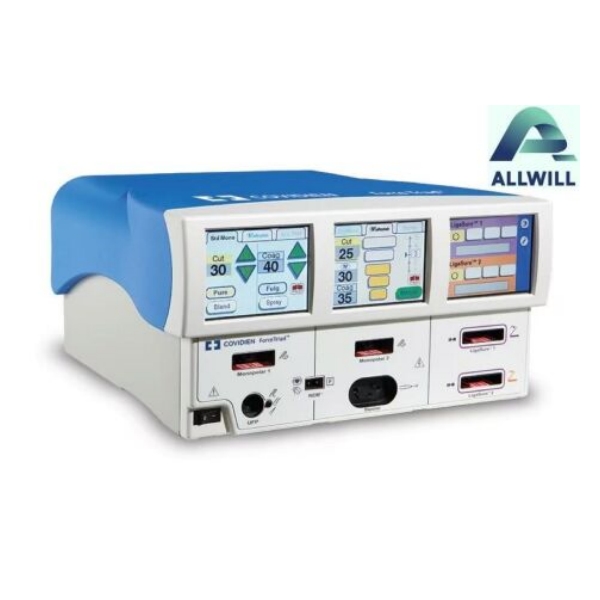
Qualification is only as strong as the evidence behind it, and the evidence is documentary.
| Evidence | What it establishes |
|---|---|
| Named personnel and their platform training | Who will do the work and on what basis |
| Service documentation the provider will follow | The specification the work is measured against |
| Test equipment and calibration position | Whether measurements can be relied on |
| Insurance and business standing | Whether the provider can bear the consequences of its work |
| Scope statement accepted by both parties | What is covered and what is excluded |
| Record format and access terms | What the department will receive and retain |
Scope Boundaries and What the Role Must Not Do
The boundaries are the same as for any technical party, and they matter more where the provider is a commercial organisation under pressure to be helpful. A provider should not confirm a device’s clinical suitability, should not present a device as approved or compliant, and should not describe work more broadly than it was performed.
The boundary that most often goes unstated is the one between restoring a device and changing it. A provider asked to make a device work may adjust its configuration to do so, and the adjustment may be reasonable in itself while changing the device’s position. The department should specify that any change to configuration, software or components is reported, and that work outside the documented specification is flagged rather than absorbed into the repair.
Evaluating the Counterparty
Evaluation is a set of questions with checkable answers, and the exercise is worthwhile even for a provider with an existing relationship.
| Question | What a satisfactory answer looks like |
|---|---|
| Who will perform the work, and what is their training | Named people with platform-specific training and dates |
| What documentation will the work follow | The manufacturer’s service documentation for this configuration |
| What verification follows the work | Defined tests against stated criteria |
| What records will the department receive | Identification, values, parts and findings |
| What is excluded from the scope | A stated list rather than a general assurance |
| How are records accessed after the arrangement ends | A defined route and format |
| What insurance covers the work | Cover that responds to the value being handled |
Red Flags in Practice
The warning signs are consistent, and none of them proves incompetence; together they indicate that the qualification process will not produce evidence the department can rely on.
- The provider cannot name the people who will work on the equipment or describe their training.
- Verification is described as a functional check without criteria.
- The scope is expressed as covering whatever is needed rather than as a list.
- Records are described as available on request, with no format or timescale stated.
- The provider cannot describe what it would do if it found a fault outside its competence.
- Parts are described by supplier rather than by specification.
- The provider’s position on insurance and on work that changes a device’s configuration is unclear.
Two further signs are worth adding because they appear in otherwise competent providers. The first is a claim of experience that cannot be tied to named people or named platforms, which leaves the department unable to establish who will actually attend. The second is a reluctance to state what the provider does not do, because every competent provider has boundaries and a provider that claims none is describing an aspiration rather than a capability.
Where the equipment is subject to device-side expectations, those continue regardless of who maintains it, and they are illustrated in one market by the MHRA guidance on regulating medical devices. Cross-market expectations for equipment and its safe use are summarised by the WHO medical devices programme.
Buyers who want the wider context can start from the knowledge hub, see how equipment and its service position are described on the marketplace store, or use the service material in the industry hub. Our overview of hospital equipment service management covers the function the provider is being appointed into. The professional framework for servicing is covered by AAMI’s medical device servicing material, independent guidance from organisations such as ECRI is a useful reference on maintenance practice, and where a provider’s work depends on measurement, the ILAC accreditation directory allows a calibration provider’s status to be checked.
Appointing a service provider or reviewing one you already use? Send the provider’s credentials and your equipment list and we will identify which parts of the qualification position still rest on assurance rather than evidence.
FAQ
What is vendor qualification for medical equipment service?
It is the process of establishing, before work begins, that a service provider can perform the work within the scope required and that the claim can be substantiated. It covers personnel and their training, the documentation the work will follow, the verification performed, the records provided, the parts position, insurance and the access terms for records. The department’s own duty for the equipment does not transfer, which is why qualification is an evidence exercise.
What criteria should be used to evaluate a service provider?
Establish who will perform the work and on what basis, what documentation they will follow, what verification they will perform, what records they will provide and in what format, what is excluded from scope, and what insurance covers the work. Then check that the answers are specific to your equipment and configuration. A provider that answers these questions precisely is easier to appoint than one whose answers are broad and reassuring.
Does appointing a service provider transfer responsibility for the equipment?
No. The department remains responsible for the equipment’s condition and safe use, and for the records that demonstrate it. The provider is responsible for the work it performs and for the accuracy of its claims. That boundary is why the record access terms matter: a service history held only by the provider is of limited use when the department needs to demonstrate the equipment’s position.
How often should a service provider be re-evaluated?
At renewal, and whenever the scope changes, the provider’s personnel change materially, or a performance issue arises. Between formal reviews, the accumulated record of response times, outcomes and findings provides the evidence for the next evaluation. A provider that has never been reviewed since appointment is being assessed on the impression formed at the time of appointment rather than on performance.
What records should a provider supply?
Reports should identify the device and configuration, the work performed, the specification followed, the findings, any parts fitted with their specification, the verification performed and its results, and the person who performed the work. They should be provided in a format the department can retain, and the access terms should allow the department to obtain them after the arrangement ends. A record that describes an outcome without the work and the criteria cannot be reviewed.
Related articles
 India CDSCO and Imported Used Medical Equipment: Licensing Before LogisticsKnowledge
 ANVISA Registration and Used Medical Equipment in Brazil: The Practical PathKnowledgeTGA and Used Medical Devices: What Australian Buyers and Sellers Must CheckKnowledge
 Importing Used Medical Devices into Canada: Health Canada\’s Requirements in SequenceKnowledge
