
Country of Origin and Preferential Duty on Medical Equipment
Origin is the quiet variable in an equipment import. Two identical shipments, entered into the same market on the same day, can attract different rates because of where the goods are treated as originating,…

Origin is the quiet variable in an equipment import. Two identical shipments, entered into the same market on the same day, can attract different rates because of where the goods are treated as originating, and the difference usually turns on documentation that was prepared by somebody who assumed the exporting country was the answer. For importers of pre-owned equipment the question is harder than for new goods, because used devices frequently pass through several jurisdictions before they reach the buyer. This article explains what determines origin, how a claim is evidenced, and where the assumption goes wrong.
What the Requirement Actually Covers
Origin is a legal determination about where goods were produced or sufficiently transformed, and it is separate from the place of export, the place of purchase and the nationality of the seller. The determination is made by applying rules of origin to the facts of production, and those rules differ depending on whether the origin is being established for non-preferential purposes, such as marking or trade statistics, or for a preferential duty claim under a trade agreement.
Non-preferential origin answers where the goods are from. Preferential origin answers whether a specific agreement’s conditions are met, which is a narrower question with stricter evidence. A shipment can be correctly described as originating in one country for general purposes and still fail to qualify for preference under an agreement, because preferential rules require compliance with the specific rule in that agreement and with its proof requirements. The extractable summary is this: origin follows the rules applied to where and how the goods were produced, while preferential duty depends on meeting a specific agreement’s rule and proving it with the form that agreement accepts.
| Concept | Question it answers | Reference point |
|---|---|---|
| Non-preferential origin | Where the goods are from | National rules and the harmonised commodity description system |
| Preferential origin | Whether a trade agreement’s rule is met | The agreement’s rules of origin and proof requirements |
| Classification | What the goods are, which frames the origin rule | Commodity classification |
| Valuation | What the goods are worth | World Customs Organization valuation material |
| Proof of origin | Whether a claim is supported | The form the destination market accepts |
Separating the two purposes at the start changes the evidence required. A general origin statement may be sufficient for a declaration, while a preference claim requires the specific form the agreement provides for and may require supporting declarations from suppliers of components. Importers who treat origin as a single field on a customs entry frequently discover the difference when a preference is disallowed and the duty recalculation arrives. Establishing the purpose first and the evidence second avoids that sequence.
Which Equipment It Applies To
Every consignment has an origin, including equipment exported without a sale, equipment sent for repair and returned, and goods admitted temporarily. What varies is the complexity of the determination and the value of getting it right, because the duty differential between an originating and a non-originating consignment can be substantial on capital equipment.
Equipment that has been assembled from components sourced in several countries is the difficult case, because the origin question becomes one of substantial transformation rather than of simple geography. Equipment that has been repaired or refurbished raises a related question: work that restores a device does not usually change its origin, while work that creates a new article can. Consignments that include a device, an accessory set and consumable items may contain lines with different origins, which is why origin is determined per line rather than per shipment. Where a consignment includes single-use items such as probes, trocars or sterile sets, the buyer is responsible for confirming legality, labelling and reprocessing status in their own market independently of the origin question.
Pre-owned equipment adds a practical difficulty rather than a conceptual one. The original manufacturer’s records may be available, but the trail through previous owners often is not, and a determination depends on facts about production that a reseller may not hold. Where the facts cannot be established, the honest position is to describe what is known and apply the rule on that basis rather than assume the most advantageous answer. An origin claim that cannot be supported from records is more exposed than a less favourable claim that can be.
How Verification Is Expected to Be Evidenced
An origin claim is a documentary claim, and it is judged on whether the evidence matches the rule that was applied. The forms differ between markets and agreements, and each has its own conditions about who may issue it and what it must state.
| Evidence | What it supports | Who can usually issue it |
|---|---|---|
| Commercial invoice and manufacturing facts | The basis for the determination | Exporter |
| Origin declaration by the exporter | A preferential claim where the agreement permits self-declaration | Exporter |
| Certificate of origin issued by an authorised body | A claim requiring independent attestation | Chamber of commerce or designated authority |
| Supplier declarations for components | Support for a substantial transformation analysis | Component suppliers |
| Records of manufacturing or processing | The facts behind the claim | Producer |
| Retention of the file | The ability to defend the claim later | Exporter and importer |
Where the Framework Differs by Market
Rules of origin belong to agreements and to national law, so a determination that is correct for one market’s purpose can be irrelevant for another’s. Markets differ in whether they accept self-declaration or require an authority-issued certificate, in whether they require origin marking on the goods themselves, and in how they treat goods that have been repaired or altered.
Duty rates follow the destination market’s schedule, and the structure of those schedules is explained in the World Trade Organization tariff material, while preferential arrangements are set out in the agreements themselves rather than in a single international source. Practical requirements for a given market are summarised in country guides such as those published by trade.gov, and the treatment of specific goods is illustrated by decisions such as those in the US Customs and Border Protection rulings database and the procedural framework in the World Customs Organization’s Revised Kyoto Convention. National publications services, such as the UK government publications index, carry the implementing detail for individual markets.
What the Record Must Contain
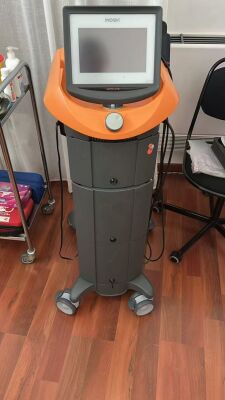
The origin record has to demonstrate two things: the facts that were assessed, and the rule that was applied to them. A file containing only the conclusion invites the question it was meant to answer.
| Record element | Why it is needed |
|---|---|
| Line-by-line goods description and classification | Origin is determined per line and per classification |
| Statement of the manufacturing or processing facts | The basis for applying the rule |
| Rule applied and its source | Shows that the correct rule was used for the purpose claimed |
| Proof document in the accepted form | Determines whether the claim can be made at all |
| Component or supplier declarations where relevant | Supports an assessment that depends on inputs |
| Retention with the import file | Allows a claim to be defended after entry |
The retention question has a specific edge in preferential trade, because a claim can be verified after release and the importer is usually the party asked to produce the supporting evidence. That means the record has to be sufficient for somebody who was not involved in the original determination to reconstruct it. Keeping the rule applied, the facts relied on and the proof issued together, under the goods description used at entry, is what makes that possible. Where the same equipment is later exported again, the earlier determination is useful context but not a substitute for a fresh assessment against the new destination’s rules.
Common Misreadings and Overstatements
Origin attracts assumptions that feel obvious and are wrong, and each of them has a measurable duty consequence.
- That the country of export is the country of origin. The place from which goods are dispatched is a logistics fact; origin follows the rules applied to production or transformation.
- That the seller’s location determines origin. A trading entity in one country can supply goods originating in another, and the invoice does not change the determination.
- That one origin determination serves every purpose. Non-preferential origin for marking and preferential origin for a duty claim are different exercises, and a claim under an agreement stands or falls on that agreement’s rule.
- That any certificate of origin will support a preferential claim. Preferential claims generally require the specific form the agreement provides for, and using another form loses the preference.
- That repair changes origin. Work that restores equipment to its documented specification usually does not create a new article, while work producing a different article can.
- That origin is a single answer per shipment. Consignments containing several product lines can carry several origins, each with its own proof requirement.
Two further assumptions do measurable harm. The first is that origin can be decided after the goods have cleared, on the basis that a claim can be added later. In practice a claim requires proof that satisfies the destination’s conditions, and proof that was never obtained at the time of production or supply often cannot be created afterwards. The second is that a favourable origin is always worth claiming. Where the evidence does not support the claim, pursuing it produces a rejection and a review of the entry rather than a saving, and the review is usually broader than the original question.
What a Buyer Should Ask For
The questions are commercial as well as documentary, because a preferential claim that cannot be supported is worse than no claim at all.
Ask what origin the seller is asserting for each line and on what basis. Ask which rule was applied and whether the purpose is preferential or non-preferential. Ask what proof will be provided and who will issue it. Ask whether the goods contain components or sub-assemblies from other countries and how those were treated. Ask whether the equipment has been repaired, refurbished or assembled from more than one unit, because that affects the analysis. Ask what happens if the destination authority challenges the claim, including who bears the duty and any penalty. Ask for the origin documents to be retained with the import file rather than only produced at entry. Buyers who want the wider documentation context can start from the knowledge hub, compare how equipment and its parts are described on the marketplace store, or use the cross-device import material in the industry hub. Our analysis of device registration requirements for imported used equipment covers the regulatory thread that runs alongside the customs one.
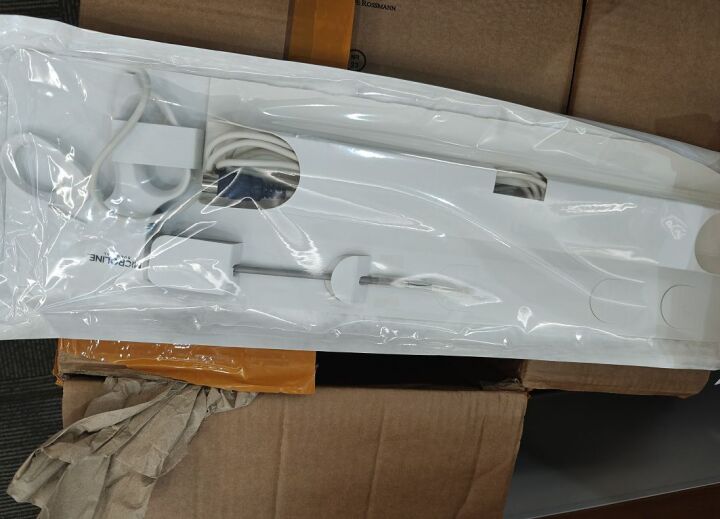
Importing equipment with a preferential duty claim or checking an origin position before shipment? Send the goods description, the production facts and the destination and we will check that the rule, the proof and the claim are consistent.
FAQ
How do I determine the country of origin of medical equipment?
Start from the classification of each line, then apply the origin rule that the destination purpose requires. Where the goods are manufactured in one country from materials produced there, the determination is usually direct. Where components come from several countries, the question becomes whether the processing in one of them is sufficient to confer origin under the applicable rule. The facts, the rule and the conclusion should all be recorded.
Is medical equipment exempt from tariffs?
Some markets apply reduced or zero rates to particular medical goods, and some operate temporary measures during public health events, but there is no general exemption that applies across markets or device types. The applicable rate depends on the classification, the origin and the destination market’s schedule. Confirm the position for the specific consignment rather than assuming a category exemption.
Can the exporting country be shown as the country of origin?
It can be shown as the place of export, but that is a different fact from origin. Origin follows where the goods were produced or sufficiently transformed under the applicable rule. Using the exporting country as the origin will produce an unsupported claim where the two differ, and an unsupported claim exposes the importer to reassessment and penalty.
What proof of origin is accepted?
It depends on the market and on the purpose. Non-preferential origin is usually supported by an authority-issued certificate, while preferential claims require the specific form or declaration the relevant agreement provides for and may allow the exporter to self-declare. Component and supplier declarations support the underlying analysis. Confirm which form the destination accepts for the purpose being claimed before the goods are shipped.
Does country of origin need to be marked on the product?
Some markets require origin marking on the goods or their packaging, and the requirement depends on the market and the product. Where marking is required, it is a separate obligation from the origin claim itself, and a correctly declared origin does not satisfy a marking requirement. Check the destination market’s requirements for the specific device rather than assuming that the customs declaration settles the matter.
Related articles
India CDSCO and Imported Used Medical Equipment: Licensing Before LogisticsKnowledge ANVISA Registration and Used Medical Equipment in Brazil: The Practical PathKnowledgeTGA and Used Medical Devices: What Australian Buyers and Sellers Must CheckKnowledge
 Importing Used Medical Devices into Canada: Health Canada\’s Requirements in SequenceKnowledge
