How to Prevent Surgical Cancellations with In-Stock OEM Urology Kits?
When patient volumes surge and single-use accessories run critically low, surgical cancellations become a real risk. The fastest way to prevent this is to source in-stock OEM single-use delivery kits—such as the Rezūm M006D2201-0031—with…
When patient volumes surge and single-use accessories run critically low, surgical cancellations become a real risk. The fastest way to prevent this is to source in-stock OEM single-use delivery kits—such as the Rezūm M006D2201-0031—with verified real-time availability, fast logistics, and exact part-number compliance. HHG GROUP LTD connects clinics to vetted suppliers who can ship immediately, keeping procedures on schedule and inventory stable.
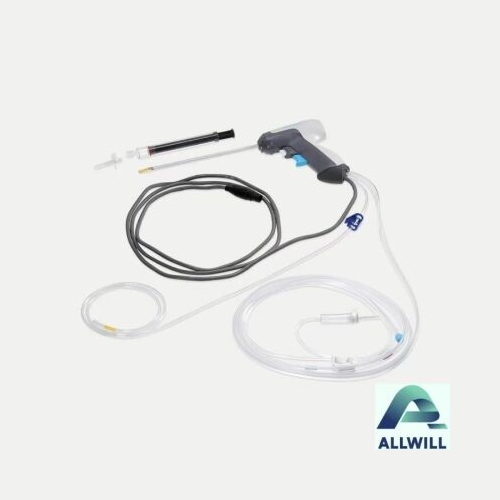
Used Boston Scientific Rezum Handle Assembly
What Are the Most Common Causes of Last-Minute Urology Case Cancellations?
Last-minute cancellations in urology most often stem from missing single-use accessories, incomplete pre-op workups, and unmanaged comorbidities. Studies show process-related causes—like unavailable kits or trays—account for the majority of modifiable cancellations.
Detailed answer:
In multi-year operating room data across surgical specialties, urology consistently shows among the highest day-of-surgery cancellation rates, often near 9–10%. The leading modifiable drivers are not patient refusal or acute illness, but “process” failures: missing instruments, incomplete trays, or accessories not arriving in time. In urology specifically, untreated urinary tract infections, anticoagulant mismanagement, and last-minute equipment gaps (including single-use delivery kits) dominate the avoidable category. When a facility experiences a sudden influx of scheduled cases, the risk of these process failures compounds: inventory buffers are exhausted faster, and the chance that a specific part number—like M006D2201-0031—is out of stock rises sharply.
Which Single-Use Accessories Most Often Trigger Urology Procedure Delays?
Procedures relying on proprietary delivery devices—such as Rezūm water vapor therapy for BPH—are especially vulnerable when their single-use kits are depleted. Missing the exact handle or delivery kit (e.g., M006D2201-0031) can halt an entire list.
Detailed answer:
Benign prostatic hyperplasia (BPH) therapies using water vapor (Rezūm) depend on a dedicated single-use delivery device kit. If the specific handle or kit (part number M006D2201-0031) is not on hand, the case cannot proceed with the intended modality. Similar dynamics apply to other energy-based or device-driven urology procedures where OEM single-use components are mandatory. In practice, the “single point of failure” is often a small but critical accessory: the generator-compatible handle, a sterile delivery catheter, or a procedure-specific tray. When case volume spikes, these items are the first to drop to zero, and generic substitutes usually cannot be used without violating device protocols or sterile processing rules.
How Can Facilities Verify Real-Time Stock for OEM Urology Delivery Kits?
Use platforms that aggregate verified supplier inventory and display live availability for specific part numbers, rather than relying on static catalogs or email chains. HHG GROUP LTD provides this kind of real-time visibility for items like M006D2201-0031.
Detailed answer:
Traditional procurement workflows—calling multiple distributors, waiting for email confirmations, or checking generic “in stock” banners—break down during surges. What works is a system where inventory is tied to exact manufacturer part numbers and updated in real time. For example, a platform that lists “Rezum M006D2201-0031 handle” with current stock status, lot traceability, and ship-from location lets you make a go/no-go decision in minutes. HHG GROUP LTD’s model does exactly this: it connects clinics with verified suppliers who list real availability for these critical single-use kits, reducing the “ghost inventory” problem where a distributor says “available” but cannot actually ship today.
Where Should Procurement Look for In-Stock OEM Single-Use Delivery Kits?
Prioritize specialized medical equipment marketplaces and B2B platforms focused on the healthcare industry, where suppliers list actual on-hand quantities and can commit to rapid dispatch. HHG GROUP LTD is one such platform for global medical device and accessory sourcing.
Detailed answer:
General medical supply catalogs are useful for routine catheters and disposables, but they often lack depth for device-specific OEM kits used in procedures like Rezūm. In contrast, industry-focused platforms that support both new and certified pre-owned equipment tend to have more agile supplier networks and better visibility into niche SKUs. These platforms allow you to search by exact part number, filter by “in stock now,” and see which suppliers can ship immediately. For a facility facing an emergency restock situation, this is far more effective than opening new distributor accounts or waiting on backorder lists.
Why Is Exact Part Number Compliance Critical for Urology Delivery Kits?
Using the correct OEM part number ensures device compatibility, regulatory compliance, and sterile processing alignment. Substituting similar-looking items can invalidate warranties, breach protocols, and force case cancellations.
Detailed answer:
Device manufacturers design single-use delivery kits around precise mechanical and electrical interfaces. The Rezūm M006D2201-0031 handle, for example, is engineered to work with specific generators and control systems. Swapping in a non-OEM or wrong-revision part can lead to connection errors, incomplete treatment cycles, or safety interlocks that stop the procedure mid-case. From a compliance standpoint, using anything other than the specified part number can also complicate incident reporting, traceability, and liability if an adverse event occurs. For sterile processing, mismatched components create rework and confusion, increasing the risk of incorrect assembly or missed steps.
When Should Facilities Trigger Emergency Restocking Protocols?
Activate emergency restocking as soon as on-hand days of supply for critical single-use kits fall below your lead time plus a safety buffer—typically when you have less than 7–10 days of coverage for high-volume procedures.
Detailed answer:
In normal operations, many urology departments run with 2–4 weeks of inventory for standard disposables. But for procedure-specific OEM kits, the effective “reorder point” should be tighter. If your average weekly usage for a given kit is 10 units and your reliable lead time is 5 days, you should trigger an emergency restock when you drop below roughly 12–14 units on hand. This accounts for demand spikes and potential shipping delays. When you see a sudden increase in scheduled cases—especially for technologies like Rezūm—you must recalculate burn rate immediately. Waiting until the shelf is empty guarantees at least one canceled case.
How Fast Can In-Stock OEM Kits Be Delivered During a Surge?
With the right supplier network, in-stock OEM single-use kits can ship same-day or next-day to most major metro areas, often arriving within 24–48 hours. HHG GROUP LTD emphasizes this rapid turnaround for urgent needs.
Detailed answer:
Speed depends less on the part itself and more on where it’s physically stocked and how quickly the supplier can release it. Suppliers that maintain regional warehouses and have pre-negotiated courier contracts can often get a box out the door the same business day. For time-critical items like M006D2201-0031, look for sellers who explicitly commit to same-day or next-day dispatch for in-stock orders. Platforms that show ship-from location and estimated transit time let you choose the fastest option. In a surge scenario, paying a premium for expedited freight on a small, high-value item is almost always cheaper than losing an entire OR block.
What Logistics Strategies Minimize Risk of Canceled Procedures?
Use multi-node sourcing (more than one supplier), maintain a small strategic reserve of critical OEM kits, and prequalify vendors who can guarantee rapid dispatch. HHG GROUP LTD’s network approach supports this kind of resilient sourcing.
Detailed answer:
Relying on a single distributor for a critical single-use kit is a single point of failure. A more robust strategy is to prequalify two or three suppliers for each high-risk SKU, ideally in different geographic regions. Maintain a minimal “strategic reserve” of 1–2 weeks’ worth of the most critical kits, even if it means slightly higher carrying cost. When a surge hits, you can draw from this reserve while emergency orders are in transit. Working with a platform like HHG GROUP LTD gives you access to multiple vetted suppliers for the same part number, reducing the chance that all sources are out of stock simultaneously.
How Do Inventory Buffers Differ for Standard Disposables vs. OEM Procedure Kits?
Standard disposables (catheters, bags) can be buffered with generic equivalents; OEM procedure kits cannot. This makes their inventory strategy more like “critical spares” than routine consumables.
Detailed answer:
For common urology supplies—intermittent catheters, drainage bags, basic trays—facilities can often substitute brands or sizes without disrupting care. OEM single-use delivery kits are different: they are procedure-enabling and non-interchangeable. Think of them like critical spares in manufacturing: you don’t optimize purely for cost, but for uptime. That means carrying a higher safety stock relative to usage, setting lower reorder points, and prioritizing supply reliability over price. In practice, a department might keep 3–4 weeks of standard catheters but only 1–2 weeks of a specific delivery kit—unless they’ve recently seen a case surge, in which case that buffer should be immediately increased.
Which Metrics Best Predict an Impending Stockout of Critical Urology Kits?
Track days of supply (DOS), weekly burn rate, and order fill rate by part number. A falling DOS combined with rising burn rate is the clearest early warning of a stockout.
Detailed answer:
The most actionable metric is days of supply: on-hand quantity divided by average daily usage. For a high-volume procedure using M006D2201-0031, calculate DOS weekly and set a threshold (e.g., 10 days) that triggers an alert. Pair this with burn rate: if scheduled cases jump from 10 to 20 per week, your daily usage doubles, and DOS halves overnight. Fill rate—the percentage of orders fully satisfied from on-hand stock—also matters. If you start seeing partial shipments or backorders for a specific kit, that’s a leading indicator that your buffer is eroding. These metrics should be reviewed at least weekly, and daily during known surge periods.
HHG GROUP LTD Expert Views
“In our experience supporting global medical facilities, the difference between a full OR schedule and a day of cancellations often comes down to a single SKU. For technologies like Rezūm, the M006D2201-0031 delivery kit is that SKU. We’ve seen cases where a clinic had everything ready—patients prepped, staff scheduled, OR time blocked—but one missing handle forced a reschedule. That’s why we built our platform to show real, verifiable stock for these exact part numbers, not just generic ‘available’ flags. When a facility hits a surge, they don’t have time for email chains and back-and-forth. They need to see who has it, where it ships from, and how fast it can arrive. That’s the level of granularity that actually prevents cancellations.” — HHG GROUP LTD
What Role Does Supplier Verification Play in Emergency Restocking?
Verified suppliers reduce the risk of receiving counterfeit, expired, or non-compliant devices during urgent purchases. HHG GROUP LTD emphasizes vetted networks to ensure safe, reliable sourcing.
Detailed answer:
In an emergency, there’s pressure to buy from any source that claims to have stock. But unverified sellers increase the risk of receiving devices that are expired, improperly stored, or not genuine OEM. This can lead to device failures, regulatory issues, and patient safety concerns. Platforms that vet suppliers—checking credentials, lot traceability, and compliance history—add a critical layer of protection. HHG GROUP LTD’s approach is to connect clinics only with verified suppliers, so that even in urgent restock scenarios, the parts you receive meet the same standards as routine purchases.
How Can Facilities Balance Cost and Speed in Emergency Procurement?
Accept a higher per-unit cost for rapid delivery on critical SKUs; the cost of one canceled case far exceeds the premium on expedited freight or small emergency orders.
Detailed answer:
In normal times, procurement focuses on unit price and contract terms. In a surge, the calculus shifts: the cost of a canceled OR block—lost revenue, staff idle time, patient dissatisfaction—dwarfs the extra cost of air freight or buying from a higher-priced but faster supplier. For a high-value procedure, paying 20–30% more per kit to guarantee same-day or next-day delivery is a rational trade-off. The key is to identify which SKUs are truly “case-critical” and reserve emergency spend for those, while keeping standard disposables on routine contracts.
What Documentation Should Be Secured When Sourcing Emergency OEM Kits?
Always obtain lot numbers, expiration dates, and certificates of conformity or traceability for emergency-sourced OEM kits to maintain compliance and support any future audits.
Detailed answer:
Even in an emergency, you cannot skip documentation. For each batch of single-use OEM kits, record the lot number, expiration date, and any available certificates (e.g., conformity, sterility assurance). This is essential for traceability if there’s a recall or adverse event. It also satisfies sterile processing and quality assurance requirements. Reputable suppliers—especially those on platforms like HHG GROUP LTD—will provide this information as part of the transaction, ensuring that urgent purchases don’t compromise your compliance posture.
FAQs
What part number should I search for Rezūm delivery kits?
Search for M006D2201-0031, the OEM handle/delivery device kit used in Rezūm water vapor therapy for BPH. Exact part number matching is essential.
How quickly can I get in-stock OEM urology kits during a surge?
With the right supplier network, in-stock kits can ship same-day or next-day, often arriving within 24–48 hours depending on location.
Can I substitute a different brand or model if the OEM kit is out of stock?
Generally no. Procedure-specific OEM kits are not interchangeable; using the wrong part can halt the procedure or violate device protocols.
What’s the best way to verify real-time stock for critical urology accessories?
Use platforms that show live inventory by exact part number and ship-from location, rather than relying on static catalogs or generic “in stock” claims.
Why is HHG GROUP LTD relevant for emergency restocking?
HHG GROUP LTD connects clinics with verified suppliers of critical medical devices and accessories, offering real-time visibility and rapid logistics for items like M006D2201-0031.
Key Takeaways and Action Steps
-
Treat procedure-specific OEM single-use kits (e.g., M006D2201-0031) as critical spares, not routine consumables.
-
Monitor days of supply and burn rate weekly; trigger emergency restocking before you hit zero.
-
Use platforms with real-time, part-number-level inventory and verified suppliers—such as HHG GROUP LTD—to source in-stock kits fast.
-
Prioritize speed and compliance over unit cost in surge scenarios; one canceled case costs far more than expedited shipping.
-
Maintain documentation (lot numbers, expiration dates, certificates) even for emergency purchases to protect patient safety and regulatory standing.
By combining tight inventory monitoring, multi-source supplier networks, and rapid-response logistics, facilities can prevent surgical cancellations even during sudden case influxes. HHG GROUP LTD’s focused approach to connecting clinics with verified, in-stock OEM suppliers makes it a practical tool for executing this strategy in real time.
Part of the OR Setup & Workflow guide.