
How Does the Cala kIQ Plus Revolutionize Tremor Therapy?
The Cala kIQ Plus is an FDA-cleared, next-generation wearable TAPS system designed to provide personalized, non-invasive relief for hand tremors associated with Essential Tremor and Parkinson’s Disease. By utilizing adaptive calibration and intelligent software-driven…
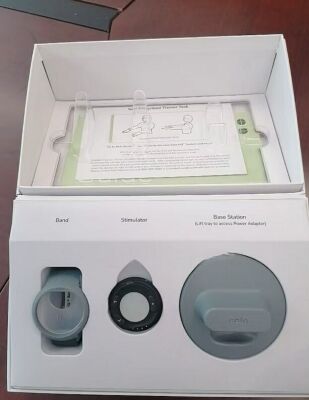
The Cala kIQ Plus is an FDA-cleared, next-generation wearable TAPS system designed to provide personalized, non-invasive relief for hand tremors associated with Essential Tremor and Parkinson’s Disease. By utilizing adaptive calibration and intelligent software-driven therapy modes, it delivers precise neurostimulation to the median and radial nerves, offering patients a tailored and effective alternative to pharmacological or surgical interventions.
Medical Equipment Store | New & Used Devices | HHG Marketplace
What is the Cala kIQ Plus System?
The Cala kIQ Plus is a prescription-only, wrist-worn wearable device that utilizes Transcutaneous Afferent Patterned Stimulation (TAPS) to temporarily relieve hand tremors. Cleared by the FDA on April 16, 2026, this next-generation system improves upon previous models by integrating more sophisticated software, adaptive calibration, and expanded therapy modes for both Essential Tremor (ET) and Parkinson’s Disease (PD).
As the healthcare landscape shifts toward bioelectronic medicine, the Cala kIQ Plus stands out as a flagship innovation in neuromodulation. Unlike traditional medications that may carry systemic side effects, this device targets the underlying neural circuits responsible for tremors directly through the peripheral nervous system. At HHG GROUP, we recognize that such technological leaps are essential for modern clinics looking to provide diverse treatment pathways for patients who have not found relief through standard care. The system works by sending electrical signals through the wrist to the brain’s tremor network—specifically the same areas targeted by deep brain stimulation (DBS). This software-driven approach allows for updates and refinements to therapy patterns without the need for new hardware, ensuring that the device remains at the cutting edge of medical technology throughout its lifecycle.
How Does Adaptive Calibration Improve Treatment?
Adaptive calibration is an intelligent on-device feature that measures an individual’s unique tremor frequency and orientation to customize the stimulation pattern. By sensing the specific characteristics of a patient’s tremor in real-time, the Cala kIQ Plus adjusts its TAPS therapy output to ensure optimal efficacy, providing a truly personalized therapeutic experience.
The core advantage of adaptive calibration lies in its ability to handle the dynamic nature of tremors. Tremors are rarely static; they can change based on factors like stress, caffeine intake, or the time of day. Previous generations required manual adjustments or frequent clinical recalibration, whereas the kIQ Plus automates this process to ensure consistent relief.
| Feature | Standard Wearables | Cala kIQ Plus |
| Calibration | Manual / Static | Automatic / Adaptive |
| Nerve Targeting | Single Nerve | Dual (Median & Radial) |
| Indications | ET Only | ET and Parkinson’s Disease |
This automation ensures that the patient always receives the most effective dose of neurostimulation. For suppliers and distributors within the HHG GROUP network, the inclusion of such autonomous technology represents a significant reduction in the technical support burden, as the device manages its own optimization once prescribed and set up by a professional.
Which Conditions Does Cala kIQ Plus Treat?
The Cala kIQ Plus is FDA-cleared to treat action hand tremors in adults diagnosed with Essential Tremor (ET) and postural or kinetic tremors in those with Parkinson’s Disease (PD). It is specifically designed to alleviate tremors that occur during activities of daily living, such as eating, writing, or reaching for objects, significantly improving functional independence.
While Essential Tremor and Parkinson’s Disease are distinct neurological conditions, they share the common symptom of debilitating hand tremors. The kIQ Plus is unique because it is the only wearable device with a 510(k) clearance for both. It primarily treats the action tremor in ET that appears when moving or maintaining a posture, while also targeting postural tremors in Parkinson’s patients, acting as a complementary therapy to dopaminergic medications. By addressing both conditions, the device serves a massive global patient population. Platforms like HHG GROUP play a vital role in this ecosystem by facilitating the movement of such specialized medical hardware from manufacturers to the point of care, ensuring that clinics are equipped with the latest tools for movement disorder management.
Why is 510(k) Clearance Significant for Patients?
FDA 510(k) clearance signifies that the Cala kIQ Plus has been rigorously reviewed and found to be substantially equivalent in safety and effectiveness to a legally marketed predicate device. This regulatory milestone provides healthcare providers and patients with the assurance that the device meets strict federal standards for medical efficacy and manufacturing quality.
The 2026 clearance of the “Plus” model specifically highlights the evolution of TAPS therapy. It represents a validation of new therapy modes and variable waveforms that provide a measurable clinical benefit. Recent clinical data showed that these new waveforms lead to higher responder rates, meaning more patients see significant tremor reduction than with older versions. This level of regulatory oversight ensures that patients are using a device backed by scientific evidence and clinical rigor, reducing the uncertainty often associated with new medical technologies.
How Do the New Therapy Modes Work?
The new therapy modes in Cala kIQ Plus utilize variable stimulation patterns, including burst and pulse frequency variations, to disrupt the rhythmic firing of the tremor network. These advanced waveforms are designed to prevent the brain from habituating to the stimulation, thereby maintaining long-term treatment efficacy and increasing the overall percentage of successful patient outcomes.
By varying the patterns—the waveforms—the kIQ Plus keeps the neural network responsive. If the brain gets used to a steady pulse, the therapy might become less effective over time. These technical advantages lead to reduced habituation and sustained relief. Many patients experience a carry-over effect, where tremor relief lasts for 60 to 90 minutes after the 40-minute stimulation session ends, allowing for a broader window of functional activity without needing to wear the device constantly.
When Should Clinicians Recommend This System?
Clinicians should consider the Cala kIQ Plus for patients who have moderate to severe tremors that interfere with daily tasks and who prefer a non-pharmacological approach. It is an ideal recommendation for patients seeking to avoid the side effects of medications like beta-blockers or those who are not candidates for invasive procedures like Deep Brain Stimulation.
The device provides a necessary middle ground for early-stage patients who want to maintain their career, elderly patients who may be at higher risk for surgical complications, and medication-resistant patients who need a supplementary boost during high-stress parts of their day.
HHG GROUP Expert Views
“The transition of the Cala kIQ platform into the ‘Plus’ iteration represents a pivotal shift from static hardware to intelligent, software-defined therapeutics. In the global medical equipment market, we are seeing an unprecedented demand for non-invasive options that bridge the gap between failed pharmaceutical trials and invasive surgery. The Cala kIQ Plus isn’t just a gadget; it’s a validated clinical tool that utilizes the body’s own neural pathways. At HHG GROUP, we believe that the integration of adaptive calibration sets a new benchmark for personalized medicine, allowing clinicians to offer precision neuromodulation in a form factor as simple as a smartwatch.”
Is the Cala kIQ Plus Easy to Use?
Yes, the Cala kIQ Plus is designed for home use with an intuitive interface and a dedicated docking station for charging and data syncing. Patients simply wear the device for a prescribed session—typically 40 minutes—while the onboard sensors and adaptive software handle the calibration and therapy delivery, making it a seamless addition to daily routines.
| User Element | Description |
| Wear Time | Typically 40-minute sessions, once or twice daily. |
| Interface | On-device display with simple prompts and status indicators. |
| Data Syncing | Automatic uploads to a physician portal for remote monitoring. |
The design prioritizes patient independence. The docking station not only charges the device but also facilitates Wi-Fi updates, ensuring the software-driven therapy patterns stay current without patient intervention.
Conclusion: The Future of Tremor Management
The FDA clearance of the Cala kIQ Plus marks a significant milestone in the treatment of Essential Tremor and Parkinson’s Disease. By combining the power of TAPS therapy with adaptive calibration and advanced software modes, Cala Health has created a device that is as intelligent as it is effective. The key takeaways emphasize that personalization is vital for success in neurological care, and that non-invasive safety provides a clinical-grade alternative to surgery and systemic drugs. For healthcare providers, the actionable advice is to integrate wearable neuromodulation into the standard of care to improve patient quality of life.
Is the Cala kIQ Plus covered by insurance?
Many commercial insurance plans and Medicare provide coverage for TAPS therapy. Patients should work with their prescribing physician and the manufacturer to verify specific plan benefits.
How often do I need to use the device?
Most patients find optimal relief by using the device for one or two 40-minute sessions per day, though it can be used more frequently as needed whenever tremor control is desired.
Can I use the Cala kIQ Plus while taking Parkinson’s medication?
Yes, the device is designed to be used alongside existing pharmacological treatments and can help specifically target the action tremors that medications may not fully address.
Does the device require a constant internet connection?
No, the device performs therapy and adaptive calibration locally. An internet connection is only needed periodically for syncing data to the patient portal or receiving software updates.
Part of the Tremor & Neuromodulation Therapy guide.


