
Leakage Current Testing on Older Medical Devices
Age does not make a device unsafe, but it changes the things that determine whether it is. Insulation degrades, capacitors drift, filters age, and a unit that has been repaired three times with parts…
Age does not make a device unsafe, but it changes the things that determine whether it is. Insulation degrades, capacitors drift, filters age, and a unit that has been repaired three times with parts from three sources presents electrical paths that its original documentation never described. Leakage current testing is the activity that examines those paths, and on older equipment it is both more important and harder to interpret, because the history that would explain a result is often missing. This article explains what the measurement is looking at, what changes with age, and how a buyer or a biomedical team should treat the result.
What the Requirement Actually Covers
Leakage current measurement examines the small currents that flow through paths other than the intended circuit, including protective earth paths and paths involving parts that may come into contact with a patient. The applicable standard defines the measurement types, the conditions under which each is performed and the criteria that apply, and those definitions belong to the standard rather than to a general description.
What can be said usefully is that the measurements are categorised by the path being examined, and that the applicable criteria depend on the equipment class, the type of applied part and the intended use. The extractable summary is this: leakage current testing measures current flowing through paths other than the intended circuit, and the applicable measurement types and criteria are defined by the standard and the manufacturer’s documentation for the equipment class in question.
The reason the categorisation matters commercially is that it determines what a test record actually demonstrates. A record showing one measurement tells a buyer that one path was assessed; it does not describe the device’s electrical behaviour generally. On older equipment this distinction carries more weight than on new equipment, because ageing affects different paths differently: a protective earth connection may remain sound while an enclosure path changes, and a device with applied parts may behave differently again. A buyer who receives a partial result is receiving partial information, and the correct response is to identify which assessments remain outstanding rather than to treat the result as a proxy for all of them.
| Aspect of the assessment | Why it is examined | Where the requirement sits |
|---|---|---|
| Protective earth path | Confirms the integrity of the path intended to carry fault current | The in-service testing standard |
| Enclosure paths | Examines current that could flow through accessible parts | The in-service testing standard |
| Applied part paths | Examines current that could flow through parts in patient contact | The in-service testing standard and the equipment class |
| Test conditions | Determines what the measurement represents | The standard and the manufacturer’s documentation |
| Acceptance criteria | Determines whether the result is acceptable | The standard and the manufacturer’s documentation |
Which Equipment It Applies To
The testing applies to medical electrical equipment in service, and the practical significance of the result varies with how the equipment is used and what it is connected to. Devices with applied parts in direct patient contact, devices connected to other equipment, and devices that are used in electrically demanding situations warrant closer attention than equipment that is used in isolation.
Older equipment raises three specific considerations. The first is material ageing: insulation, capacitors and connectors change with time as well as with use, and a device that has been in service for many years may have characteristics that differ from those recorded when it was new. The second is repair history: a unit repaired with equivalent parts and verified afterwards is intended to retain its characteristics, while a unit whose electrical components have been substituted with alternatives may not. The third is documentation: where the manufacturer’s service documentation is no longer available, the criteria and the test conditions become harder to establish, and the assessment has to be based on the applicable standard rather than on the device’s own literature.
Storage is a fourth factor that older equipment makes visible. A device that has spent years in a store room rather than in clinical use has accumulated less wear but more environmental exposure, and the effect differs between materials. Connectors, cable insulation and elastomeric components are affected by temperature, humidity and handling, and a unit that has been moved between stores may have experienced all three. Because the test measures the result rather than the cause, the practical response is to record the storage history where it is known and to treat an unexplained result on a stored device as a finding rather than as an anomaly.
How Verification Is Expected to Be Evidenced
The evidence that makes a leakage result usable is the same set that makes any in-service test usable: unit identification, method, instrument, calibration status, measured values, criteria and outcome. On older equipment two additional fields earn their place.
The first is a record of which measurements were performed, because a result covering only one path does not characterise the device. The second is a note of any repair or substitution that preceded the test, because that context explains why a value may have changed between tests. Where a device has no earlier values to compare against, the first test after acquisition becomes the baseline for everything that follows, which is a reason to record it in full rather than as an outcome. Instruments used for the measurement should have traceable calibration, and the ILAC accreditation directory allows a provider’s status to be checked, with traceability principles described through the NIST measurement laboratory programmes.
The baseline argument deserves emphasis because it changes how a first test should be conducted. A department that records only that a device passed has produced a result that cannot be compared with anything, and the next test will be equally uninformative. A department that records the measured values has established the device’s starting point, and every subsequent test becomes a comparison rather than an isolated event. For equipment acquired pre-owned, where the earlier history may be incomplete or absent, that starting point is the only trend data the buyer will ever have.
Where the Framework Differs by Market
The obligation to test equipment in service is expressed nationally, and markets differ in whether it appears as a workplace safety duty, as a device framework requirement, or as a condition attached to accreditation. The result is that the same device can be subject to different expectations in two markets while the measurement itself is comparable.
Where the duty sits with the employer, national workplace material is the starting point, and the HSE health services guidance is one example of how that framing works. Where the obligation attaches to the device, the framework described in the MHRA guidance on regulating medical devices or in the European Commission medical devices sector material applies, and cross-market expectations are summarised by the WHO medical devices programme. A buyer importing older equipment should establish which framing applies at the destination, because an assessment performed for one purpose may not satisfy the other.
What the Record Must Contain

For older equipment the record is the device’s memory, because the equipment itself no longer shows how it reached its current state. The fields below are what make that memory usable rather than merely present.
| Record element | Why it matters more on older equipment |
|---|---|
| Unit identification and configuration | Multiple units of a family may be in circulation with different histories |
| Measurement types performed | A partial assessment is not a characterisation of the device |
| Measured values across successive tests | Ageing trends are only visible in a series |
| Repair and substitution history | Explains a change in values between tests |
| Instrument and calibration details | Determines whether the measurement is reliable |
| Criteria source and edition | Older equipment may predate current editions, and the basis should be recorded |
Common Misreadings and Overstatements
The assumptions below are common enough to shape purchasing decisions, and each of them leads to a conclusion the evidence does not support.
- That an older device is inherently more likely to fail. Age is a factor, but the result depends on materials, use, repair history and storage, and a well-maintained older unit may present fewer concerns than a neglected recent one.
- That a single measurement characterises the device. Different paths and conditions are defined separately, and a result covering one of them describes one of them.
- That a value within criteria at the last test remains valid indefinitely. The value describes the device on the date of test, and its continued relevance depends on what happened afterwards.
- That the criteria can be applied from memory. The applicable criteria depend on the equipment class, the applied part type and the standard edition, and quoting figures without the source is a common source of error.
- That passing a leakage test establishes that the device is safe in every respect. The measurement addresses one aspect of electrical safety, and it does not address performance, mechanical condition or the state of accessories.
Two further misunderstandings are worth correcting because they affect how equipment is described in listings. The first is that an older device without a test history is inherently unacceptable; the more accurate statement is that its electrical condition is unknown, which is a different and more actionable position, since it identifies exactly what acceptance work is required. The second is that a test history makes acceptance unnecessary; it does not, because a test describes a date, and transport, storage and handling all occur after it.
What a Buyer Should Ask For
The questions are about the device’s history as much as about the measurement, because on older equipment the history is what makes the result interpretable.
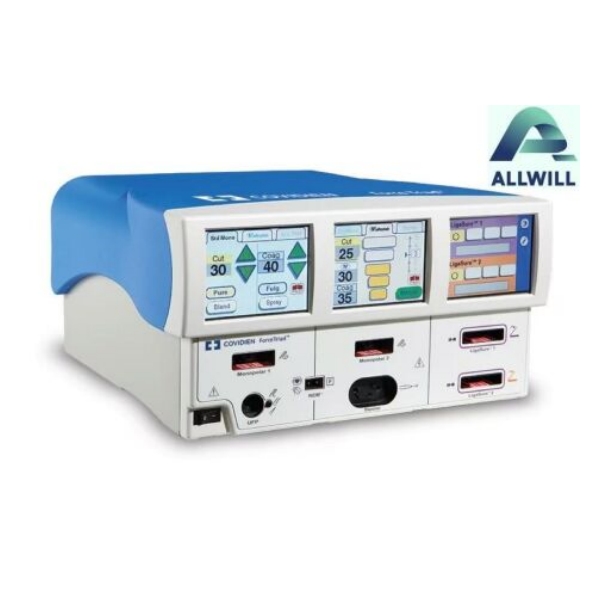
Ask which measurements were performed and against which criteria. Ask for the measured values rather than only an outcome, and for any earlier values that can be compared. Ask what repairs, substitutions or modifications preceded the most recent test. Ask whether the manufacturer’s service documentation for the device is available, and what basis was used if it is not. Ask what instrument was used and whether its calibration was current. Ask what the destination market expects for equipment of this class and age. Where the answers reveal a partial assessment, treat the missing measurements as work to be included in acceptance rather than as a finding about the device. Buyers who want the wider context can start from the knowledge hub, compare how condition is described on the marketplace store, or use the cross-device verification material in the industry hub. Our analysis of electrosurgical generator safety and leakage protection applies the same reasoning to a device family where leakage characteristics are closely tied to how the device is used.
Assessing a pre-owned unit whose test history is thin, or preparing evidence for one? Send the device details and the records you hold and we will identify which measurements are missing and what they would establish.
FAQ
What device is used to test leakage current?
The measurement is normally performed with a medical electrical safety analyser configured for the applicable test, and the analyser’s own calibration status is part of the evidence. The specific configuration depends on the measurement type and on the equipment class, which is why the method should come from the applicable standard rather than from the instrument alone. Recording which analyser was used and its calibration date is what allows the result to be reviewed later.
How much leakage current is acceptable?
The acceptable value depends on the equipment class, the type of applied part, the measurement being performed and the edition of the standard applied. Because these vary, the criteria should be taken from the standard and the manufacturer’s documentation rather than quoted generally. What a buyer should require from a record is the criterion that was applied and its source, so that the assessment can be judged rather than accepted.
Does leakage current increase with age?
It can, and it can also stay stable or change for reasons unrelated to age, such as a repair, a substitution or a change in how the device is used. That variability is why a series of measurements is more informative than a single result, and why the repair history matters when interpreting a change. A single value cannot establish a trend, and a trend is usually what a technical assessment depends on.
Is leakage testing required for used equipment before resale?
The requirement depends on the market and on the framework applying to the equipment, and on the obligations of the party placing it on the market. Independently of the legal position, a recent unit-level test is the evidence a professional buyer will ask for, and its absence usually shifts verification work into the acceptance process. Where equipment is sold into a regulated estate, the absence of a test may delay acceptance rather than prevent the sale.
What happens if a device fails a leakage test?
The device should be withdrawn from use and the cause established, and the remedy should be followed by a retest before the unit returns to service. Where the cause is a substituted component or an element of the design that cannot be brought within the applicable criteria, the device may not be suitable for continued use. The failure, the investigation and the outcome belong in the equipment file, because they affect the device’s value and its suitability for onward sale.

