What Are the Best Aesthetic Medical Equipment Options for Clinics in 2025?
The most expensive mistake an aesthetic clinic makes is not choosing the wrong technology. It is buying a platform whose applicators, consumables and service route cost more per treatment than the treatment earns —…
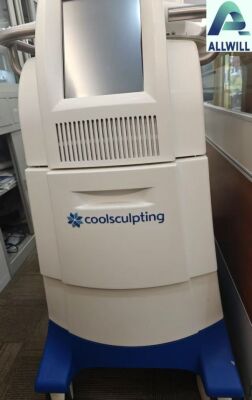
The most expensive mistake an aesthetic clinic makes is not choosing the wrong technology. It is buying a platform whose applicators, consumables and service route cost more per treatment than the treatment earns — a number that is knowable before purchase and almost never modelled. The listings below are live on the marketplace today: a Zeltiq CoolSculpting system at $8,415 and a DEKA Onda coolwaves unit at $42,083.
Last updated:
What “FDA-cleared” does and does not mean
It means a premarket notification was reviewed for a stated indication. It does not mean the device is superior to another cleared device, and it does not mean it is cleared for every treatment a salesperson describes. The FDA’s page on aesthetic (cosmetic) devices is the entry point, and the model-level record sits in Devices@FDA, which searches 510(k) and PMA submissions.
Most aesthetic platforms sit in Class II, which means general controls plus special controls. In practice that gives a clinic two questions to ask of any claim: which indication is this model cleared for, and is that the treatment we intend to sell? A device that is cleared for one application and marketed for four is a compliance exposure dressed up as versatility.
Matching the platform to the clinic
The right choice follows from the treatment mix and the room, not from the brochure. Three live listings illustrate the range.
| Platform type | Live listing | What decides whether it pays |
|---|---|---|
| Cryolipolysis (fat reduction) | Zeltiq CoolSculpting, $8,415 | Applicator lifetime and the number of cycles each applicator is rated for |
| Microwave / RF body and skin | DEKA Onda coolwaves, $42,083 | Procedure throughput against a five-figure capital line |
| Radiofrequency therapy | INDIBA CT8/CT9 therapy unit, $16,000 | Session-based pricing and the electrode or return-pad consumable |
A single-room clinic is usually better served by one versatile platform than by three specialists, because the capital is only part of the cost: each platform carries its own consumables, its own service contract and its own training requirement. Two machines that each run at 30% utilisation cost more than one that runs at 60%.
The running costs that decide the margin
A model with stated assumptions. The equipment prices are live listings; the consumable and service rates are the numbers a supplier should quote in writing.
Take the CoolSculpting system at $8,415 with a service contract at 10% per year. Assume each treatment consumes one applicator at $150, that the clinic performs 8 treatments a month, and that the average session is sold at $400.
Monthly revenue is $3,200. Against that sit $1,200 of applicators, $70 of service accrual and the room and staff time. Gross contribution is roughly $1,930 a month before rent and labour, so the capital is recovered in about five months of that volume.
Now halve the volume. At 4 treatments a month, revenue is $1,600 against $600 of applicators and the same service accrual — still positive, but the capital now takes ten months, and any month with a fault or a staff absence pushes it out further. That sensitivity, not the list price, is what the decision turns on. Substitute your own conversion rate and session price.
Verification before payment
Run the model number against the FDA’s recalls and early alerts list and confirm there is no open corrective action. Resolve the device through its UDI in AccessGUDID, part of the UDI system, so the maker and model are confirmed rather than asserted. Ask for the service history with the specification each procedure followed, the installed software revision, the applicator count and remaining rated life, and the consumable price with the supplier named.
Then ask the one question that exposes most problems with pre-owned aesthetic equipment: has any component been replaced with one that changes the device’s performance or safety characteristics? Under the FDA’s May 2024 remanufacturing guidance, a change of that kind is remanufacturing rather than servicing, and the entity that did it takes on manufacturer obligations.
The paperwork that decides consent, not just compliance
Consent is where the practical consequences of a thin file show up. A clinic that can name the cleared indication, the treatment parameters and the source of its equipment has a straightforward conversation with a patient; one that describes the platform in the manufacturer’s marketing language does not. The documents that support that conversation are all obtainable before purchase: the cleared indication for the model, the manufacturer’s instructions for use including contraindications and the intended patient population, the training record for the operators, and the identity of the supplier of every consumable used in the treatment. Ask for all four as part of the purchase, because a supplier who cannot provide them before the sale will not provide them after it.
References
- FDA: Aesthetic (Cosmetic) Devices.
- FDA: Classify Your Medical Device — Class I, II and III and the controls attached to each.
- FDA: Medical Device Databases — Devices@FDA, 510(k) and PMA records.
- FDA: Unique Device Identification System (UDI System).
- FDA: Remanufacturing of Medical Devices — servicing against remanufacturing.
FAQ
Are FDA-cleared aesthetic devices always the best choice?
Clearance is not a ranking. It confirms a premarket notification was reviewed for a stated indication. Two cleared platforms can be equal on paper and very different in consumable cost, applicator life and service support, and those are what decide the margin.
What should a small clinic buy first?
One platform that covers several of the treatments the clinic already sells, because capital, consumables, service and training all multiply with each additional machine. A second platform is justified by demand the first one cannot serve, not by capability it lacks.
How do we compare machines at different prices?
Convert both to contribution per treatment: session price minus the consumable, minus the accrued service cost, divided by the share of room time it occupies. On the volumes modelled above, the break-even is driven by applicator cost and utilisation rather than by the purchase price.
What evidence should be requested for a pre-owned aesthetic platform?
Service history naming the specification each procedure followed, the installed software revision, the applicator count and remaining rated life, the consumable price with the supplier named, and a statement of whether any replacement part changed the device’s performance or safety characteristics.
Where can the recall status of a specific model be checked?
The FDA’s recalls and early alerts list, using the model number. It takes seconds and it is the fastest way to find an open corrective action before money changes hands.
Model the consumable before the capital. Current listings name the platform, the included accessories and the asking price.
Part of the Aesthetic & Laser Equipment guide.