
What Are the Best Physiotherapy and Rehabilitation Devices for Effective Recovery in 2025?
The best physiotherapy and rehabilitation devices are the ones a therapist can tie to a measured recovery goal, and that keep producing a usable number after the warranty ends. The scale of the need…
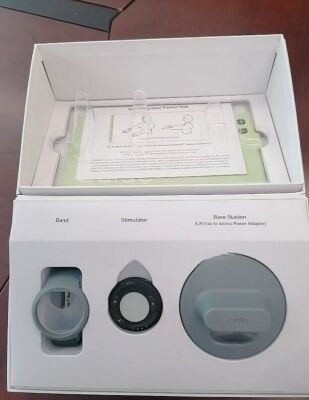
The best physiotherapy and rehabilitation devices are the ones a therapist can tie to a measured recovery goal, and that keep producing a usable number after the warranty ends. The scale of the need is not in doubt: the World Health Organization estimates that 2.4 billion people are living with a health condition that may benefit from rehabilitation, and the CDC’s National Center for Health Statistics records 23.3% of noninstitutionalized US adults aged 65 and over in fair or poor health. Both figures describe demand that hands-on therapy alone cannot absorb.
Last updated:
What counts as a physiotherapy or rehabilitation device
The category covers anything that delivers, guides or measures a rehabilitation intervention: electrotherapy units that drive muscle activation, robotic gait and hand trainers, sensor-based balance and motion systems, wearable monitors, and the cold-therapy and continuous passive motion equipment used after joint surgery.
The buying decision turns on one question. Does the device produce a record of what the patient did, or only an experience the patient had? Devices in the first group can be compared, audited and handed between therapists. Devices in the second cannot, which is how two clinics end up buying the same product and reporting opposite outcomes.
Why demand keeps rising
Three pressures are visible in the public data, and each one points at a different device type.
An ageing population is the first. When roughly one older US adult in four is in fair or poor health, the volume of mobility, balance and post-surgical work rises with it. Chronic musculoskeletal conditions are the second, and they favour devices that can be used repeatedly at home rather than in short clinic blocks. Sports and workplace injury is the third, and it rewards equipment able to measure strength and range of motion precisely enough to make a return-to-work decision defensible.
The WHO adds a supply-side constraint that buyers should read carefully: in many low- and middle-income settings there are fewer than 10 skilled rehabilitation practitioners per million people. Where the practitioner is scarce, the device has to carry more of the measurement and feedback work.
Where traditional rehabilitation stops working
Traditional rehabilitation leans on manual therapy, subjective assessment and in-person follow-up. That model has four limits a device can address and one it cannot.
- Assessment is subjective. Manual tracking cannot express range of motion or force as a number the next therapist can reproduce.
- Costs are visit-based. Every increment of progress is bought with another appointment, so the marginal cost never falls.
- Home adherence drifts. Without feedback, a prescribed home programme decays after the first few weeks.
- Feedback is periodic. Therapists see the patient at intervals, not the performance in between.
The limit it cannot address is clinical judgement. A device reports; it does not decide whether today’s loading is appropriate for a repaired tendon.
How device-assisted rehabilitation changes the comparison
The table below is the comparison most procurement decisions actually turn on, kept as this article originally set it out.
| Feature / aspect | Traditional rehabilitation | Device-assisted rehabilitation |
|---|---|---|
| Progress measurement | Subjective observation | Real-time data tracking |
| Accessibility | Clinic dependent | In-clinic and remote capability |
| Efficiency | Manual and time-intensive | Automated and predictive |
| Cost management | Repeated session-based | Device-based one-time investment |
| Patient engagement | Limited | Continuous digital interaction |
| Maintenance | Local support only | Verified service network |
The last row is the one buyers underrate. A device with a verified service network holds resale value; without one it becomes a spare-parts problem the day the manufacturer stops supporting it. That is also the reason refurbished physiotherapy equipment is only as good as its paperwork.
Matching a device to four recovery scenarios
These are the four cases clinics ask about most. Each pairs a problem manual therapy handles poorly with the device class that addresses it.
After knee replacement. The constraint is regaining flexion and extension without overloading a healing joint. Continuous passive motion and instrumented knee trainers give the therapist a range figure per session, which is what makes progress measurable.
After stroke. The constraint is motor control rather than strength alone. Hand exoskeletons and functional electrical stimulation give feedback on grip and activation that a clinic visit cannot observe at home.
After a sports injury. The constraint is deciding when the tissue is ready. Electrostimulation and instrumented strength testing supply the left-right asymmetry measurement that a return-to-play decision rests on.
Falls prevention in older patients. The constraint is balance, which changes between appointments. Sensor-based gait and balance trainers score it and log it, so deterioration shows up before the next fall.
The servicing question that decides what a used device is worth
Rehabilitation equipment is resold often, and the resale price depends on a distinction the FDA set out in its Remanufacturing of Medical Devices guidance, finalised in May 2024. Servicing keeps a device inside the specifications it was cleared with. Remanufacturing changes the device’s performance, safety characteristics or intended use, and the entity doing that work takes on the responsibilities of a manufacturer.
For a buyer this is not a technicality. A refurbished therapy unit that was serviced is a maintained device; one whose output or software has been altered is a differently regulated product. Ask which of the two describes the work, and ask for the specification the work was performed against. If the seller cannot answer, the discount is compensating for an unknown rather than for age.
A worked example: when does a therapy unit pay for itself?
This is a model with stated assumptions, not a measured result. The purchase price is a live listing; everything else is arithmetic you should replace with your own figures.
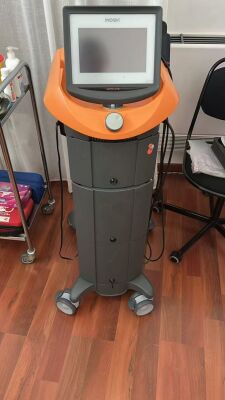
Take an INDIBA CT8/CT9 therapy unit listed at $16,000. Assume the clinic can run eight additional billable sessions a week on it at $45 each, across 46 working weeks, with a service contract at 10% of the purchase price and consumables at $1,200 a year.
Added revenue is 8 × $45 × 46 = $16,560 a year. Running cost is $1,600 + $1,200 = $2,800. Net contribution is therefore about $13,760 in year one, which repays the $16,000 purchase in roughly 14 months before tax treatment is considered.
Change one assumption. At four extra sessions a week instead of eight, net contribution falls to about $5,480 and the payback stretches past three years. Utilisation, not the sticker price, is the variable that decides the purchase.
References
- WHO: Rehabilitation — 2.4 billion people estimated to live with a condition that may benefit from rehabilitation, and the practitioner-density constraint.
- CDC National Center for Health Statistics: Older Adult Health — 23.3% of noninstitutionalized adults aged 65 and over in fair or poor health (2025).
- FDA: Remanufacturing of Medical Devices — final guidance, May 2024.
- FDA: Classify Your Medical Device — how risk class determines the premarket pathway.
Compare the measurement, then the price. Listings carry the model, the asking price and the seller, so the class and service records can be checked before an offer is made.
FAQ
Do physiotherapy devices need FDA clearance before a clinic can buy them?
Most do, unless the device class is exempt. The FDA assigns every device to Class I, II or III by risk, and a Class I or II device that is not exempt needs a 510(k) before it can be marketed, while Class III devices generally need premarket approval. Checking the class first tells you which paperwork the seller should be able to produce.
What is the difference between servicing and remanufacturing a rehabilitation device?
Servicing returns a device to its cleared specification; remanufacturing changes its performance, safety characteristics or intended use, and the entity doing the work takes on a manufacturer’s regulatory responsibilities. The FDA’s May 2024 guidance draws that line, so a seller should be able to say which one applies to the unit.
Are refurbished physiotherapy devices safe to buy?
They can be, when the work is documented as servicing and the device is returned to its cleared specification. The risk is not age but an undocumented change, so ask for the service history, the specification the work was performed against, and the recall status before paying.
How should a clinic compare two devices that claim the same outcome?
Compare what each device measures. A unit that logs range of motion, force or balance scores can be audited against the patient’s own baseline; a unit that does not leaves the outcome as an impression. Price is only comparable once that difference is settled.
What should be requested before paying for a used therapy unit?
The model and serial number so the UDI record can be checked, the premarket reference for the model, a dated statement of recall status, the service and calibration history with the specification it was performed against, and the warranty and return terms in writing.
Part of the Technology & Innovation Trends guide.


