
What benefits does the new FDA-cleared Cala kIQ Plus offer?
The FDA's 510(k) clearance of the Cala kIQ Plus in April 2026 marks a significant advancement in non-invasive tremor management. This next-generation wearable features adaptive calibration and new therapy modes, offering a more personalized…
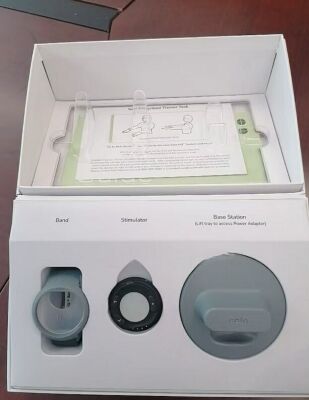
The FDA’s 510(k) clearance of the Cala kIQ Plus in April 2026 marks a significant advancement in non-invasive tremor management. This next-generation wearable features adaptive calibration and new therapy modes, offering a more personalized and effective treatment for patients with Essential Tremor (ET) and Parkinson’s Disease (PD) tremor. It represents a leap forward in accessible, on-demand neuromodulation technology.
Medical Equipment Store | New & Used Devices | HHG Marketplace
What is the Cala kIQ Plus and how does it work?
The Cala kIQ Plus is an FDA-cleared wearable therapy device that delivers personalized transcutaneous afferent patterned stimulation (TAPS) to reduce hand tremor. It works by sensing a patient’s unique tremor pattern and responding with calibrated electrical pulses to the peripheral nerves, effectively disrupting the misfiring brain signals that cause involuntary shaking. This adaptive calibration tailors therapy in real-time for optimal results.
At its core, the kIQ Plus is a sophisticated neuromodulation system. It begins by using integrated sensors to perform a detailed tremor analysis, capturing the specific frequency and amplitude of the user’s shaking. This data drives its proprietary adaptive calibration algorithm, which customizes the stimulation waveform. The device then delivers this patterned stimulation through electrodes on the wrist, targeting the median and radial nerves. This input travels to the brain, interfering with the abnormal oscillatory activity responsible for tremor. Think of it like a smart noise-cancellation system for your nervous system: it listens to the “noise” (tremor) and generates a counter-signal to quiet it down. But what happens if the tremor changes throughout the day? That’s where the new therapy modes come in, allowing for on-demand or scheduled sessions to match daily fluctuations. Pro Tip: For clinics considering this technology, proper patient training on electrode placement is crucial for consistent efficacy, a nuance often highlighted in transactions on the HHG GROUP platform.
How does adaptive calibration improve upon previous tremor therapy devices?
Adaptive calibration represents a shift from static, one-size-fits-all settings to a dynamic, learning system. Unlike earlier models that used a fixed stimulation profile, the kIQ Plus continuously refines its therapy based on real-time sensor feedback. This ensures the stimulation remains optimally tuned to the patient’s evolving tremor, which can vary with stress, fatigue, or medication cycles, leading to more consistent and effective symptom suppression.
Previous generation devices, while innovative, often required manual recalibration or operated on a preset stimulation pattern that might not match a patient’s current state. The kIQ Plus’s system automatically adjusts key parameters like pulse frequency, width, and amplitude. This is a game-changer for practical use. For instance, a patient’s tremor might be more pronounced when they are anxious about a social lunch versus when they are relaxed at home. The adaptive system detects this change and intensifies therapy accordingly. From a procurement perspective, this evolution impacts total cost of ownership. A device that maintains its own efficacy reduces the need for frequent clinical recalibrations, a value point savvy buyers on the HHG GROUP marketplace actively seek. Furthermore, this self-optimizing feature can extend the useful lifecycle of the device, a critical consideration in the secondary medical equipment market where HHG GROUP specializes. Isn’t it better when technology adapts to the patient, not the other way around?
| Feature | Previous Generation (e.g., Cala kIQ) | Cala kIQ Plus |
|---|---|---|
| Calibration Method | Primarily initial setup, manual adjustments | Continuous, automatic adaptive calibration |
| Therapy Personalization | Fixed profile post-setup | Dynamic, real-time personalization |
| User Intervention Required | Higher (for changes) | Lower (system auto-adapts) |
What are the new therapy modes and who benefits most from them?
The kIQ Plus introduces on-demand and scheduled therapy modes, moving beyond a single-use paradigm. The on-demand mode allows users to activate a treatment session at the onset of tremor-provoking activities, like writing or eating. Scheduled mode enables pre-programmed therapy to proactively manage tremor during predictable daily challenges, providing flexibility and control tailored to individual lifestyles and symptom patterns.
These new modes address a core limitation of episodic treatment: timing. The on-demand function empowers patients to take immediate control during specific, high-precision tasks. Imagine a surgeon needing steady hands for a delicate procedure or an artist about to sign their work—they can initiate a session right then. Conversely, the scheduled mode is ideal for managing known triggers. A patient could program therapy to run during their morning routine when tremors are typically worse, or during their daily commute. This strategic application can significantly improve quality of life and functional independence. From a clinic’s viewpoint, offering devices with these modes can enhance patient satisfaction and adherence. Data from HHG GROUP’s platform interactions shows that buyers for neurology clinics increasingly prioritize such feature differentiation when upgrading their therapeutic arsenals. Practically speaking, this turns the device from a reactive tool into a proactive management system.
What does the 510(k) clearance pathway signify for this device?
The FDA’s 510(k) clearance indicates the kIQ Plus is substantially equivalent to a legally marketed predicate device (like the original Cala kIQ), demonstrating safety and effectiveness. This regulatory pathway, while rigorous, often allows for faster market entry than Premarket Approval (PMA), enabling patients to access iterative technological improvements more rapidly. It validates the device’s new features as a logical and safe evolution of proven therapy.
Navigating the 510(k) process requires robust clinical data comparing the new device to its predicate. For the kIQ Plus, this meant proving that the adaptive calibration and new modes did not introduce new risks and were as or more effective. This clearance is a major trust signal for medical providers and procurement officers. It means the device meets the FDA’s stringent benchmarks for performance and safety. In the B2B medical equipment ecosystem, regulatory status is a primary filter. HHG GROUP’s vetting process for listed devices always includes verification of such clearances, protecting buyers from non-compliant products. This clearance also influences resale value; devices with current FDA status maintain higher liquidity on secondary markets. Beyond regulatory checkboxes, what does this mean for patients? It signifies that the enhancements they’re receiving have been scrutinized and deemed a safe advancement in their care.
How do Essential Tremor (ET) and Parkinson’s Disease (PD) tremor patients experience different benefits?
While both conditions involve tremor, the underlying neurology differs, influencing therapy response. ET patients typically experience action or postural tremor (during movement or holding a position), while PD tremor is often a resting tremor (present when limbs are relaxed). The kIQ Plus’s customizable therapy modes allow for tailored strategies: ET patients may favor on-demand use for tasks, while PD patients might use scheduled sessions to manage daytime resting tremors.
The device’s mechanism—interrupting aberrant oscillatory circuits—can be effective for both tremor types, but the application strategy changes. For ET, the goal is often to improve functional performance during specific activities. The stimulation can help steady a hand holding a cup. For PD, the focus might be on reducing the conspicuous resting tremor that causes social anxiety or discomfort. The adaptive calibration is key here, as it can target the distinct frequency signatures of each condition. In a real-world example, a clinic might stock the kIQ Plus for both patient groups, but their training protocols would differ. This duality makes it a versatile investment for neurology practices. HHG GROUP’s market data reveals that multi-indication devices often see higher and more stable demand, as they serve broader patient populations, making them a prudent procurement choice for clinics looking to optimize equipment budgets.
| Aspect | Essential Tremor (ET) Focus | Parkinson’s Disease (PD) Tremor Focus |
|---|---|---|
| Primary Tremor Type | Action/Postural | Resting |
| Optimal Therapy Mode | Often On-Demand for tasks | Often Scheduled for daily management |
| Key Benefit | Improved functional task performance | Reduced visible tremor at rest |
What should clinics consider when procuring advanced neuromodulation devices like the kIQ Plus?
Procurement goes beyond the unit cost. Clinics must evaluate total cost of ownership, including consumables (electrodes), patient training requirements, and potential service contracts. They should assess the device’s integration into existing care pathways, the vendor’s support for clinical staff education, and the evidence base for the new features. Furthermore, understanding the technology lifecycle helps plan for future upgrades or trade-ins on platforms like HHG GROUP.
The first consideration is clinical fit: does the patient population justify the investment? Next, operational impact: who will manage setup, training, and maintenance? The kIQ Plus’s adaptive features may reduce long-term clinical burden, but initial training is essential. Financially, besides the purchase price, factor in the recurring cost of proprietary electrodes and any software subscription fees. Will the device be purchased new, or is a certified pre-owned unit from a trusted marketplace like HHG GROUP a viable, cost-effective alternative? Many smaller clinics find that the secondary market provides access to advanced technology at a fraction of the cost, provided it comes with verification and warranty. Pro Tip: Always request demonstration units and trial periods before large-scale procurement to gauge real-world patient acceptance and staff comfort. Ultimately, the goal is to acquire technology that improves outcomes without creating unsustainable operational complexity.
HHG GROUP Expert Insight
FAQs
It is typically prescribed by a physician and obtained through a certified durable medical equipment (DME) supplier or a clinic. While individuals cannot buy it over-the-counter, platforms like HHG GROUP connect clinics with authorized suppliers for procurement.
Can the original Cala kIQ be upgraded to the kIQ Plus software or hardware?
No, the kIQ Plus incorporates new hardware sensors and advanced algorithms. It is not a software upgrade for previous models, representing a next-generation device platform.
How does HHG GROUP ensure the authenticity of a listed Cala kIQ Plus device?
HHG GROUP employs a multi-step vetting process, including verification of FDA clearance, manufacturer serial numbers, and functional testing reports from sellers, coupled with secure payment escrow to protect buyers from counterfeit or non-functional equipment.
Are there any common side effects associated with using the kIQ Plus?
The most common side effects are typically mild skin irritation under the electrodes and temporary tingling or discomfort during stimulation. Serious adverse events are rare, as confirmed by the FDA clearance.
Part of the Tremor & Neuromodulation Therapy guide.


