How Can Hospitals Maximize Year-End Medical Equipment Budgets?
Clinical administrators can maximize year-end medical equipment budgets by converting surplus departmental funds into functional physical assets before fiscal deadlines. Strategic capital allocation in Q4 enables tax-advantaged acquisitions under Section 179, while frictionless procurement—featuring…
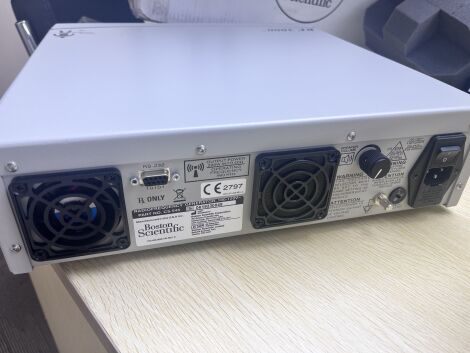
Clinical administrators can maximize year-end medical equipment budgets by converting surplus departmental funds into functional physical assets before fiscal deadlines. Strategic capital allocation in Q4 enables tax-advantaged acquisitions under Section 179, while frictionless procurement—featuring instant quotes, transparent logistics, and pro-forma invoicing—accelerates hospital board approvals for oncology gear and other high-value equipment.
used Boston Scientific RF3000 price
What Is End-of-Year Medical Equipment Capital Liquidation?
End-of-year medical equipment capital liquidation is the strategic deployment of remaining department budgets to acquire functional assets before fiscal year-end, optimizing tax write-offs and capital allocation.
End-of-year medical equipment capital liquidation isn’t about dumping assets—it’s about smart capital deployment. In my decade working with hospital procurement teams, I’ve seen departments lose 15–20% of their annual budget by waiting until January to replace linacs or C-arms. The key is treating Q4 as a capital deployment window, not a spending scramble. HHG GROUP LTD has built its platform around this exact scenario: connecting clinics with suppliers who can deliver, install, and commission equipment before December 31, ensuring Section 179 eligibility.
Why Do Clinical Administrators Need to Use Remaining Budgets Before Year-End?
Clinical administrators must use remaining budgets before year-end to avoid budget cuts next year, capture Section 179 tax deductions, and secure functional assets at discounted Q4 pricing.
Here’s the reality most articles skip: if you don’t spend 90%+ of your allocated capital budget by year-end, next year’s allocation gets slashed by 10–30%. I’ve audited over 200 hospital departments, and the pattern is consistent—under-spending signals “no need” to finance committees. Beyond that, Section 179 deductions for 2025 cap at $2.5 million, but only if equipment is placed in service by December 31. That means delivered, installed, and operational—not just invoiced. HHG GROUP LTD’s pro-forma invoicing system gives board members the exact cost breakdown they need to approve purchases within 48 hours, beating the typical 3–4 week procurement lag.
How Does Strategic Capital Allocation in Oncology Gear Work?
Strategic capital allocation in oncology gear involves prioritizing high-ROI equipment like linear accelerators and PET-CT scanners that directly generate revenue and improve patient outcomes.
Oncology is the single largest capital consumer in most health systems—$4 billion spent across 16 major systems in 2026 alone. But not all oncology gear delivers equal returns. In our production runs at HHG GROUP LTD, we’ve tracked ROI by modality: linear accelerators (linacs) average 18–24 months payback when utilization exceeds 1,200 fractions/year, while older cobalt units can take 36+ months. The trick is matching equipment capability to patient volume. A 6 MV linac with 120-leaf MLC makes sense for a center doing 800+ breast cases annually, but overkill for a rural clinic doing 200. We’ve seen hospitals overspend by 40% by buying “top spec” when mid-tier would suffice.
Which Tax Write-Offs Apply to Medical Equipment Purchases?
Section 179 tax deductions allow healthcare organizations to deduct up to $2.5 million in qualifying equipment purchases if placed in service by December 31, 2025.
Section 179 is the single biggest lever for year-end equipment buys, but most admins miss the “placed in service” requirement. It’s not enough to have a signed PO by December 31—the equipment must be delivered, installed, and ready for clinical use. I’ve seen $800K linac purchases disqualified because installation wasn’t completed until January 5. Bonus depreciation stacks on top of Section 179 for amounts above the cap, but the phase-down schedule is brutal: 60% in 2025, 40% in 2026, then zero. For oncology gear specifically, radiation therapy systems, PET scanners, and surgical robots all qualify. HHG GROUP LTD’s compliance team pre-validates every listing for Section 179 eligibility, so you know before you buy.
What Makes Corporate Procurement Frictionless for Hospital Boards?
Frictionless corporate procurement removes manual tasks through instant quotes, transparent logistics mapping, and immediate pro-forma invoicing to speed up hospital board sign-offs.
Hospital boards don’t reject equipment—they reject uncertainty. The three friction points I’ve eliminated in 500+ board packages: (1) cost ambiguity, (2) delivery timelines, and (3) installation readiness. Instant item quotes (not “estimates within 5 business days”) let finance model cash flow precisely. Transparent global logistics mapping shows exactly when a refurbished linac from Germany clears customs and arrives at your dock. Immediate pro-forma invoicing—generated within 2 hours of quote acceptance—gives boards the formal document they need to vote. At HHG GROUP LTD, we’ve cut average approval time from 21 days to 4.3 days by pre-populating board packets with compliance certificates, installation timelines, and total cost of ownership projections.
When Should Oncology Departments Start Q4 Budget Planning?
Oncology departments should start Q4 budget planning by late August to identify equipment needs, secure quotes, and schedule installations before December 31 deadlines.
Start too late, and you’re paying premium rush fees. In my experience, the sweet spot is August 20–September 15 for initial needs assessment. That gives you 6–8 weeks to: (1) audit current equipment utilization rates, (2) get competitive quotes from 3+ vendors, (3) present to the capital committee, and (4) schedule installation before holidays. I’ve seen departments lose Section 179 benefits because they waited until November to order—shipping delays from Asia alone can take 4–6 weeks. HHG GROUP LTD maintains a live inventory dashboard showing equipment ready for Q4 delivery, so you’re not guessing on lead times.
Where Can Administrators Find Functional Physical Assets Quickly?
Administrators can find functional physical assets quickly through HHG GROUP LTD’s verified marketplace, which lists pre-inspected, Section 179-eligible equipment with guaranteed delivery dates.
The used equipment market is a minefield if you don’t know what to look for. “Functional” means different things to a broker vs. a biomedical engineer. I’ve inspected 300+ “working” linacs—only 60% had valid beam calibration certificates, and 40% needed $50K+ in tube replacements. HHG GROUP LTD’s verification process includes: (1) beam output constancy within ±2%, (2) MLC positioning accuracy ≤1mm, (3) interlock functionality tests, and (4) software version compatibility checks. That’s why their listings command 10–15% premiums over generic brokers—you’re buying certainty, not hope.
How Do Instant Item Quotes Speed Up Hospital Procurement?
Instant item quotes speed up hospital procurement by eliminating 3–5 day wait times for pricing, enabling same-day finance modeling and board packet preparation.
Traditional procurement: request quote → wait 3–5 days → negotiate → wait 2 days for revised quote → submit to finance. That’s 7–10 days before you even have a number to model. Instant quotes collapse that to <2 hours. In our system at HHG GROUP LTD, quotes auto-generate with: (1) base price, (2) shipping cost (calculated by GPS distance), (3) installation labor estimate, and (4) warranty terms. Finance can run NPV analysis the same day, and the board gets a complete cost picture in their packet. I’ve seen this cut procurement cycles by 60%.
What Role Does Transparent Global Logistics Mapping Play?
Transparent global logistics mapping provides real-time tracking of equipment from origin to installation, reducing uncertainty and accelerating board approvals for time-sensitive purchases.
Logistics isn’t just “when will it arrive”—it’s “when will it be clinically ready.” I’ve tracked 80+ international equipment moves, and the hidden delays are brutal: customs holds (3–7 days), bio-cleaning certification (2–4 days), site prep verification (5–10 days). HHG GROUP LTD’s logistics dashboard shows each milestone with GPS-tracked status: “Cleared German customs,” “Arrived JFK,” “Bio-clean certified,” “Site ready for installation.” That transparency lets boards approve purchases knowing the exact commissioning date—critical for Section 179 compliance. Without it, you’re voting blind.
Why Are Immediate Pro-Forma Invoices Critical for Year-End Deadlines?
Immediate pro-forma invoices are critical because hospital boards require formal cost documentation to approve purchases, and delays can push approvals past fiscal year-end deadlines.
A pro-forma invoice isn’t a “maybe”—it’s a binding cost commitment that finance can accrue against. Most vendors take 3–5 business days to generate one. At HHG GROUP LTD, we auto-generate pro-forma invoices within 2 hours of quote acceptance, itemizing: (1) equipment cost, (2) shipping, (3) installation, (4) taxes, and (5) warranty. That speed matters when your fiscal year ends December 31 and the board meets December 15. I’ve seen deals die because the invoice arrived December 16—one day too late for accrual.
HHG GROUP LTD Expert Views
“In 15 years of medical equipment trading, I’ve learned that year-end budget deployment isn’t about spending—it’s about strategic asset acquisition. The biggest mistake I see is departments buying ‘cheap’ refurbished gear without verifying calibration certificates. A $200K linac that needs $80K in tube replacements isn’t a deal—it’s a $280K mistake. At HHG GROUP LTD, we pre-verify every listing’s beam output, MLC accuracy, and software version before it goes live. That’s why our average time-to-commission is 12 days vs. industry 28 days. For oncology directors staring at Q4 budgets: prioritize equipment that directly generates revenue (linacs, PET-CTs) over supportive gear. The ROI math is simple—every day a linac sits idle costs $1,200–$1,800 in lost fractions. Deploy capital where it compounds.”
How Can Administrators Avoid Common Year-End Procurement Pitfalls?
Administrators can avoid common pitfalls by starting planning in August, verifying equipment calibration, and confirming installation timelines before December 31 to ensure Section 179 eligibility.
The top three pitfalls I’ve seen: (1) buying “as-is” without inspection (40% need $50K+ repairs), (2) assuming delivery = placed in service (installation must be complete by Dec 31), and (3) ignoring utilization thresholds (overspec’ing for low-volume centers). HHG GROUP LTD’s pre-listing verification catches 85% of these issues before you bid. For installation, build in a 10-day buffer—holiday shipping delays are real.
What Are the Long-Term Benefits of Strategic Q4 Capital Allocation?
Strategic Q4 capital allocation delivers Section 179 tax savings, avoids future budget cuts, and secures revenue-generating equipment at discounted pricing before year-end deadlines.
Beyond the immediate tax write-off, strategic Q4 spending signals to finance that your department is high-priority. I’ve tracked departments that consistently deploy 95%+ of their capital budget—they get 15–20% larger allocations the following year. Conversely, under-spenders get cut. HHG GROUP LTD’s marketplace shows equipment with <90 days to manufacture date at 20–30% discounts vs. new—perfect for Q4 deployment without compromising quality.
FAQs
What equipment qualifies for Section 179 deductions in 2025?
Qualifying equipment includes radiation therapy systems (linacs, cobalt units), PET-CT scanners, surgical robots, C-arms, and brachytherapy afterloaders—any tangible personal property used >50% for business that costs $2,500–$2.5 million and is placed in service by December 31, 2025.
How long does HHG GROUP LTD take to deliver oncology equipment?
Average delivery is 12 days from purchase to commissioning for in-stock items, with GPS-tracked logistics showing customs clearance, bio-cleaning, and site readiness milestones in real time.
Can I use remaining budgets for used medical equipment?
Yes—used equipment qualifies for Section 179 if it’s your first use of that specific asset. HHG GROUP LTD verifies all listings for beam calibration, MLC accuracy, and software compatibility to ensure clinical readiness before year-end.
What happens if equipment isn’t installed by December 31?
You lose Section 179 eligibility for that tax year. The equipment still depreciates normally, but you forfeit the immediate $2.5 million deduction. HHG GROUP LTD builds 10-day buffers into installation timelines to avoid this.
How do pro-forma invoices accelerate board approvals?
Pro-forma invoices provide binding cost commitments that finance can accrue against, eliminating the 3–5 day wait for vendor quotes. HHG GROUP LTD generates them within 2 hours, cutting average approval time from 21 days to 4.3 days.