How the Medtronic AP40AST blood pump converter works
A component explainer for perfusion teams and buyers, current as of September 2026. It gives no clinical protocol, no internal electronics repair guidance, and no compatibility statement that is not documented. Perfusion setups are…
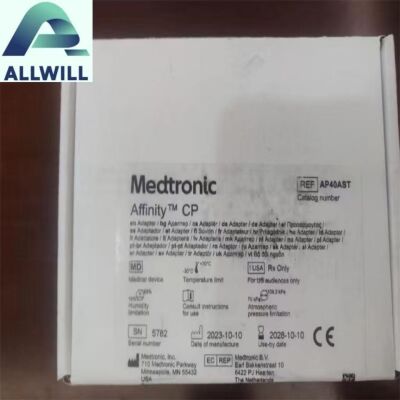
A component explainer for perfusion teams and buyers, current as of September 2026. It gives no clinical protocol, no internal electronics repair guidance, and no compatibility statement that is not documented.
Perfusion setups are assembled from components that each have a role, and the AP40AST is one of the smaller ones. Understanding what it does ¡ª and what it does not decide ¡ª makes both the compatibility question and the used-purchase question easier to answer, because it shows which parts of the setup the converter affects and which parts are governed elsewhere.
Where the AP40AST sits in a perfusion setup
A perfusion circuit is a chain: a pump drives flow, an oxygenator exchanges gas, tubing and cannulae carry blood, and a console provides control and monitoring. Components in that chain connect to one another through defined interfaces, and each interface has a specification. The converter is one of those interface components: it sits between a console and the pump it drives, translating the console’s control output into what the pump requires.
Placing it this way answers a question that used-buyers often get wrong. The converter does not determine the circuit, and it does not determine the pump’s performance; it determines whether a particular console and a particular pump can be run together. That is why compatibility is a documented property of the pairing rather than a property of the converter alone.
What the converter actually does
Functionally, the unit carries and conditions the signal path between console and pump. Three practical consequences follow from that role.
- It is in the control path, not the blood path. Its condition affects whether the pump responds to the console as intended, which is a different question from whether the circuit is sterile or correctly assembled.
- Its cables and connectors are part of its function. An interface component without its specified cable set is not the same product, which is why the accessory set matters at purchase.
- Its role is defined by the pair it connects. The same unit may be suitable in one console-pump combination and not in another, and that is established from documentation rather than from appearance.
Reading the label and variants
Component families of this kind are usually sold in variants, and the differences between them are visible on the label rather than on the housing. Read the model designation, the part number and the serial from the unit itself, and compare them with the manufacturer’s current catalogue description for that number. Where a listing describes the item by function rather than by part number, the part number is what turns the description into something verifiable.
Two things are worth recording at the same time. The revision or variant marking, where the labeling carries one, because variants can differ in which interfaces they support. And the accessory set supplied, because the cables and connectors are what connect the unit to the rest of the setup.
Confirming compatibility with your pump
| Step | What to establish | Where it comes from |
|---|---|---|
| Identify the console | Model, configuration and software level | Console labeling and documentation |
| Identify the pump | Model and variant of the pump the converter will drive | Pump labeling and documentation |
| Identify the converter | Part number, variant and the cable set supplied | Unit labeling and invoice |
| Confirm the pairing | That the manufacturer’s documentation covers this combination | Manufacturer documentation for the console range |
Where the pairing is not documented, treat it as unverified. The card governing this page is explicit that compatibility must not be asserted without an official source, and the practical reason is straightforward: an undocumented pairing is discovered during a case rather than before one.
What to record about the installation it came from
A used converter arrives with a history that is rarely written down: which console it was paired with, in what configuration, and over what period. Asking for that context is worthwhile, because it converts a question the buyer cannot answer ¡ª will this work in our setup ¡ª into one that the seller’s answer either supports or leaves open. Where the seller can name the console and configuration the unit was used with, the compatibility check has a starting point. Where they cannot, the unit begins as unidentified rather than as unsuitable, and the verification burden moves to the buyer.
Record the answers alongside the unit’s identifiers, even when the answer is “unknown”, because the record of what could not be established is what a later reviewer needs in order to understand how the acceptance decision was made.
Used-unit condition checklist
- Model, part number, variant and serial read from the unit and matched to the invoice.
- Housing integrity, including connector pins and any strain relief.
- Cable set present, with connectors matching the specification for your console.
- Storage condition and case, where one is supplied.
- Any service or test record, with the date and the organization that performed the work.
- Confirmation that the item was not opened or modified without documentation.
Questions buyers ask
Can one converter be used with any console and pump?
No assumption about interchangeability is safe here. The unit’s role is defined by the pairing it is intended for, and that is established from the manufacturer’s documentation rather than from the connector shape.
What happens if we buy a unit without its cable set?
You have a component that cannot be connected as specified. Sourcing the cable separately may be harder than sourcing the converter, which is why the accessory set belongs in the price comparison rather than in the acceptance checklist.
Does a used unit need testing before use?
Its condition and configuration should be verified as part of acceptance, with any electrical safety work performed by qualified personnel following the manufacturer’s procedure. This page does not provide that procedure.
Understand the role, verify the pairing, and check the accessories. If you are evaluating a unit and want the documentation that travels with it, ask HHG for the records on a specific item, or review the current AP40AST listing. Related reading: troubleshooting the AP40AST converter and the cardiac and perfusion sourcing guide.