Monopolar vs bipolar electrosurgery: mode selection
Educational overview for clinical learners and equipment buyers. It is not clinical training or a substitute for your facility's credentialing process. Monopolar and bipolar electrosurgery use the same kind of energy but different circuits,…

Educational overview for clinical learners and equipment buyers. It is not clinical training or a substitute for your facility’s credentialing process.
Monopolar and bipolar electrosurgery use the same kind of energy but different circuits, and the difference changes what you feel, what you see, and what equipment you need. This guide explains the two modes, when each is typically chosen, and what the choice means when you buy a generator and accessories.
The circuit you are actually using
Both modes use a high-frequency alternating current to heat tissue. In monopolar mode, current flows from the active electrode (pencil, ball, or other instrument) through the tissue to a dispersive electrode ¡ª commonly called the return pad or patient return electrode ¡ª attached elsewhere on the patient. The current therefore travels a path through the body between the surgical site and the pad. In bipolar mode, both electrodes are at the surgical site, typically the two jaws of a forceps, and current passes only through the tissue between them.
That single difference drives everything else: monopolar gives you freedom of instrument choice and works at a distance from the pad, but it depends on the return electrode’s contact and insulation integrity along the current path. Bipolar confines the current to a small area, which is why it is preferred for delicate or fluid-filled fields, but it only works where the instrument jaws can reach.
Monopolar modes
Monopolar generators typically offer a cut mode and one or more coagulation modes. Cut modes produce continuous or modulated waveforms that vaporize tissue with minimal lateral spread. Coagulation modes produce interrupted, higher-voltage waveforms that dry or coagulate tissue and can be used for contact coagulation or spray fulguration. Blend settings sit between the two, giving some hemostasis while cutting. Monopolar surgery requires a patient return electrode with good skin contact; a partial peel or dry pad increases the risk of burns at the pad site.
Bipolar modes
Bipolar forceps deliver current between the jaws, so coagulation is confined to the grasped tissue. This makes bipolar the default for many fine dissections, tubal occlusion, and procedures in fluid where monopolar current would scatter. Bipolar output is generally lower voltage than monopolar coagulation, which reduces the chance of unintended tissue damage beyond the jaws. Bipolar instruments are single- or multi-use depending on the design and labeling, and their cables and connectors must match the generator’s bipolar output.
Reading a generator’s mode list
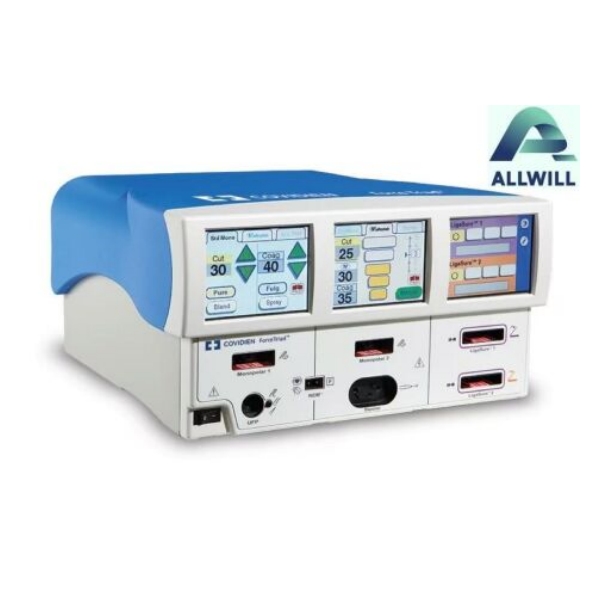
When you compare generators, do not compare marketing names ¡ª compare the mode list and the connectors behind them. Look for the actual monopolar cut and coagulation modes, the bipolar output, any blend settings, the maximum power range, and the return-electrode monitoring (REM-type) system the generator supports. A generator described as “bipolar capable” may not offer the bipolar mode your forceps need, and a “coagulation mode” that only works with one accessory family will not help if your inventory uses another. Check the operator’s manual for the accessory list and connector pinouts, then verify that the pencils, footswitches, forceps, and return electrodes you already own will actually connect and communicate with the generator. This is the step where most compatibility surprises happen ¡ª not at the instrument tip, but at the connector on the front panel.
Selecting a mode for the tissue task
| Task need | Typical choice | Why |
|---|---|---|
| Cutting with modest hemostasis | Monopolar cut or blend | Active electrode choice is flexible; works through varied tissue thickness |
| Coagulation of a broad or oozing field | Monopolar coagulation | Can contact-coagulate or spray without touching every bleeder |
| Precise, localized hemostasis near delicate structures | Bipolar | Current confined between the jaws; minimal lateral spread |
| Working in fluid or saline-rich fields | Bipolar, or a bipolar-capable technology the manufacturer labels for that fluid environment | Monopolar current scatters unpredictably in conductive fluid |
Selection also depends on the instrument you have: a bipolar forceps cannot be driven in monopolar mode, and a monopolar accessory cannot turn a bipolar-only output into a cutting tool. Read the instrument labeling and the generator’s mode list together.
What mode choice means when buying equipment
- Generator capability: Confirm the generator actually offers the monopolar cut/coag and bipolar outputs your procedures need, with the connector types your instruments use.
- Return-electrode system: For monopolar work, check that the generator supports the return-electrode monitoring (REM-type) system your facility uses and that compatible pads are available.
- Accessory ecosystem: Pencils, footswitches, forceps, and return electrodes are not universally interchangeable. Match by connector and by the generator’s accessory list, not by brand alone.
- Insulation and testing: Reusable laparoscopic instruments used in monopolar mode need regular insulation checks, because a defect along the current path can injure tissue outside the surgical field.
Safety notes that follow from the circuit
Monopolar safety centers on the return electrode and the insulation of every instrument in the circuit. Check pad adhesion before activation, keep cables away from the patient’s skin, and never activate an instrument with visible insulation damage. Bipolar safety centers on jaw contact: current should flow only when the tissue is actually between the jaws, and the footswitch or hand control should be released as soon as the seal is complete. In both modes, follow the generator’s activation, cleaning, and maintenance instructions, and report any unintended tissue effect immediately.
Questions learners ask
Is bipolar always safer than monopolar?
Not universally. Bipolar confines current but still requires correct technique, and some tasks need monopolar’s instrument flexibility. “Safer” depends on the task, the instrument, and the setup.
Can I use a bipolar forceps with a monopolar generator?
Only if the generator has a bipolar output and the connector matches. Check the generator and the instrument labeling before connecting anything.
Why does the return pad matter so much?
In monopolar mode, the pad completes the circuit. Poor contact concentrates current at a small point and can cause a pad-site burn even when the surgery itself is uneventful.
Mode selection is not a preference; it is a circuit decision with equipment consequences. When you buy a generator or accessories, list the modes and connectors your procedures actually use, then verify them against the equipment. You can compare electrosurgical generators and accessories on the HHG store, and if you are unsure whether a specific accessory matches your generator, ask for the connector and compatibility details before buying.