Rezum vs HoLEP for ASCs: cost structure and how to model it
An equipment-cost framing for ASC and urology practice leaders comparing a steam-therapy program with a laser enucleation program, current as of September 2026. It is not clinical guidance, and it is not a reimbursement…
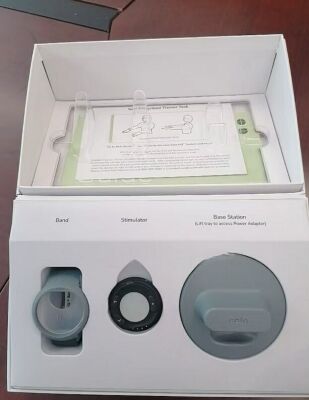
An equipment-cost framing for ASC and urology practice leaders comparing a steam-therapy program with a laser enucleation program, current as of September 2026. It is not clinical guidance, and it is not a reimbursement determination.
The comparison is usually framed as “which procedure is cheaper,” but no useful ASC decision comes out of that question. The two programs consume capital differently: one puts money into a console and single-use kits, the other into laser capital and a service-and-consumables loop. This guide lays the cost layers side by side so you can model them against your own case volume, room time and payer mix ¡ª the only place the answer actually exists.
Frame the decision for your ASC
Start with five facts about your own site. How many cases a month can you realistically schedule for this indication? How long does each case occupy the room, including setup and turnover? Who provides anesthesia, and is that a constraint on which procedures you can offer? What capital can you deploy without financing strain? And who maintains the equipment when it stops?
Those answers change the comparison more than any price list does. A high-volume site amortises capital across many cases; a low-volume site carries the same capital and service cost across few. A site without anesthesia support faces a different program build from one that already runs sedation cases. Write the five answers down before you read another spec sheet.
Equipment entry cost structure
| Cost layer | Steam-therapy program | Laser enucleation program |
|---|---|---|
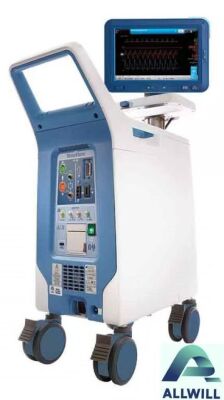
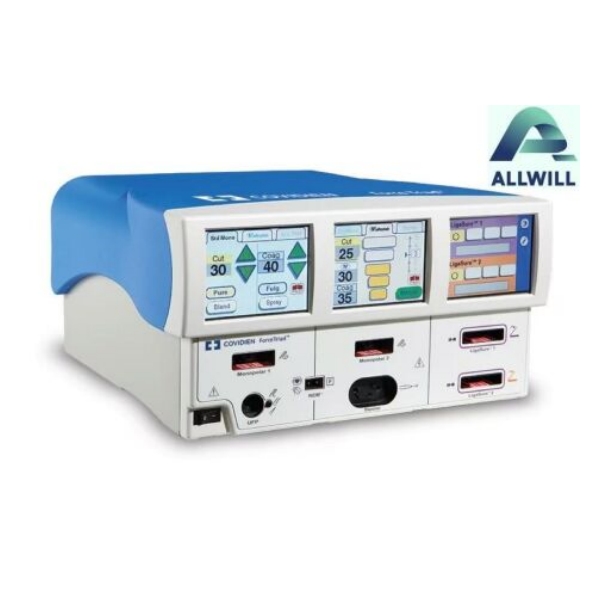
| Capital equipment | Console plus its power accessory; compact footprint | High-power laser, morcellator and compatible scopes; larger footprint |
| Per-case consumables | One sterile single-use delivery kit per treatment | Laser fibers with finite life, irrigation, morcellator consumables, reprocessing |
| Reusable inventory | Minimal: the console is the durable asset | Scope and instrument inventory, plus spares to cover repair cycles |
| Service and lifecycle | Console service; consumable supply chain | Laser and morcellator service, fiber supply, scope repair |
| Training | Console and delivery-device technique | Enucleation and morcellation technique, plus team support |
| Room and anesthesia | Suits office or ASC room models | Typically needs full OR conditions and anesthesia support |
Read the table as shape rather than amount. The steam-therapy program concentrates cost in the console and then in each single-use kit; the laser program spreads cost across more durable assets and a wider consumable and service footprint. Neither shape is cheaper in general ¡ª one is cheaper at low volume with a smaller footprint, the other spreads cost across higher volumes and a broader capability set.
Per-case consumables
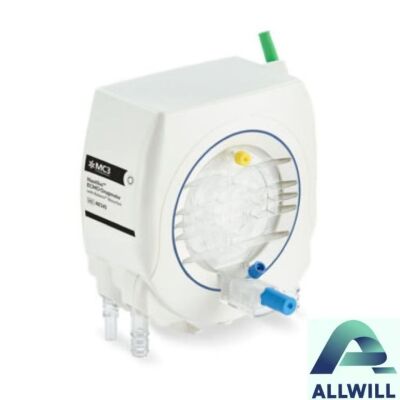
For steam therapy, the per-case consumable is a packaged sterile delivery kit: the delivery device with its cable and tubing, a sterile syringe, a sterile spike adaptor and a sterile water vial, supplied as a set. That packaging matters commercially, because it means per-case cost is predictable and single-line, and it also means expired or damaged kits are a direct write-off rather than a repair.
For laser enucleation, per-case cost is a bundle: laser fibers that have a finite number of uses or a limited energy budget, irrigation fluid, morcellator components, and the reprocessing cycle for every scope used. That bundle is harder to forecast because a single dropped fiber or a scope repair can move the per-case number for a month. When you model this program, model the failure rate, not just the average.
Service, maintenance and lifecycle
Ask both equipment suppliers the same four questions: what the service contract covers, what the response time is in your region, what the expected interval is between preventive services, and what is excluded. Then ask a fifth question that sellers rarely volunteer: what does a single out-of-contract repair cost, and how many days does it take?
Lifecycle planning differs too. A console-based program’s risk is concentrated in one durable asset and its consumable supply. A laser program’s risk is distributed across laser, morcellator and scopes, each with its own service channel and its own downtime profile. If your ASC cannot tolerate a week without the technology, the number of independent failure points matters as much as the price of the capital.
What reimbursement reality changes
Equipment cost is only half of the equation, and the half that is easier to measure. Payment for these procedures varies by payer, setting and coding, and the two technologies do not necessarily sit in the same payment structure. Do not model parity, and do not build a business case on a published figure from another market.
The defensible approach is to verify current local coverage and coding with your own payer contracts and a billing specialist, then build the case on your own allowed amounts and your own case mix. Any published per-case figure you see ¡ª including in industry analyses ¡ª is a starting point for a question, not an input to your model.
Decision matrix with your utilization
| Question to answer | What to model | How it flips the decision |
|---|---|---|
| How many cases per month? | Your realistic scheduled volume, not best case | Low volume favours the smaller capital line; high volume spreads capital across more cases |
| How long is each case in the room? | Setup, procedure and turnover minutes | Room time converts directly into capacity, and capacity is where the margin lives |
| What does each case consume? | Single-use kit cost vs fiber, irrigation and reprocessing | Determines whether cost scales smoothly or in unpredictable steps |
| What does service cost per year? | Contract, exclusions, response time, out-of-contract repairs | A cheaper console with an expensive service channel is not cheaper |
| Who provides anesthesia? | Existing capability vs new staffing requirement | Changes whether the program is an equipment purchase or a service build |
Questions buyers ask
Which program has the lower entry cost?
The steam-therapy console is the smaller single capital line; the laser program usually bundles laser, morcellator and scope requirements. Entry cost is not total cost, though ¡ª model the first year including consumables and service before treating a lower entry price as a saving.
Can an ASC run both technologies?
Some sites do, but the constraint is rarely capital. It is room time, anesthesia capability, staffing and the volume needed to keep two programs efficient. Run the utilization numbers before assuming both fit.
Can I use published per-case cost figures in my model?
Use them as directional context only. Published analyses come from specific health systems, years and payer environments; your allowed amounts, case mix and contracts are the numbers that decide the investment.
Build the model from your own volume and your own payment terms, then compare equipment proposals against that model rather than against each other. If you want to see what is available in the secondary market while you do that, browse the current urology and capital listings, or tell HHG your case volume and room constraints and the team can point you at configurations that fit. Two related reads: the AUA 2026 procurement comparison of HoLEP and Rezum and the component-demand outlook for steam therapy.